School of Architecture Computing and Engineering, University of East London, London E16 2RD, UK.
School of Computing and Information Science, Anglia Ruskin University, Cambridge CB1 1PT, UK.
Sensors (Basel). 2022 Jul 30;22(15):5726. doi: 10.3390/s22155726.
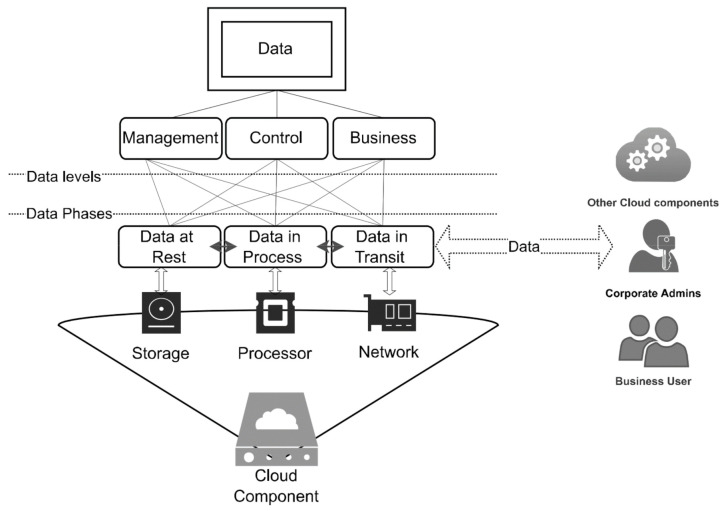
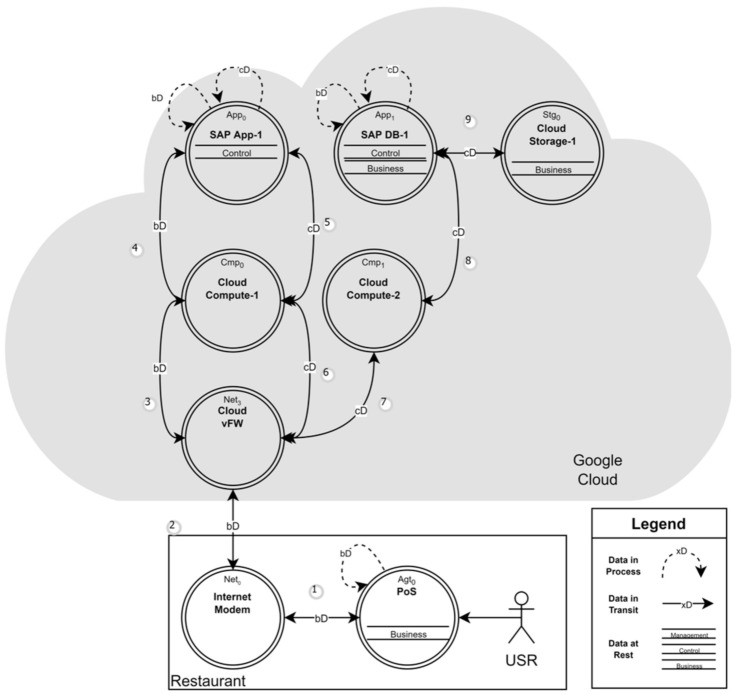
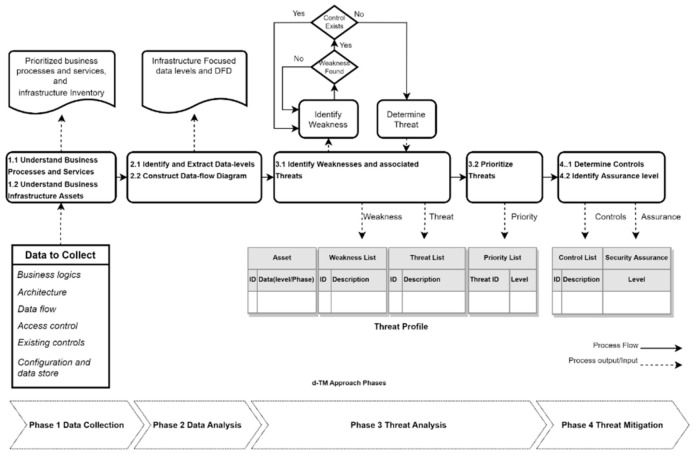
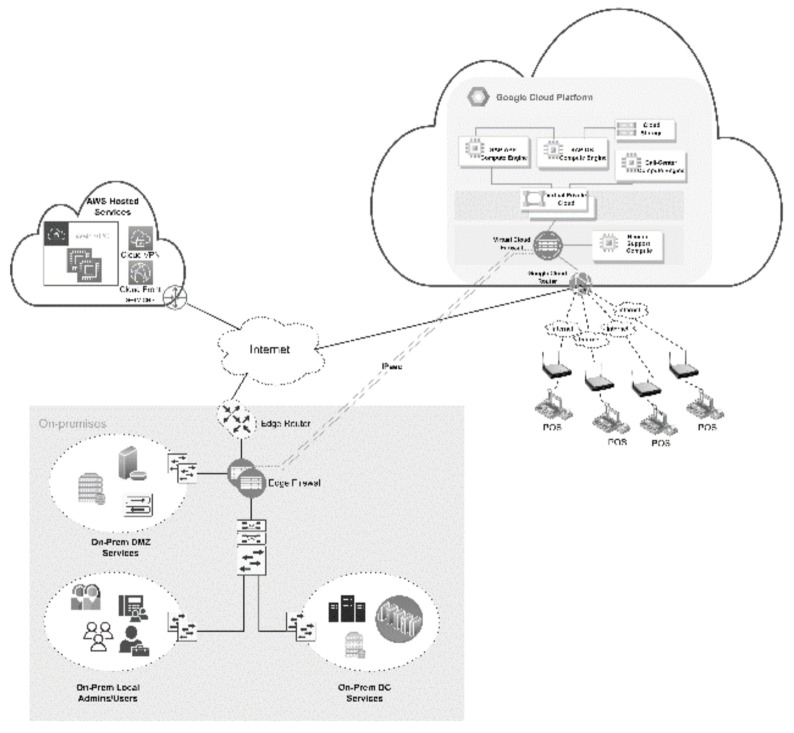
Cloud computing offers many benefits including business flexibility, scalability and cost savings but despite these benefits, there exist threats that require adequate attention for secure service delivery. Threats in a cloud-based system need to be considered from a holistic perspective that accounts for data, application, infrastructure and service, which can pose potential risks. Data certainly plays a critical role within the whole ecosystem and organisations should take account of and protect data from any potential threats. Due to the variation of data types, status, and location, understanding the potential security concerns in cloud-based infrastructures is more complex than in a traditional system. The existing threat modeling approaches lack the ability to analyse and prioritise data-related threats. The main contribution of the paper is a novel data-driven threat analysis (d-TM) approach for the cloud-based systems. The main motivation of d-TM is the integration of data from three levels of abstractions, i.e., management, control, and business and three phases, i.e., storage, process and transmittance, within each level. The d-TM provides a systematic flow of attack surface analysis from the user agent to the cloud service provider based on the threat layers in cloud computing. Finally, a cloud-based use case scenario was used to demonstrate the applicability of the proposed approach. The result shows that d-TM revealed four critical threats out of the seven threats based on the identified assets. The threats targeted management and business data in general, while targeting data in process and transit more specifically.
云计算提供了许多好处,包括业务灵活性、可扩展性和成本节约,但尽管有这些好处,仍存在需要引起足够重视的安全服务交付威胁。需要从整体角度考虑基于云的系统中的威胁,包括数据、应用程序、基础架构和服务,这些都可能带来潜在风险。数据在整个生态系统中当然起着至关重要的作用,组织应该考虑并保护数据免受任何潜在威胁。由于数据类型、状态和位置的变化,理解基于云的基础架构中的潜在安全问题比在传统系统中更加复杂。现有的威胁建模方法缺乏分析和优先处理与数据相关的威胁的能力。本文的主要贡献是一种新的数据驱动的威胁分析(d-TM)方法,用于基于云的系统。d-TM 的主要动机是整合来自三个抽象级别(即管理、控制和业务)和三个阶段(即存储、处理和传输)的数据,每个级别内都有数据。d-TM 基于云计算中的威胁层,从用户代理到云服务提供商提供了一种系统的攻击面分析流程。最后,使用基于云的用例场景来演示所提出方法的适用性。结果表明,d-TM 从识别的资产中发现了七个威胁中的四个关键威胁。这些威胁主要针对管理和业务数据,更具体地说是针对处理和传输中的数据。