Casado-Navarro Rafael, Serrano-Saiz Esther
Tissue and Organ Homeostasis Program, Centro de Biología Molecular Severo Ochoa (CSIC-UAM), Madrid, Spain.
Front Neuroanat. 2022 Jul 26;16:937596. doi: 10.3389/fnana.2022.937596. eCollection 2022.
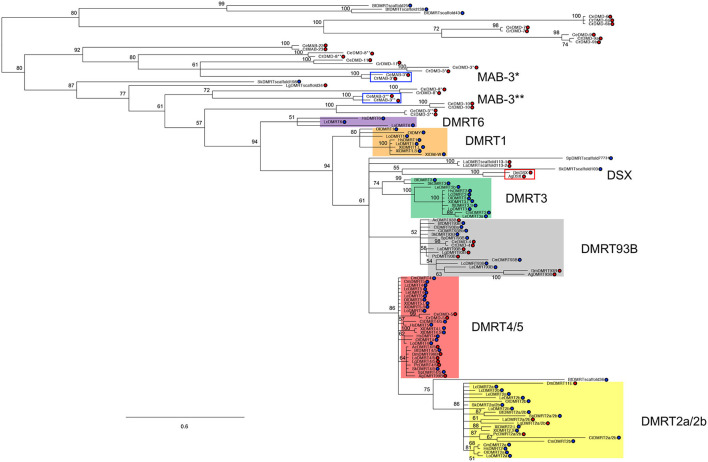
Sexual phenotypic differences in the nervous system are one of the most prevalent features across the animal kingdom. The molecular mechanisms responsible for sexual dimorphism throughout metazoan nervous systems are extremely diverse, ranging from intrinsic cell autonomous mechanisms to gonad-dependent endocrine control of sexual traits, or even extrinsic environmental cues. In recent years, the DMRT ancient family of transcription factors has emerged as being central in the development of sex-specific differentiation in all animals in which they have been studied. In this review, we provide an overview of the function of genes in nervous system sexual regulation from an evolutionary perspective.
神经系统中的性别表型差异是动物界最普遍的特征之一。整个后生动物神经系统中导致性别二态性的分子机制极为多样,从内在的细胞自主机制到性腺依赖性的性别特征内分泌控制,甚至是外在的环境线索。近年来,DMRT古老的转录因子家族已成为在所有已研究的动物性别特异性分化发育中起核心作用的因素。在这篇综述中,我们从进化的角度概述了基因在神经系统性别调控中的功能。