NeuroCure Cluster of Excellence, Charité-Universitätsmedizin Berlin, D-10117 Berlin, Germany.
Institute of Biology, Humboldt Universität zu Berlin, D-10117 Berlin, Germany.
eNeuro. 2022 Aug 29;9(4). doi: 10.1523/ENEURO.0089-22.2022. Print 2022 Jul-Aug.
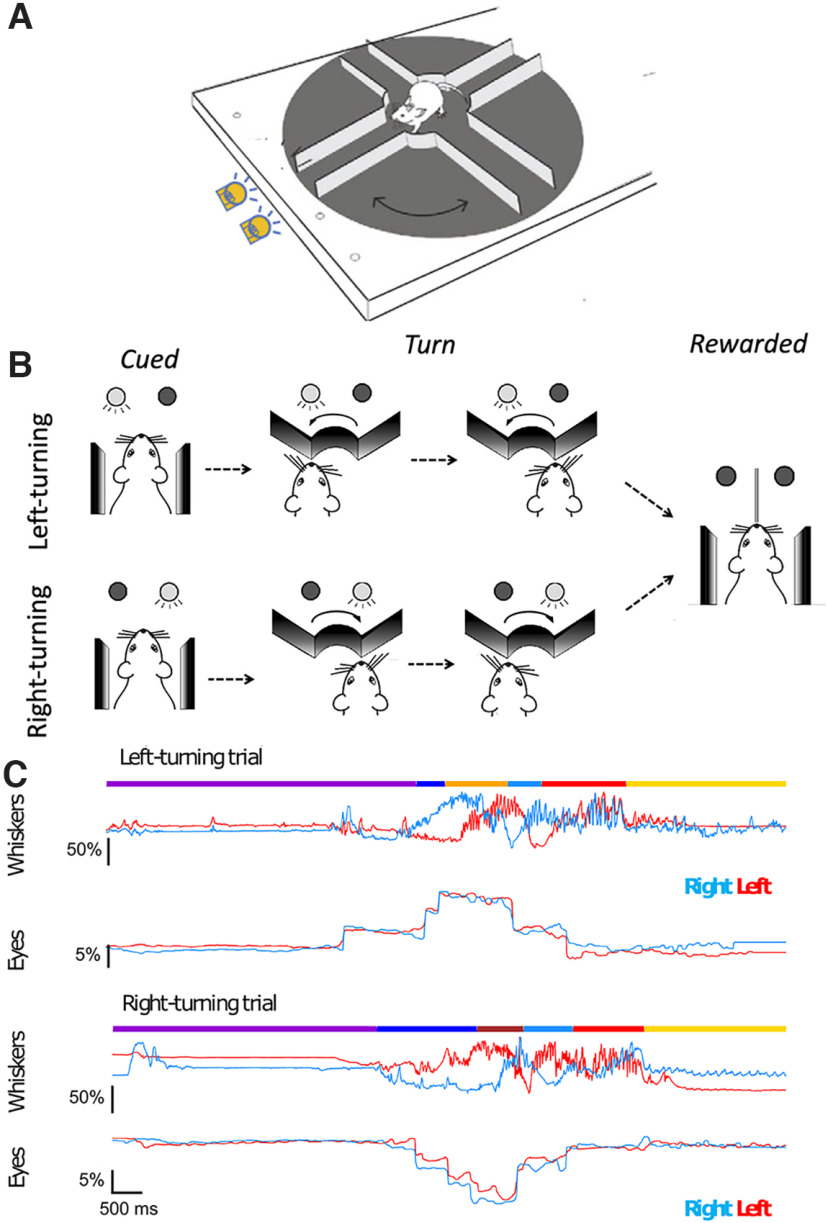
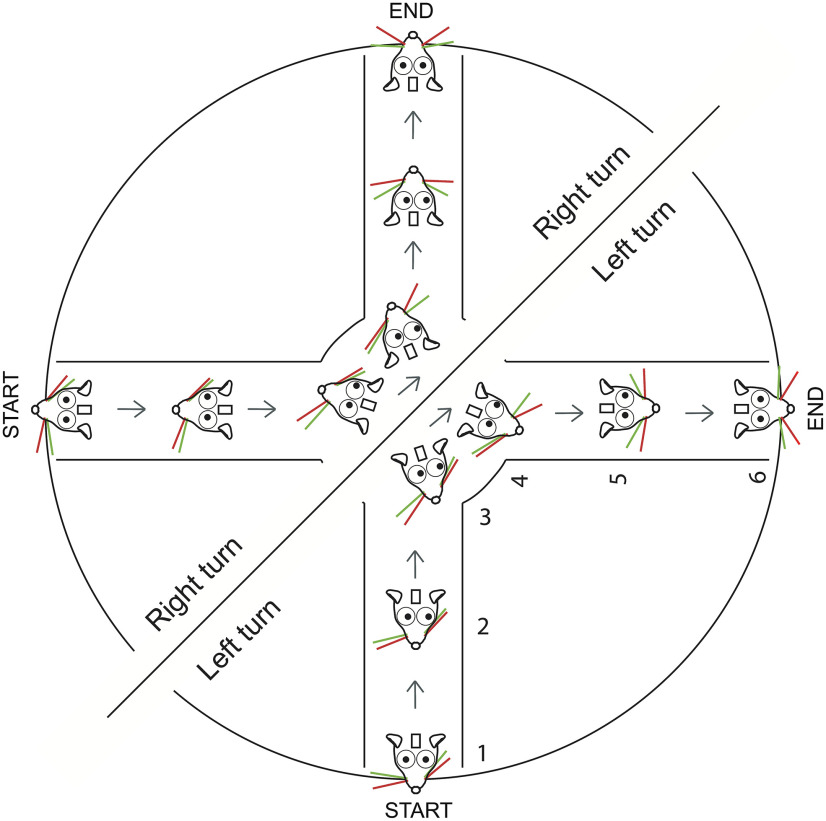
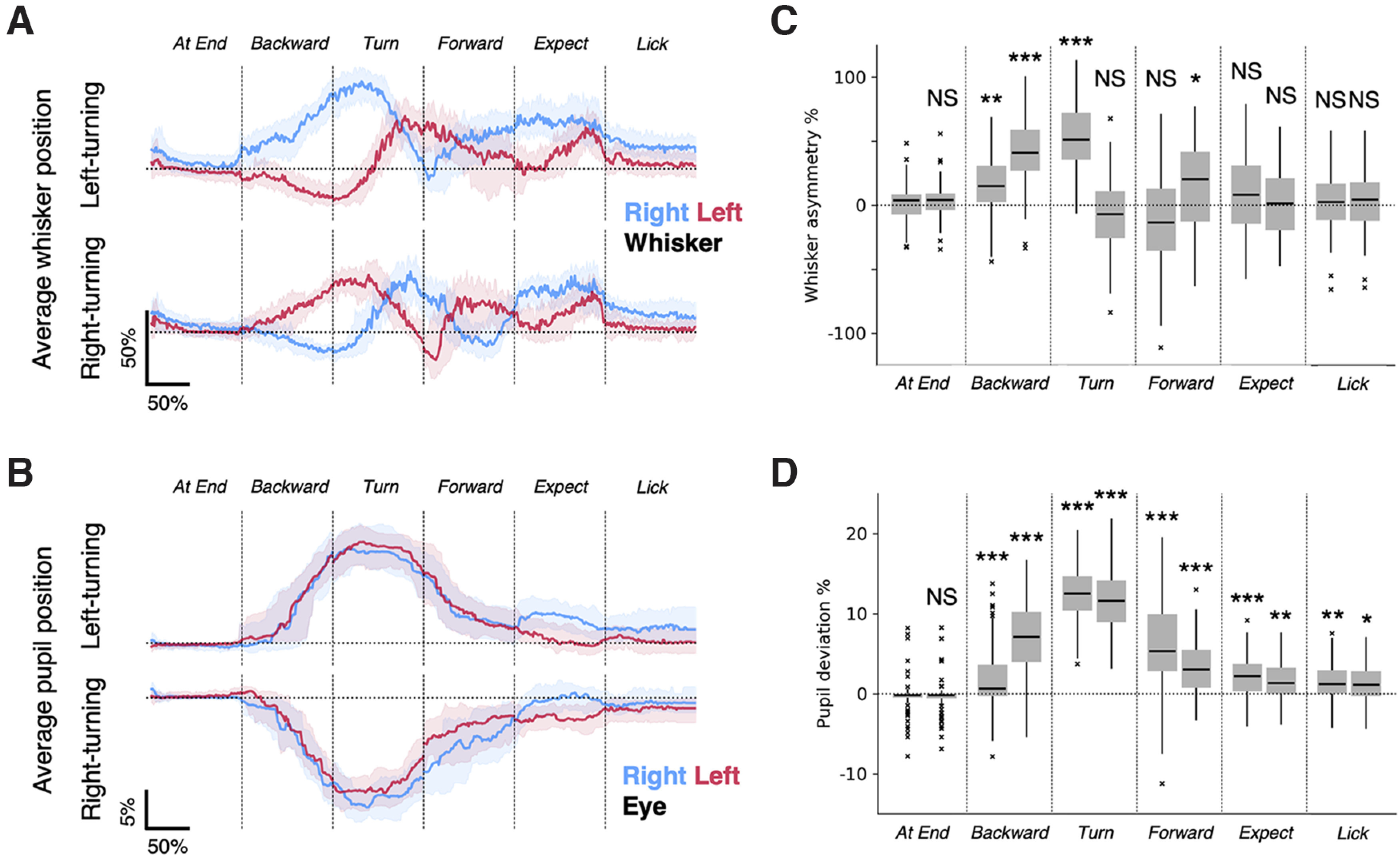
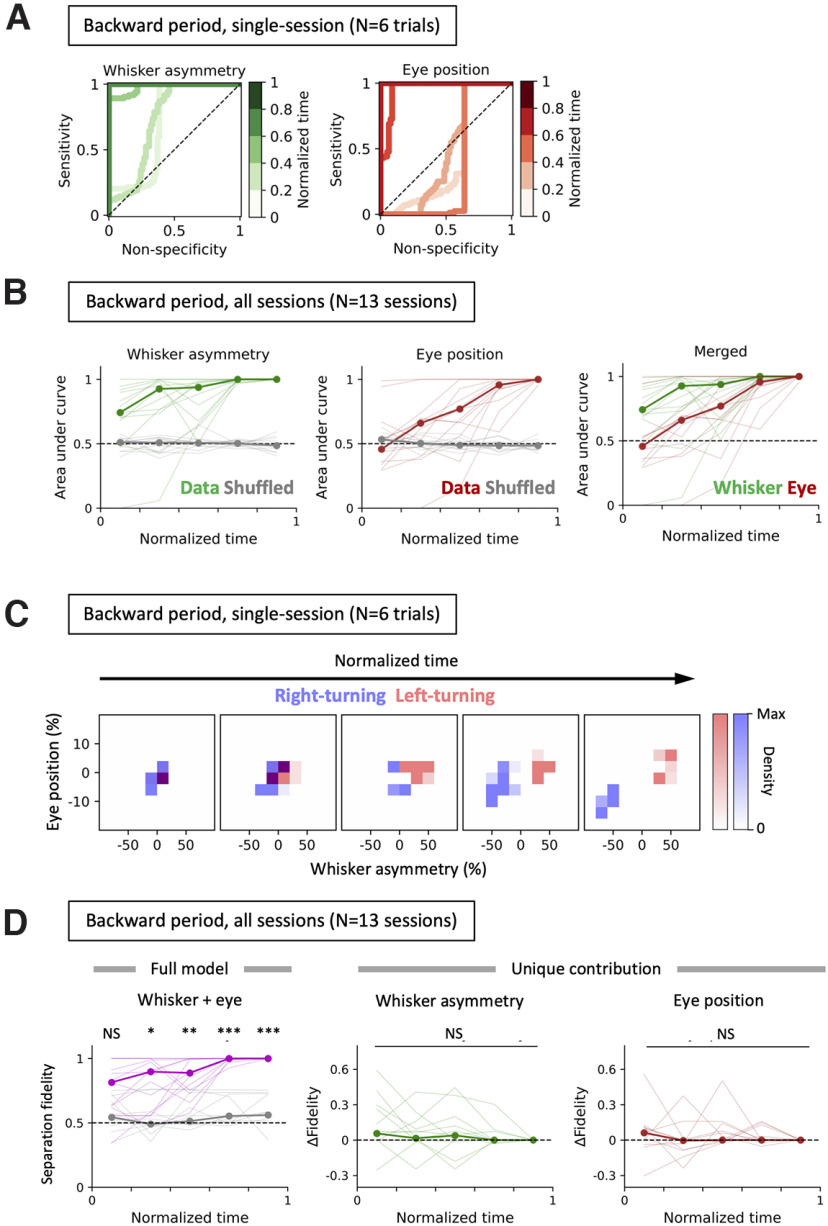
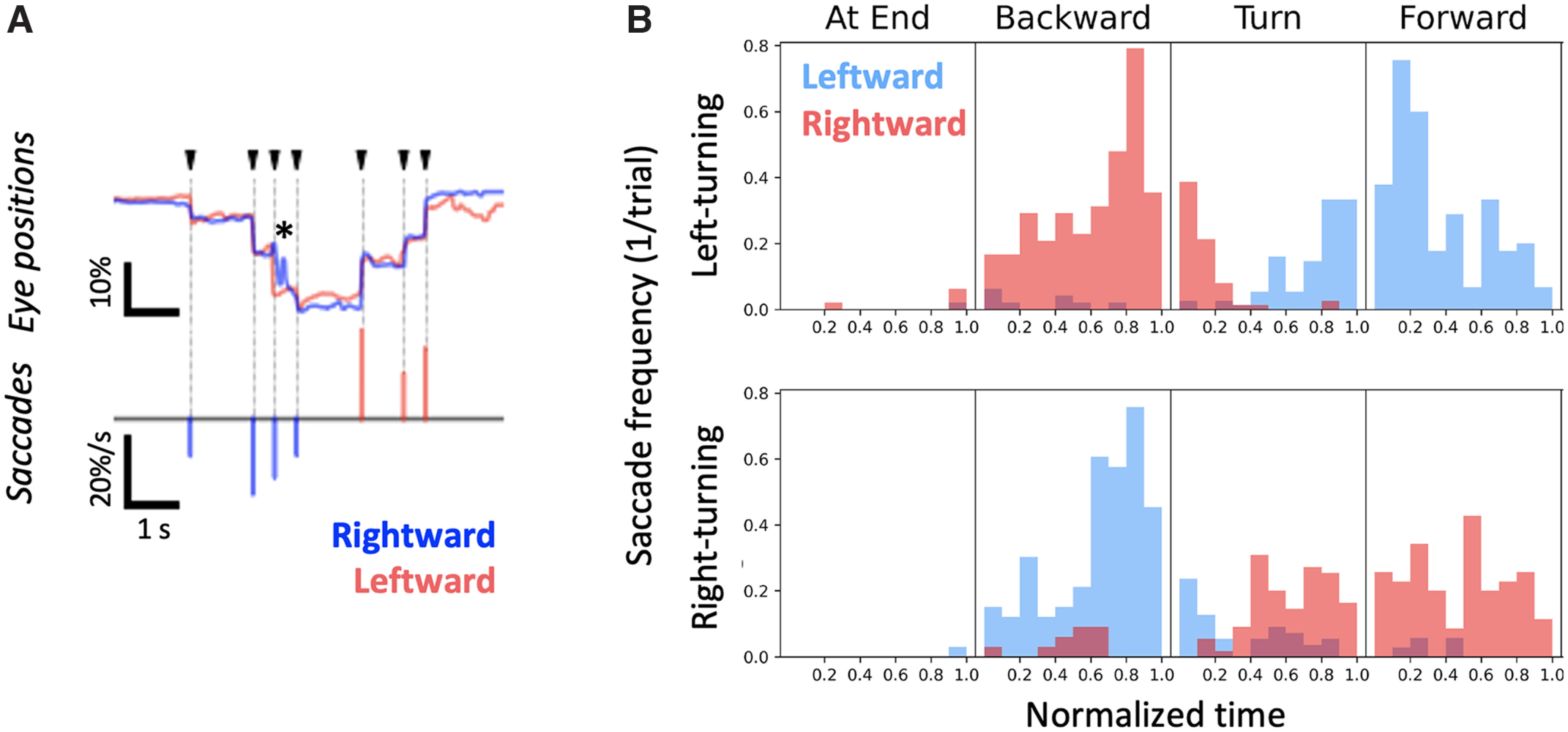
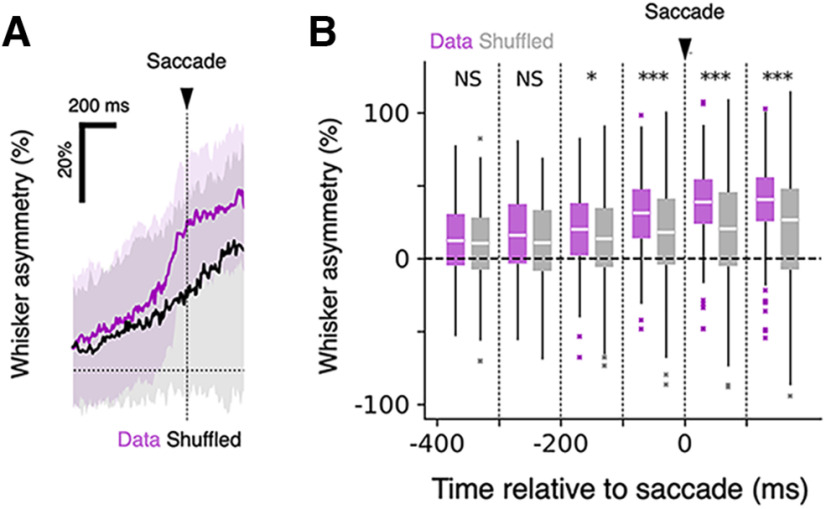
Navigation through complex environments requires motor planning, motor preparation, and the coordination between multiple sensory-motor modalities. For example, the stepping motion when we walk is coordinated with motion of the torso, arms, head, and eyes. In rodents, movement of the animal through the environment is coordinated with whisking. Even head-fixed mice navigating a plus maze position their whiskers asymmetrically with the bilateral asymmetry signifying the upcoming turn direction. Here we report that, in addition to moving their whiskers, on every trial mice also move their eyes conjugately in the direction of the upcoming turn. Not only do mice move their eyes, but they coordinate saccadic eye movement with the asymmetric positioning of the whiskers. Our analysis shows that asymmetric positioning of whiskers predicted the turn direction that mice will make at an earlier stage than eye movement. Consistent with these results, our observations also revealed that whisker asymmetry increases before saccadic eye movement. Importantly, this work shows that when rodents plan for active behavior, their motor plans can involve both eye and whisker movement. We conclude that, when mice are engaged in and moving through complex real-world environments, their behavioral state can be read out in the movement of both their whiskers and eyes.
在复杂环境中导航需要运动规划、运动准备以及多个感觉运动模态之间的协调。例如,我们在行走时的踏步动作与躯干、手臂、头部和眼睛的运动协调一致。在啮齿动物中,动物在环境中的运动与胡须的摆动协调一致。即使是头部固定的老鼠在穿越迷津时,也会不对称地摆动胡须,这种双侧不对称表示即将转弯的方向。在这里,我们报告说,除了移动胡须外,老鼠在每次试验中还会将眼睛共轭地转向即将转弯的方向。老鼠不仅移动眼睛,而且还协调扫视眼动与胡须的不对称定位。我们的分析表明,胡须的不对称定位比眼动更早地预测了老鼠将要转弯的方向。与这些结果一致,我们的观察还表明,在扫视眼动之前,胡须不对称性增加。重要的是,这项工作表明,当啮齿动物计划主动行为时,它们的运动计划可以涉及眼睛和胡须的运动。我们的结论是,当老鼠在复杂的现实环境中参与并移动时,它们的行为状态可以从它们的胡须和眼睛的运动中读取出来。