Population Health Research Institute, St George's, University of London, London, UK.
IMBE, St George's, University of London, London, UK.
Crim Behav Ment Health. 2022 Jun;32(3):212-226. doi: 10.1002/cbm.2233. Epub 2022 Apr 5.
Emerging evidence suggests that distant placements and multiple moves may be detrimental to young people in care settings. Less is known about the characteristics of young people in secure care most affected by these processes.
This study examined distance from home and number of previous placements in English young people detained in secure care and their relationships with organisational and individual characteristics.
Data were derived from the (2016) cross-sectional National Adolescent Study census of English young people in secure care, which included 1322 young people across secure mental health, welfare and Youth Justice establishments. Associations were described with odds ratios/95% confidence intervals (OR/CI).
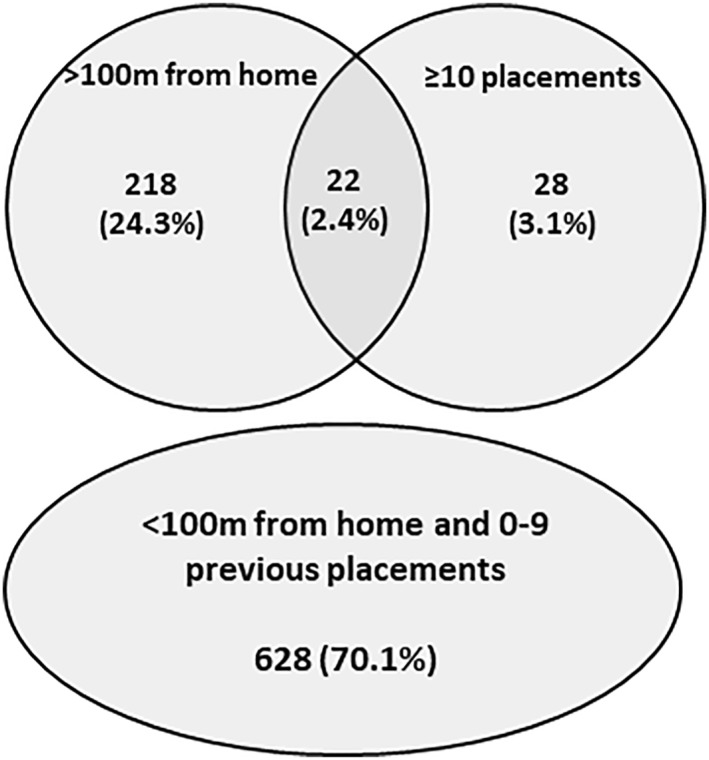
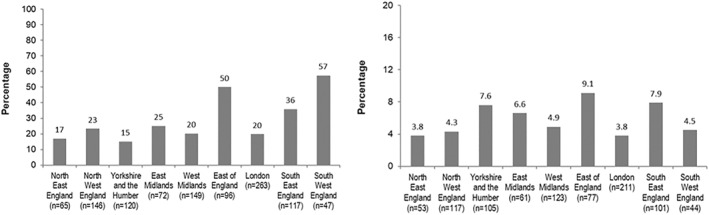
Overall, 285 young people (26.4%) were in secure placements over 100 miles from their family/local authority while 54 (5.6%) had 10 or more previous placements. These rates were higher in secure welfare than other settings (73.8%; OR (CI) = 9.62 (5.72, 16.18), 12.7%; OR (CI) = 2.76 (1.29, 5.91) respectively), and there was significant overlap between long-distance placement and multiple placements (n = 22; OR (CI) = 2.26 (1.27, 4.04)). Younger age and presence of neurodevelopmental disorder were also associated with long-distance placements while psychiatric diagnosis, previous secure placement, and previous service contact were linked to multiple placements.
Distant and/or multiple placements in young people in secure care appear common, particularly for those who are placed in secure welfare and who are younger and/or present with a psychiatric disorder. Multi-agency evaluations that capture the longitudinal experience of these vulnerable young people are needed to understand how undesirable patterns of placement in secure care occur and prevent future instances.
新出现的证据表明,对于安置在护理环境中的年轻人来说,远距离安置和多次转移可能是有害的。对于在安全护理中受这些过程影响最大的年轻人的特征,人们了解得较少。
本研究调查了被安置在安全护理中的英国年轻人与家乡的距离和之前的安置次数,并分析了这些因素与组织和个体特征的关系。
数据来自于(2016 年)对英国安全护理中年轻人的全国青少年研究横断面普查,其中包括来自安全心理健康、福利和青年司法机构的 1322 名年轻人。使用比值比/95%置信区间(OR/CI)描述关联。
总体而言,285 名年轻人(26.4%)被安置在距离家庭/地方当局 100 英里以上的地方,而 54 名年轻人(5.6%)有 10 次或更多次之前的安置经历。在安全福利机构中,这些比率高于其他机构(73.8%;OR(CI)=9.62(5.72,16.18),12.7%;OR(CI)=2.76(1.29,5.91)),并且远距离安置和多次安置之间存在显著重叠(n=22;OR(CI)=2.26(1.27,4.04))。年龄较小和存在神经发育障碍也与远距离安置有关,而精神科诊断、之前的安全安置和之前的服务接触与多次安置有关。
在安全护理中的年轻人中,远距离和/或多次安置似乎很常见,特别是对于那些被安置在安全福利机构中的年轻人,他们年龄较小,或存在精神科疾病。需要多机构评估,以了解这些弱势年轻人的纵向经历,从而了解安全护理中不良安置模式是如何发生的,并防止未来再次出现这种情况。