Department of Microbiology, Institute for Immunology and Immunological Diseases, Graduate School of Medical Science, Brain Korea 21 Project, Yonsei University College of Medicine, Seoul, South Korea.
Front Cell Infect Microbiol. 2022 Jul 28;12:891878. doi: 10.3389/fcimb.2022.891878. eCollection 2022.
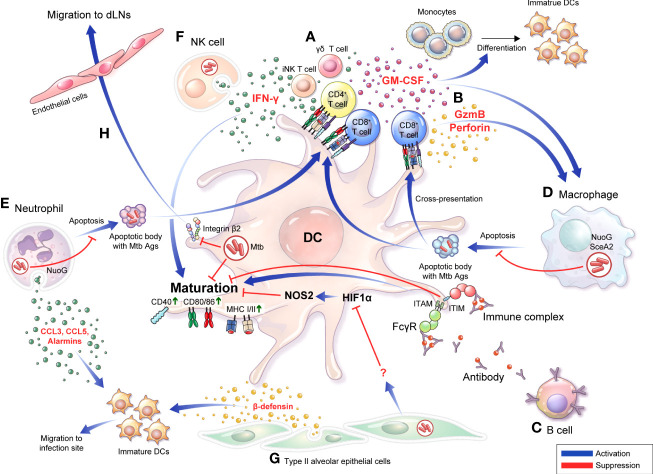
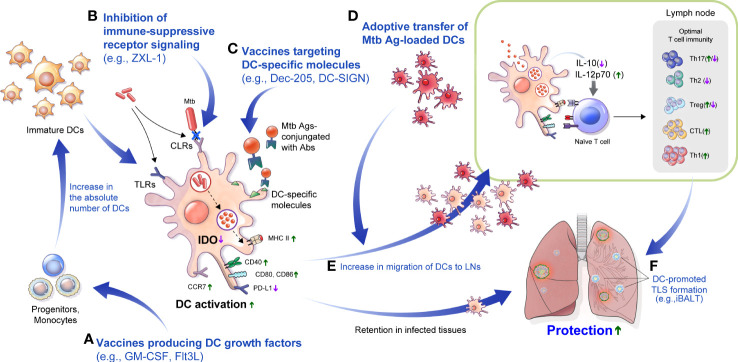
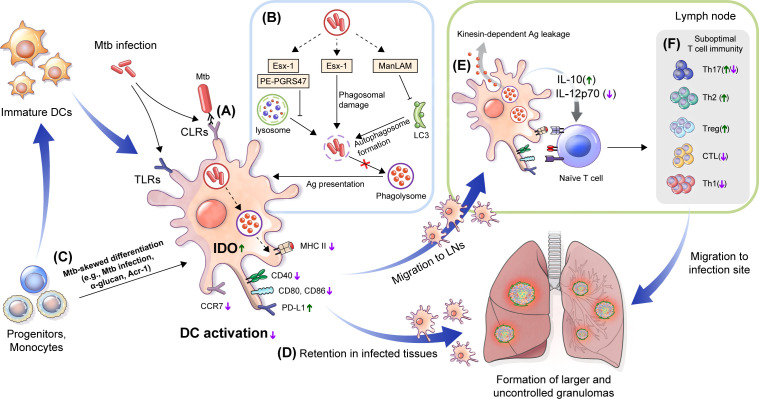
Dendritic cells (DCs) are principal defense components that play multifactorial roles in translating innate immune responses to adaptive immunity in (Mtb) infections. The heterogeneous nature of DC subsets follows their altered functions by interacting with other immune cells, Mtb, and its products, enhancing host defense mechanisms or facilitating pathogen evasion. Thus, a better understanding of the immune responses initiated, promoted, and amplified or inhibited by DCs in Mtb infection is an essential step in developing anti-tuberculosis (TB) control measures, such as host-directed adjunctive therapy and anti-TB vaccines. This review summarizes the recent advances in salient DC subsets, including their phenotypic classification, cytokine profiles, functional alterations according to disease stages and environments, and consequent TB outcomes. A comprehensive overview of the role of DCs from various perspectives enables a deeper understanding of TB pathogenesis and could be useful in developing DC-based vaccines and immunotherapies.
树突状细胞(DCs)是主要的防御成分,在翻译结核分枝杆菌(Mtb)感染中的先天免疫反应到适应性免疫方面发挥着多方面的作用。DC 亚群的异质性遵循其与其他免疫细胞、Mtb 及其产物相互作用的改变功能,增强宿主防御机制或促进病原体逃避。因此,更好地理解 DC 在 Mtb 感染中引发、促进和放大或抑制的免疫反应是制定抗结核(TB)控制措施的重要步骤,例如宿主定向辅助治疗和抗 TB 疫苗。本综述总结了最近在显著的 DC 亚群方面的进展,包括其表型分类、细胞因子谱、根据疾病阶段和环境的功能改变,以及随后的 TB 结果。从各个角度对 DCs 作用的全面概述使我们能够更深入地了解 TB 的发病机制,并可能有助于开发基于 DC 的疫苗和免疫疗法。