Value Evidence and Outcomes (Epidemiology), Global Medical R&D, GSK, Brentford, UK
Value Evidence and Outcomes (Real World Analytics), GSK, Brentford, UK.
BMJ Open Gastroenterol. 2022 Aug;9(1). doi: 10.1136/bmjgast-2021-000857.
In order to identify areas of unmet need in patients with primary biliary cholangitis (PBC), this study sought to use real-world observational healthcare data to characterise the burden in patients with PBC and in PBC patients with a recorded diagnosis of pruritus.
This retrospective, cross-sectional database study compared prevalence of prespecified comorbidities and medications in the PBC population and PBC-pruritus subpopulation with non-cases using an indirect standardisation approach. The PBC population was identified from the US IBM MarketScan Commercial Claims and Medicare Supplemental Database during 2016 using International Classification of Diseases 10th Revision, Clinical Modification codes (≥2 claims for PBC); the PBC-pruritus subpopulation additionally had ≥1 claim for pruritus during this period. Non-cases had no claims for PBC. Indirect age-sex standardised prevalence ratios (iSPR) and 95% confidence intervals (CIs) were calculated for prespecified comorbidities and medications recorded during 2017.
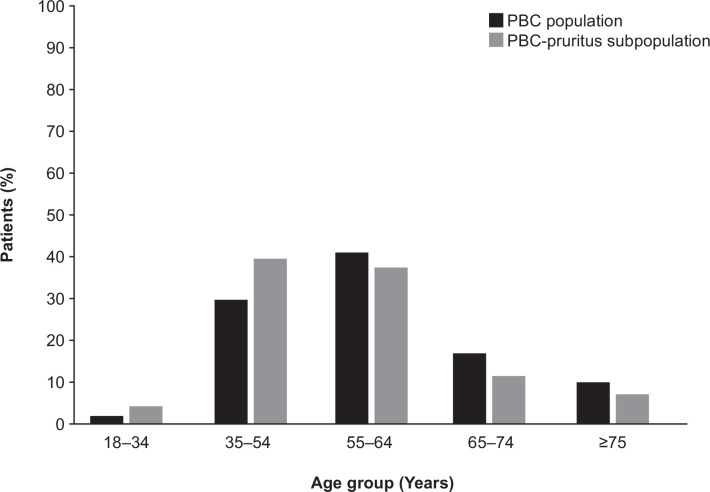
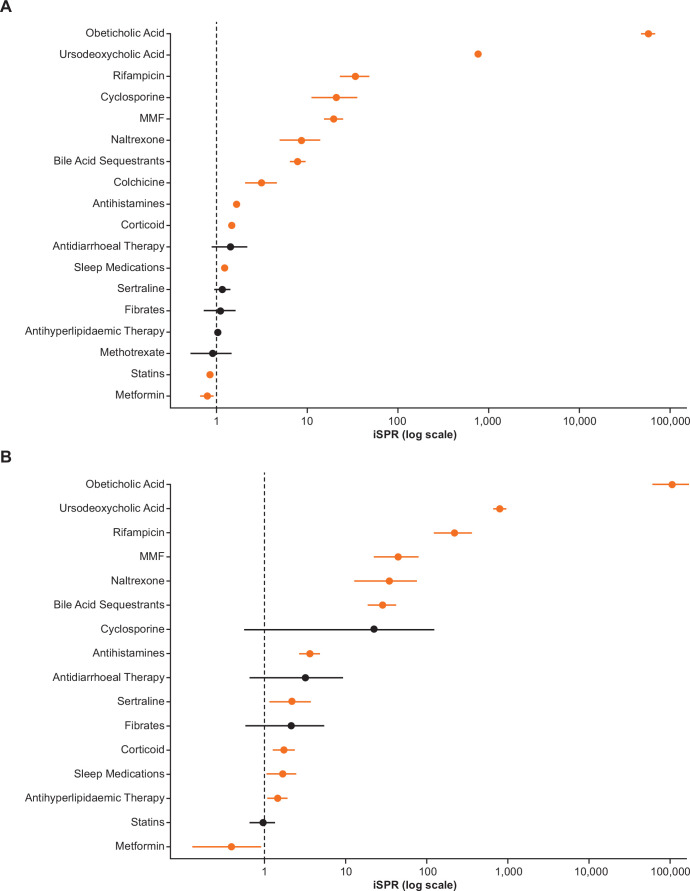
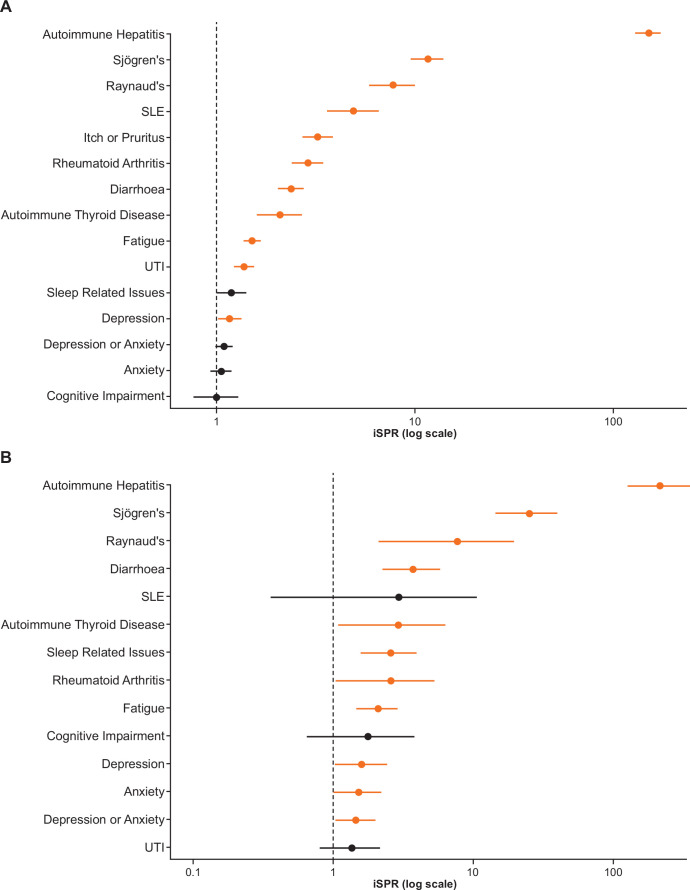
The PBC population (N=1963) and PBC-pruritus subpopulation (N=139) had significantly higher prevalence of fatigue (19.9%, iSPR (95% CI): 1.51 (1.36 to 1.66); 26.6%, 2.10 (1.48 to 2.90)), depression/anxiety (21.3%, 1.09 (0.99 to 1.20); 28.1%, 1.46 (1.04 to 2.00)) and sleep-related issues (6.9%, 1.18 (0.99 to 1.40); 14.4%, 2.58 (1.58 to 3.99)) compared with non-cases. Bile acid sequestrants were prescribed in 5.8% and 18.0% of the PBC and PBC-pruritus populations, respectively. In general, a higher prevalence of comorbidities and medication use was observed in the PBC-pruritus subpopulation compared with the PBC population and non-cases.
Despite availability of treatments for PBC, the PBC population had a higher burden of comorbidities than non-cases. This burden was even greater among the PBC-pruritus subpopulation, with a particularly high prevalence of sleep disorders and depression/anxiety. Despite this, pruritus remains undertreated highlighting a need for treatments specifically indicated for cholestatic pruritus.
为了确定原发性胆汁性胆管炎(PBC)患者未满足的需求领域,本研究旨在利用真实世界的观察性医疗保健数据来描述 PBC 患者以及记录有瘙痒症的 PBC 患者的负担。
本回顾性、横断面数据库研究使用间接标准化方法比较了 PBC 人群和 PBC 瘙痒症亚人群与非病例人群中预先规定的合并症和药物的患病率。使用国际疾病分类第 10 次修订版临床修正(≥2 次 PBC 索赔),于 2016 年从美国 IBM MarketScan 商业索赔和医疗保险补充数据库中确定 PBC 人群;在此期间,PBC 瘙痒症亚人群还至少有 1 次瘙痒症索赔。非病例无 PBC 索赔。在 2017 年记录的预先规定的合并症和药物中,计算了特定年龄和性别的间接标准化患病率比(iSPR)和 95%置信区间(CI)。
PBC 人群(N=1963)和 PBC 瘙痒症亚人群(N=139)的疲劳患病率显著更高(19.9%,iSPR(95%CI):1.51(1.36 至 1.66);26.6%,2.10(1.48 至 2.90))、抑郁/焦虑(21.3%,1.09(0.99 至 1.20);28.1%,1.46(1.04 至 2.00))和睡眠相关问题(6.9%,1.18(0.99 至 1.40);14.4%,2.58(1.58 至 3.99))与非病例相比。分别有 5.8%和 18.0%的 PBC 和 PBC 瘙痒症人群开了胆汁酸螯合剂。一般来说,与 PBC 人群和非病例相比,PBC 瘙痒症亚人群的合并症和药物使用的患病率更高。
尽管有治疗 PBC 的方法,但 PBC 人群的合并症负担高于非病例。在 PBC 瘙痒症亚人群中,这种负担甚至更大,尤其是睡眠障碍和抑郁/焦虑的患病率更高。尽管如此,瘙痒症的治疗仍然不足,这凸显了对专门针对胆汁淤积性瘙痒症的治疗方法的需求。