Chen Sisi, Chen Gaoying, Xu Fang, Sun Beibei, Chen Xinyi, Hu Wei, Li Fei, Syeda Madiha Zahra, Chen Haixia, Wu Youqian, Wu Peng, Jing Ruirui, Geng Xinwei, Zhang Lingling, Tang Longguang, Li Wen, Chen Zhihua, Zhang Chao, Sun Jie, Chen Wei, Shen Huahao, Ying Songmin
International Institutes of Medicine, the Fourth Affiliated Hospital of Zhejiang University School of Medicine, Yiwu, Zhejiang, China.
Department of Pharmacology and Department of Respiratory and Critical Care Medicine of the Second Affiliated Hospital, Zhejiang University School of Medicine, Key Laboratory of Respiratory Disease of Zhejiang Province, Hangzhou, Zhejiang, China.
Cell Discov. 2022 Aug 16;8(1):80. doi: 10.1038/s41421-022-00433-y.
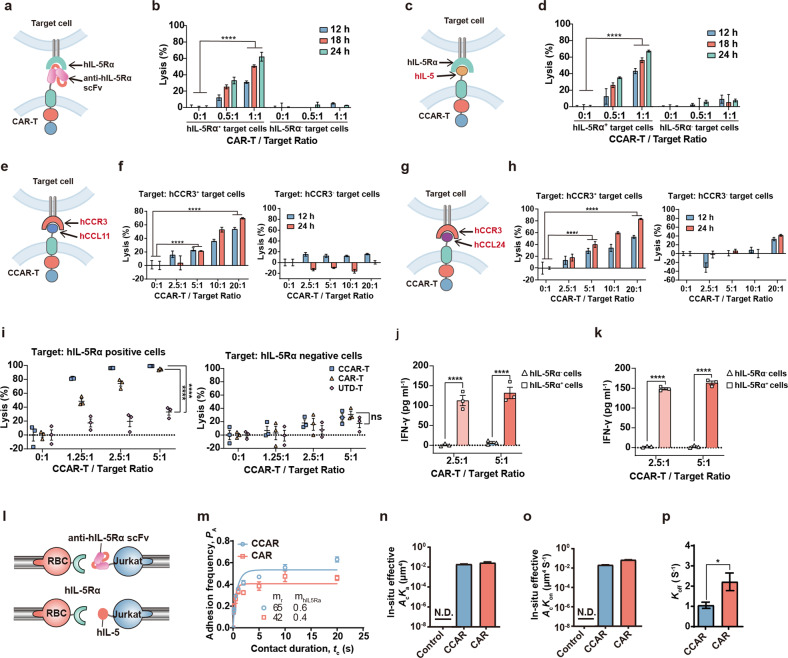
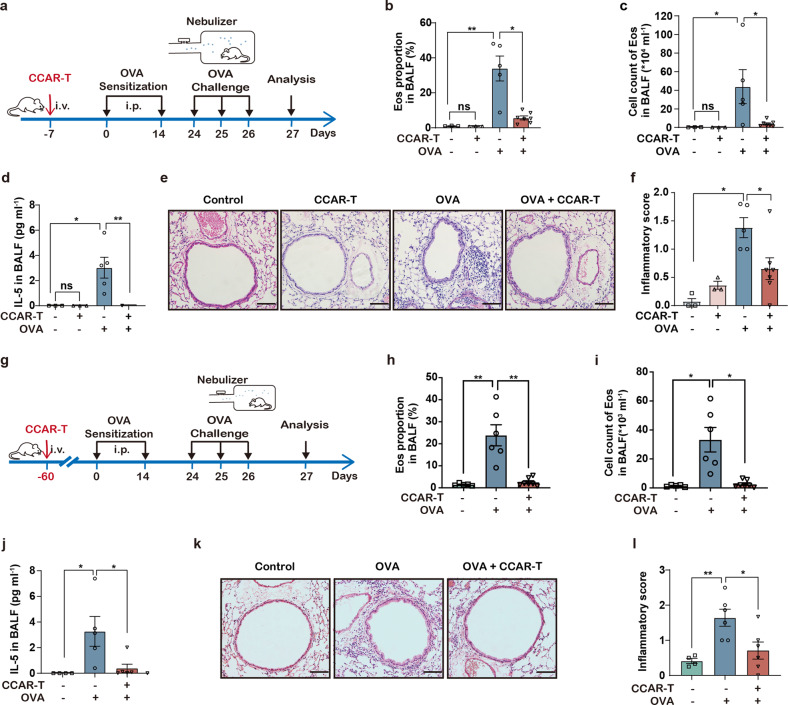
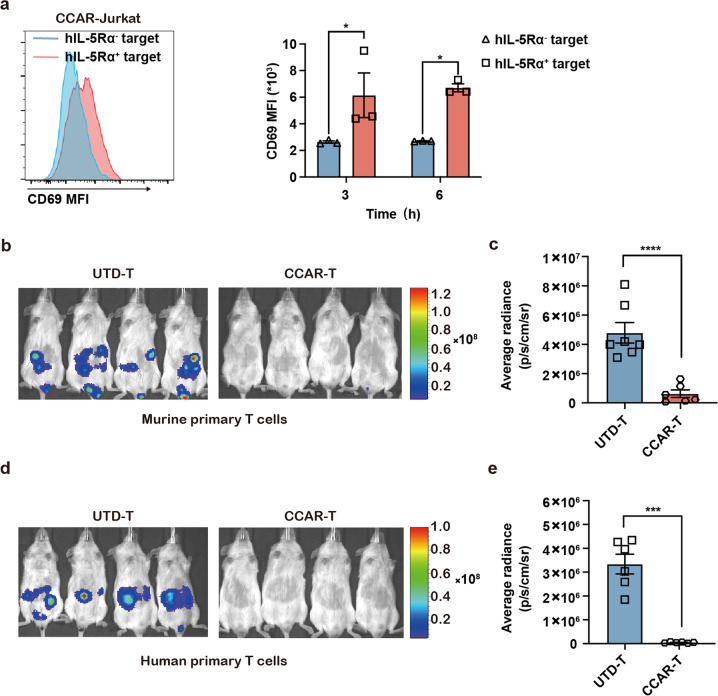
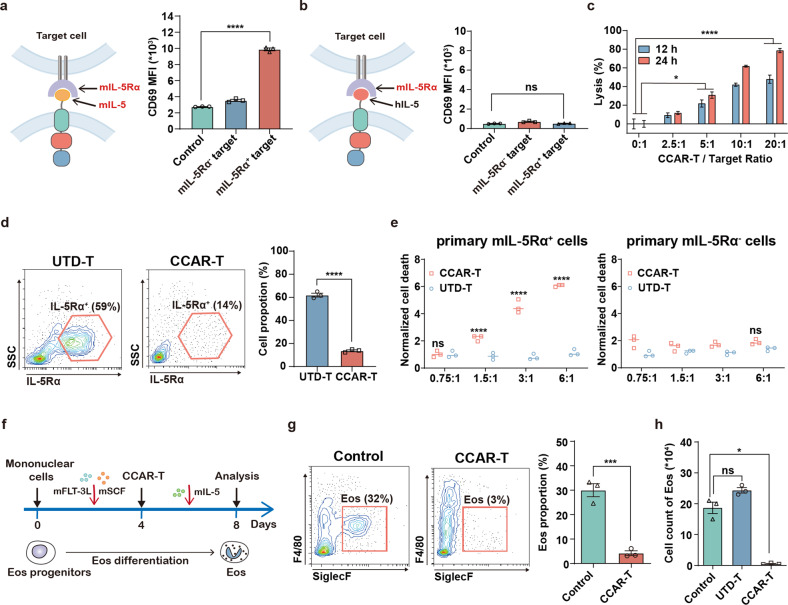
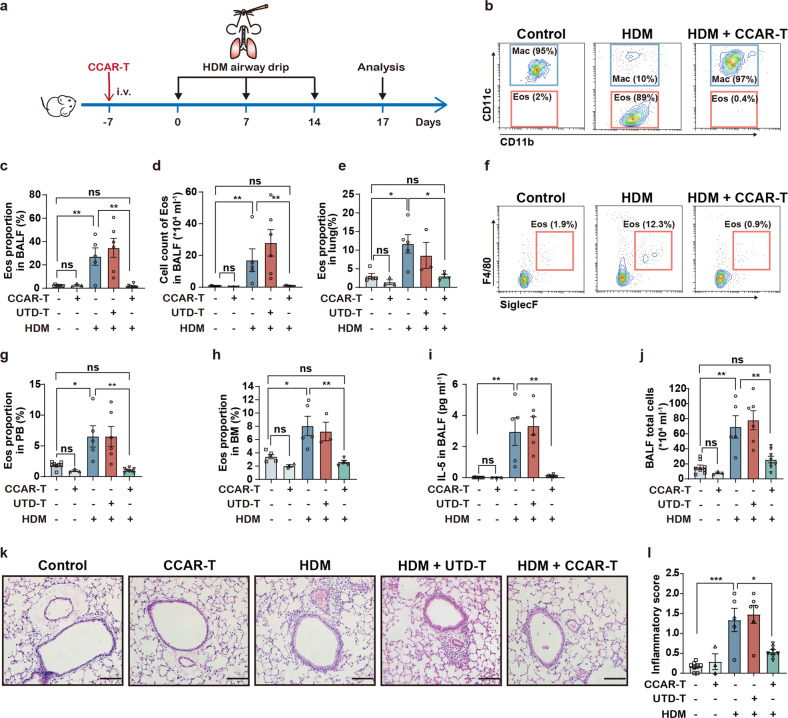
Severe eosinophilic asthma (SEA) is a therapy-resistant respiratory condition with poor clinical control. Treatment efficacy and patient compliance of current therapies remain unsatisfactory. Here, inspired by the remarkable success of chimeric antigen receptor-based cellular adoptive immunotherapies demonstrated for the treatment of a variety of malignant tumors, we engineered a cytokine-anchored chimeric antigen receptor T (CCAR-T) cell system using a chimeric IL-5-CD28-CD3ζ receptor to trigger T-cell-mediated killing of eosinophils that are elevated during severe asthma attacks. IL-5-anchored CCAR-T cells exhibited selective and effective killing capacity in vitro and restricted eosinophil differentiation with apparent protection against allergic airway inflammation in two mouse models of asthma. Notably, a single dose of IL-5-anchored CCAR-T cells resulted in persistent protection against asthma-related conditions over three months, significantly exceeding the typical therapeutic window of current mAb-based treatments in the clinics. This study presents a cell-based treatment strategy for SEA and could set the stage for a new era of precision therapies against a variety of intractable allergic diseases in the future.
重度嗜酸性粒细胞性哮喘(SEA)是一种临床控制不佳的难治性呼吸道疾病。目前治疗方法的治疗效果和患者依从性仍不尽人意。在此,受基于嵌合抗原受体的细胞过继性免疫疗法在治疗多种恶性肿瘤方面取得显著成功的启发,我们构建了一种细胞因子锚定嵌合抗原受体T(CCAR-T)细胞系统,该系统使用嵌合IL-5-CD28-CD3ζ受体来触发T细胞介导的对重度哮喘发作期间升高的嗜酸性粒细胞的杀伤。在两种哮喘小鼠模型中,IL-5锚定的CCAR-T细胞在体外表现出选择性和有效的杀伤能力,并限制嗜酸性粒细胞分化,对过敏性气道炎症具有明显的保护作用。值得注意的是,单剂量的IL-5锚定CCAR-T细胞在三个月内对哮喘相关病症产生了持续保护作用,显著超过了目前临床上基于单克隆抗体治疗的典型治疗窗口。本研究提出了一种针对SEA的基于细胞的治疗策略,并可能为未来针对各种难治性过敏性疾病的精准治疗新时代奠定基础。