Poznan University of Medical Sciences, Poznan, Poland.
Department of Orthopaedics, University of Illinois at Chicago, Molecular Biology Research Building, 900 S. Ashland Ave. Room# 3356, Chicago, IL, 60607, USA.
Arch Immunol Ther Exp (Warsz). 2022 Aug 17;70(1):20. doi: 10.1007/s00005-022-00656-7.
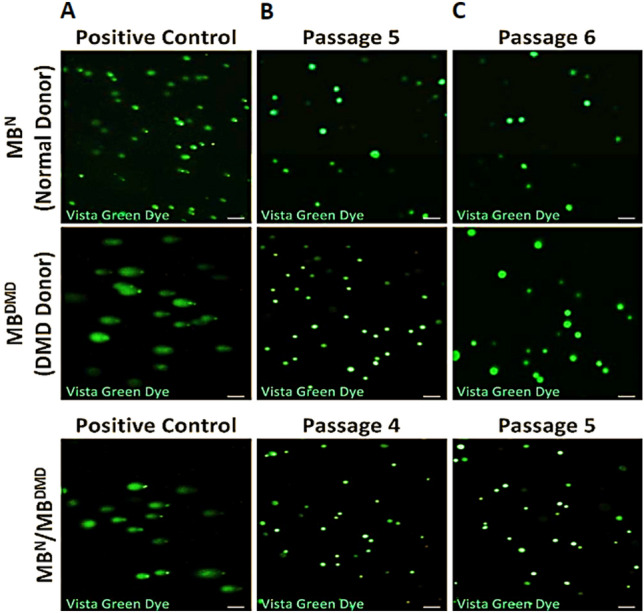
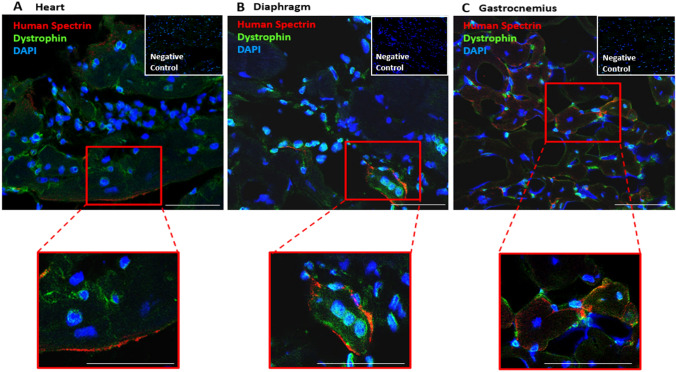
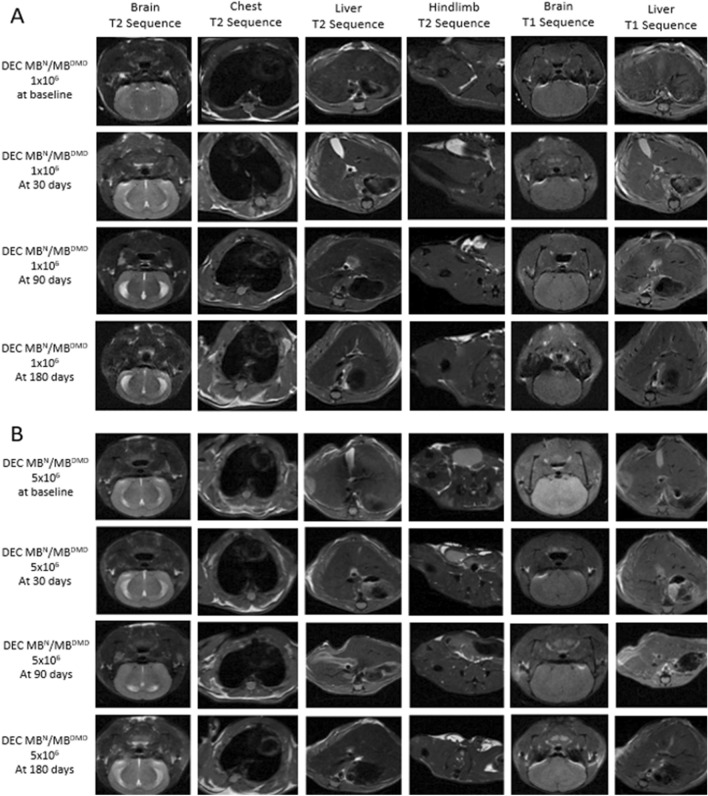
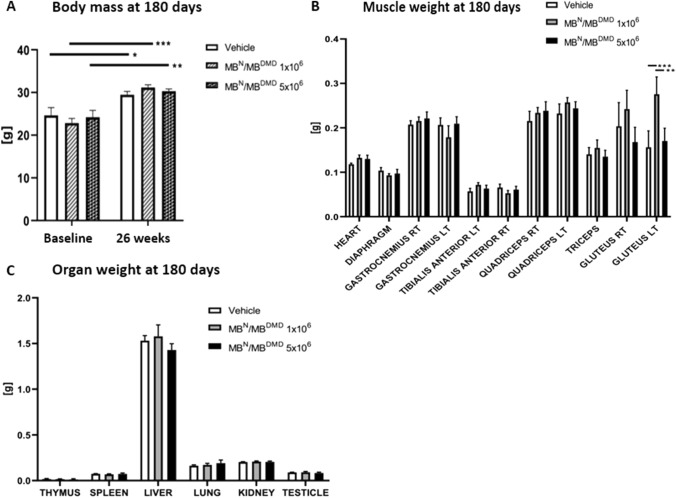
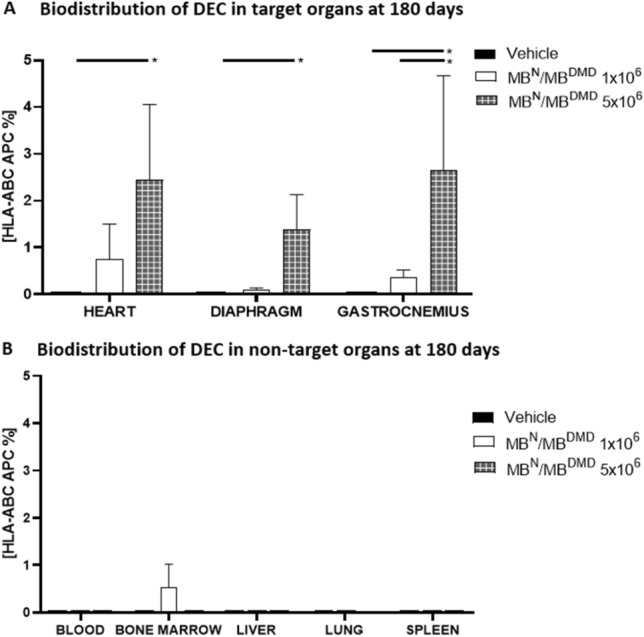
Duchenne muscular dystrophy (DMD) is a lethal disease caused by X-linked mutations in the dystrophin gene. Dystrophin deficiency results in progressive degeneration of cardiac, respiratory and skeletal muscles leading to premature death due to cardiopulmonary complications. Currently, no cure exists for DMD. Based on our previous reports confirming a protective effect of human dystrophin expressing chimeric (DEC) cell therapy on cardiac, respiratory, and skeletal muscle function after intraosseous administration, now we assessed long-term safety and biodistribution of human DEC therapy for potential clinical applications in DMD patients. Safety of different DEC doses (1 × 10 and 5 × 10) was assessed at 180 days after systemic-intraosseous administration to mdx/scid mice, a model of DMD. Assessments included: single cell gel electrophoresis assay (COMET assay) to confirm lack of genetic toxicology, magnetic resonance imaging (MRI) for tumorigenicity, and body, muscle and organ weights. Human DEC biodistribution to the target (heart, diaphragm, gastrocnemius muscle) and non-target (blood, bone marrow, lung, liver, spleen) organs was detected by flow cytometry assessment of HLA-ABC markers. Human origin of dystrophin was verified by co-localization of dystrophin and human spectrin by immunofluorescence. No complications were observed after intraosseous transplant of human DEC. COMET assay of donors and fused DEC cells confirmed lack of DNA damage. Biodistribution analysis of HLA-ABC expression revealed dose-dependent presence of human DEC cells in target organs, whereas negligible presence was detected in non-target organs. Human origin of dystrophin in the heart, diaphragm and gastrocnemius muscle was confirmed by co-localization of dystrophin expression with human spectrin. MRI revealed no evidence of tumor formation. Body mass and muscle and organ weights were stable and comparable to vehicle controls, further confirming DEC safety at 180 days post- transplant. This preclinical study confirmed long-term local and systemic safety of human DEC therapy at 180 days after intraosseous administration. Thus, DEC can be considered as a novel myoblast based advanced therapy medicinal product for DMD patients.
杜氏肌营养不良症(DMD)是一种致命疾病,由 X 连锁基因突变引起。肌营养不良蛋白的缺乏导致心脏、呼吸和骨骼肌进行性退化,导致心肺并发症导致过早死亡。目前,DMD 尚无治愈方法。基于我们之前的报告,确认人源肌营养不良蛋白表达嵌合(DEC)细胞疗法对骨髓内给药后心脏、呼吸和骨骼肌功能的保护作用,现在我们评估了人源 DEC 疗法用于 DMD 患者潜在临床应用的长期安全性和生物分布。在 mdx/scid 小鼠(DMD 模型)中,评估了不同 DEC 剂量(1×10 和 5×10)的安全性,在系统-骨髓内给药后 180 天进行评估。评估包括:单细胞凝胶电泳分析(COMET 分析)以确认缺乏遗传毒性,磁共振成像(MRI)以评估致瘤性,以及体重、肌肉和器官重量。通过 HLA-ABC 标志物的流式细胞术评估检测人源 DEC 向靶(心脏、膈肌、腓肠肌)和非靶(血液、骨髓、肺、肝、脾)器官的生物分布。通过免疫荧光共定位肌营养不良蛋白和人血影蛋白验证肌营养不良蛋白的人源起源。骨髓内移植人源 DEC 后未观察到并发症。供体和融合 DEC 细胞的 COMET 分析证实无 DNA 损伤。HLA-ABC 表达的生物分布分析显示,靶器官中存在剂量依赖性的人源 DEC 细胞,而非靶器官中则检测到可忽略的存在。心脏、膈肌和腓肠肌中肌营养不良蛋白的人源起源通过肌营养不良蛋白表达与人血影蛋白的共定位得到证实。MRI 未显示肿瘤形成的证据。体重和肌肉及器官重量稳定且与载体对照相当,进一步证实移植后 180 天 DEC 的安全性。这项临床前研究证实了骨髓内给药后 180 天人源 DEC 治疗的长期局部和全身安全性。因此,DEC 可被视为 DMD 患者的新型肌母细胞基于的先进治疗药物产品。