Duong Nikki, Healey Marcus, Patel Kunal, Strife Brian J, Sterling Richard K
Division of Gastroenterology, Hepatology, and Nutrition, Virginia Commonwealth University Medical Center, Richmond, VA 23219, United States.
Department of Internal Medicine, Virginia Commonwealth University Medical Center, Richmond, VA 23219, United States.
World J Hepatol. 2022 Jun 27;14(6):1200-1209. doi: 10.4254/wjh.v14.i6.1200.
Transjugular intrahepatic portosystemic shunt (TIPS) is used to treat complications of portal hypertension, such as ascites and variceal bleeding (VB). While liver doppler ultrasound (DUS) is used to assess TIPS patency, trans-shunt venography (TSV) is the gold standard.
To determine the accuracy of DUS to assess TIPS dysfunction and for need for revision.
Retrospective review of patients referred for TIPS revision from 2008-2021. Demographics, DUS parameters at baseline and at the DUS preceding TIPS revision, TSV data were collected. Receiver operating characteristics curves, sensitivity, specificity, performance for doppler to predict need for revision were performed. Univariate and multivariate analyses were used to predict clinical factors associated with need for TIPS revision.
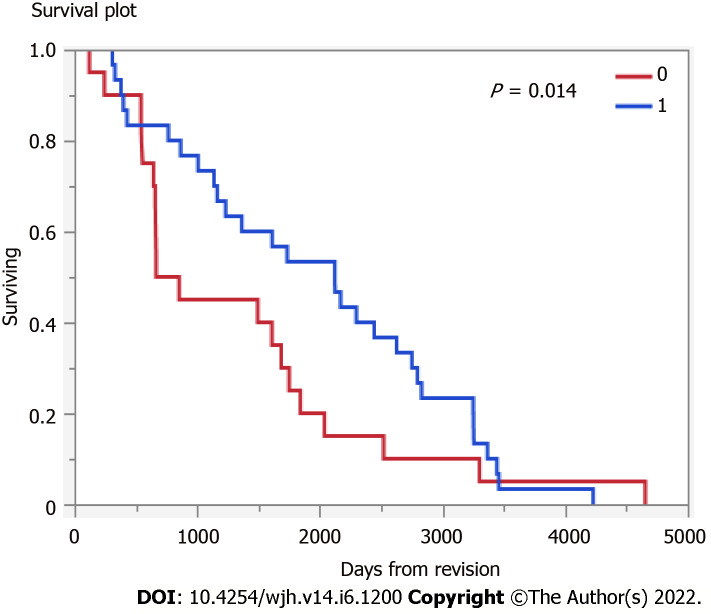
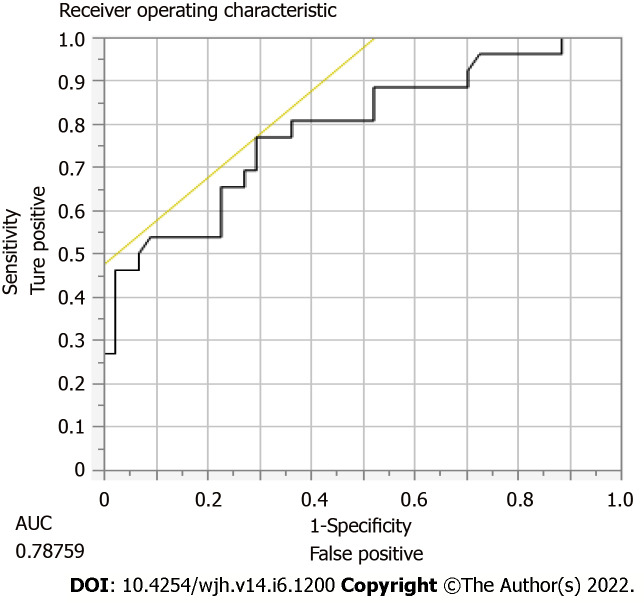
The cohort consisted of 89 patients with cirrhosis (64% men, 76% white, 31% alcohol as etiology); median age 59 years. Indication for initial TIPS were VB (41%), refractory ascites (51%), and other (8%). TIPS was revised in 44%. On univariate analysis, factors associated with need for TIPS revision were male ( 0.03), initial indication for TIPS ( 0.05) and indication for revision ( 0.01). Revision of TIPS was associated with lower mortality (26% 46%) and significantly lower rates of transplant (13% 24%; = 0.1). In predicting need for TIPS revision, DUS has a 40% sensitivity, 45% specificity, PPV 78%, and NPV 14%. The most accurate location for shunt velocity measure was distal velocity (Area under the curve: 0.79; 0.0007).
DUS has poor overall sensitivity and specificity in predicting need for TIPS revision. Non-invasive methods of predicting TIPS dysfunction are needed since those needing TIPS revision had better survival.
经颈静脉肝内门体分流术(TIPS)用于治疗门静脉高压并发症,如腹水和静脉曲张破裂出血(VB)。虽然肝脏多普勒超声(DUS)用于评估TIPS通畅情况,但经分流静脉造影(TSV)是金标准。
确定DUS评估TIPS功能障碍及是否需要翻修的准确性。
回顾性分析2008年至2021年因TIPS翻修而转诊的患者。收集人口统计学资料、基线时及TIPS翻修前DUS的参数、TSV数据。绘制受试者工作特征曲线,计算敏感性、特异性、多普勒预测翻修需求的性能。采用单因素和多因素分析预测与TIPS翻修需求相关的临床因素。
该队列包括89例肝硬化患者(64%为男性,76%为白人,31%病因是酒精);中位年龄59岁。初始TIPS指征为VB(41%)、难治性腹水(51%)和其他(8%)。44%的患者进行了TIPS翻修。单因素分析显示,与TIPS翻修需求相关的因素为男性(P = 0.03)、初始TIPS指征(P = 0.05)和翻修指征(P = 0.01)。TIPS翻修与较低的死亡率(26%对46%)和显著较低的移植率相关(13%对24%;P = 0.1)。在预测TIPS翻修需求方面,DUS的敏感性为40%,特异性为45%,阳性预测值为78%,阴性预测值为14%。分流速度测量最准确的位置是远端速度(曲线下面积:0.79;P < 0.0007)。
DUS在预测TIPS翻修需求方面总体敏感性和特异性较差。由于需要TIPS翻修的患者生存率更高,因此需要非侵入性方法来预测TIPS功能障碍。