Xu Huawei, Yang Xiaoyi, Zhang Yanwen, Wang Huihui, Wu Shiyang, Zhang Zhuoyan, Ahammed Golam Jalal, Zhao Chunzhao, Liu Hao
College of Agriculture, Henan University of Science and Technology, Luoyang, China.
College of Horticulture and Plant Protection, Henan University of Science and Technology, Luoyang, China.
Front Plant Sci. 2022 Aug 1;13:967031. doi: 10.3389/fpls.2022.967031. eCollection 2022.
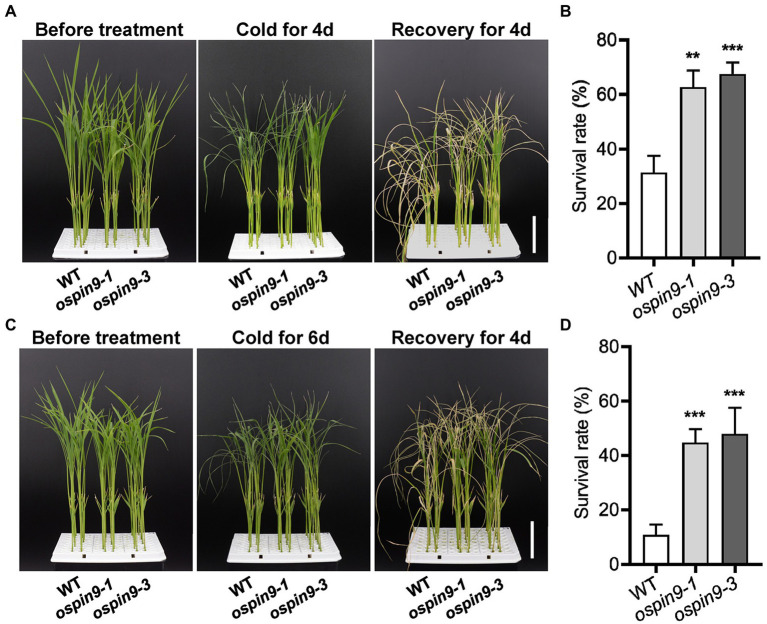
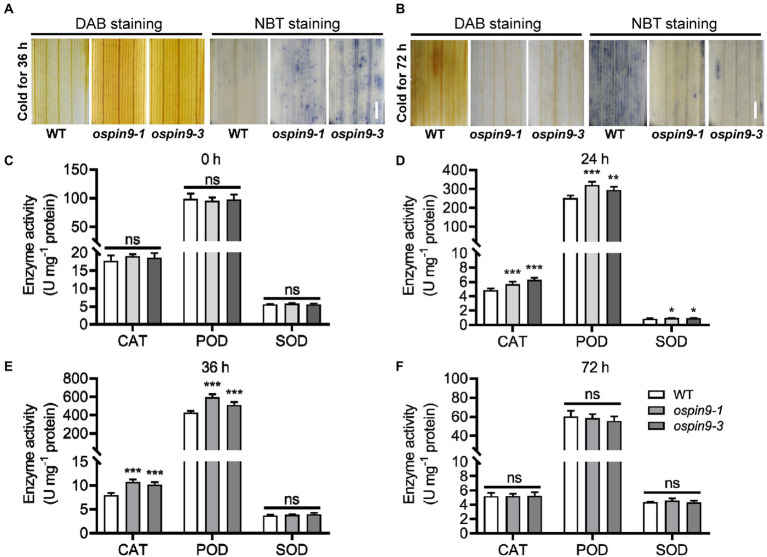
Phytohormone auxin plays a vital role in plant development and responses to environmental stresses. The spatial and temporal distribution of auxin mainly relies on the polar distribution of the PIN-FORMED (PIN) auxin efflux carriers. In this study, we dissected the functions of , a monocot-specific auxin efflux carrier gene, in modulating chilling tolerance in rice. The results showed that expression was dramatically and rapidly suppressed by chilling stress (4°C) in rice seedlings. The homozygous mutants were generated by CRISPR/Cas9 technology and employed for further research. mutant roots and shoots were less sensitive to 1-naphthaleneacetic acid (NAA) and -1-naphthylphthalamic acid (NPA), indicating the disturbance of auxin homeostasis in the mutants. The chilling tolerance assay showed that mutants were more tolerant to chilling stress than wild-type (WT) plants, as evidenced by increased survival rate, decreased membrane permeability, and reduced lipid peroxidation. However, the expression of well-known ()/ ()-dependent transcriptional regulatory pathway and Ca signaling genes was significantly induced only under normal conditions, implying that defense responses in mutants have probably been triggered in advance under normal conditions. Histochemical staining of reactive oxygen species (ROS) by 3'3-diaminobenzidine (DAB) and nitroblue tetrazolium (NBT) showed that mutants accumulated more ROS than WT at the early stage of chilling stress, while less ROS was observed at the later stage of chilling treatment in mutants. Consistently, antioxidant enzyme activity, including catalase (CAT), peroxidase (POD), and superoxide dismutase (SOD), improved significantly during the early chilling treatments, while was kept similar to WT at the later stage of chilling treatment, implying that the enhanced chilling tolerance of mutants is mainly attributed to the earlier induction of ROS and the improved ROS scavenging ability at the subsequent stages of chilling treatment. In summary, our results strongly suggest that the gene regulates chilling tolerance by modulating ROS homeostasis in rice.
植物激素生长素在植物发育和对环境胁迫的响应中起着至关重要的作用。生长素的时空分布主要依赖于PIN形成(PIN)生长素外流载体的极性分布。在本研究中,我们剖析了单子叶植物特有的生长素外流载体基因在调节水稻耐冷性中的功能。结果表明,水稻幼苗在低温胁迫(4°C)下,其表达受到显著且快速的抑制。通过CRISPR/Cas9技术产生了纯合突变体,并用于进一步研究。突变体的根和芽对1-萘乙酸(NAA)和N-1-萘基邻苯二甲酸(NPA)的敏感性较低,这表明突变体中生长素稳态受到干扰。耐冷性试验表明,突变体比野生型(WT)植物更耐低温胁迫,存活率增加、膜通透性降低和脂质过氧化减少证明了这一点。然而,只有在正常条件下,著名的依赖于ICE1(诱导C-重复结合因子表达1)/CBF(C-重复结合因子)的转录调控途径和钙信号基因的表达才会显著诱导,这意味着突变体中的防御反应可能在正常条件下就已提前触发。用3,3'-二氨基联苯胺(DAB)和氮蓝四唑(NBT)对活性氧(ROS)进行组织化学染色表明,在低温胁迫早期,突变体比野生型积累更多的ROS,而在低温处理后期,突变体中观察到的ROS较少。一致地,包括过氧化氢酶(CAT)、过氧化物酶(POD)和超氧化物歧化酶(SOD)在内的抗氧化酶活性在早期低温处理期间显著提高,而在低温处理后期与野生型保持相似,这意味着突变体增强的耐冷性主要归因于早期ROS诱导和低温处理后续阶段ROS清除能力的提高。总之,我们的结果有力地表明,该基因通过调节水稻中的ROS稳态来调控耐冷性。