Obstetrics Department, Hangzhou Women's Hospital, Hangzhou, China.
Department of Gastroenterology, Children's Hospital, Zhejiang University School of Medicine, Hangzhou, China.
PeerJ. 2022 Aug 12;10:e13834. doi: 10.7717/peerj.13834. eCollection 2022.
Intrapartum fever is a well-known risk factor for adverse perinatal outcomes. In this study, we evaluated the clinical features for intrapartum maternal fever and investigated the risk factors for neonatal early-onset sepsis (EOS) with intrapartum maternal fever.
This retrospective cohort study involved a total of 568 neonates born to mothers with intrapartum maternal fever (temperature peak ≥38 degree Celsius) in Hangzhou Women's Hospital from January 1st to December 31st, 2019. Neonates were assigned to the EOS and non-sepsis groups based on the diagnostic criteria for early-onset neonatal sepsis,. Demographic data, clinical information and laboratory test results were evaluated to assess the risk factors for EOS.
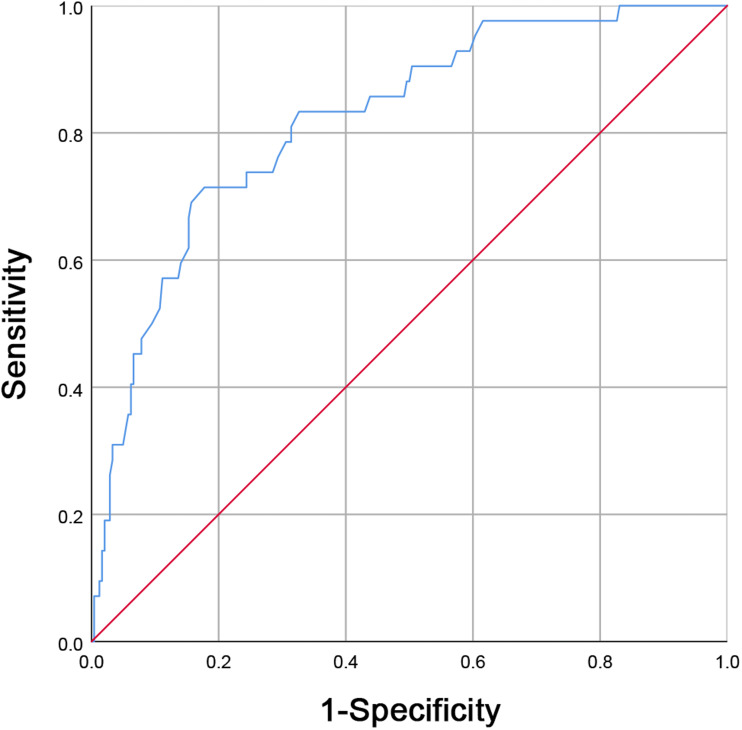
A total of 568 neonates were included in this study, 84 of whom were diagnosed with EOS. The EOS group was significantly different from the non-sepsis group in 11 items including the both white blood cell (WBC) count and C-reactive protein (CRP) level of the mother before delivery ( < 0.05). A logistic regression analysis revealed that a high maternal WBC count before delivery (OR = 3.261, = 0.019) and a maternal histological chorioamnionitis (HCA) diagnosis (OR = 5.608, = 0.002) were independent risk factors for EOS. The optimal cut-off value for WBC (before delivery) was 16.75 × 10*/L for EOS, according to receiver operating characteristic analysis (area under curve was 0.821).
Elevated prenatal maternal WBC counts and maternal HCA diagnosis are both independently associated with EOS. Prenatal maternal WBC counts can be used as a sensitive indicator to predict EOS early.
产时发热是围产儿不良结局的已知危险因素。本研究评估了产时产妇发热的临床特征,并探讨了产时发热产妇新生儿早发性败血症(EOS)的危险因素。
本回顾性队列研究共纳入 2019 年 1 月 1 日至 12 月 31 日在杭州市妇产科医院分娩的 568 例产时发热(体温峰值≥38℃)的产妇所分娩的新生儿。根据早发型新生儿败血症的诊断标准,将新生儿分为 EOS 组和非败血症组。评估了人口统计学数据、临床信息和实验室检查结果,以评估 EOS 的危险因素。
本研究共纳入 568 例新生儿,其中 84 例诊断为 EOS。EOS 组与非败血症组在 11 项指标上存在显著差异,包括母亲产前白细胞(WBC)计数和 C 反应蛋白(CRP)水平(均<0.05)。Logistic 回归分析显示,产前白细胞计数高(OR=3.261,P=0.019)和母亲组织学绒毛膜羊膜炎(HCA)诊断(OR=5.608,P=0.002)是 EOS 的独立危险因素。根据受试者工作特征(ROC)曲线分析,产前白细胞计数(WBC)的最佳截断值为 16.75×10^9/L,曲线下面积(AUC)为 0.821。
产前母体白细胞计数升高和母体 HCA 诊断均与 EOS 独立相关。产前母体白细胞计数可作为预测 EOS 的敏感指标。