Amyloidosis Center, Boston University School of Medicine, Boston, MA, USA.
Mayo Clinic, Rochester, MN, USA.
Blood Cancer J. 2022 Aug 18;12(8):119. doi: 10.1038/s41408-022-00714-5.
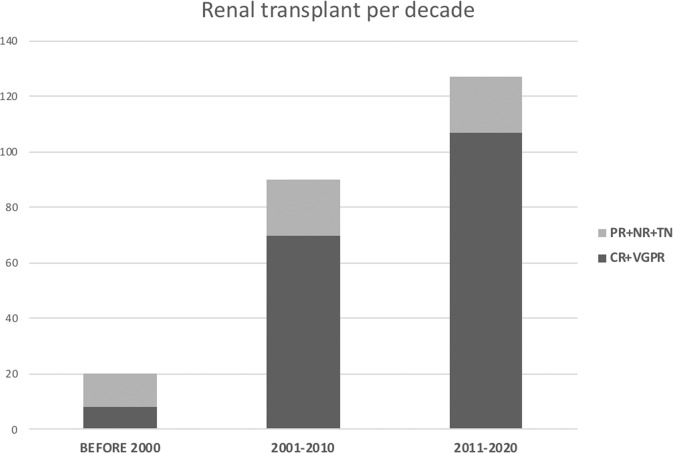
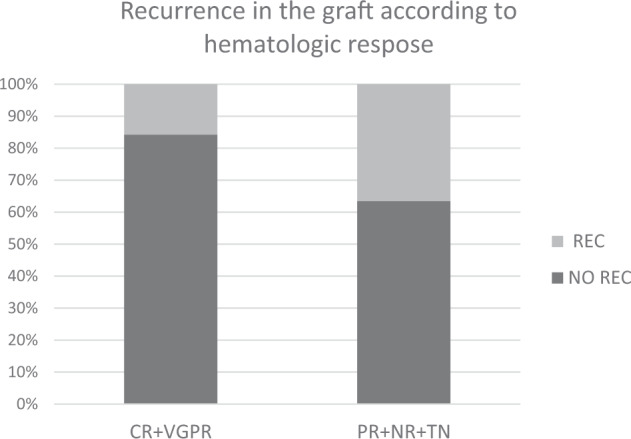
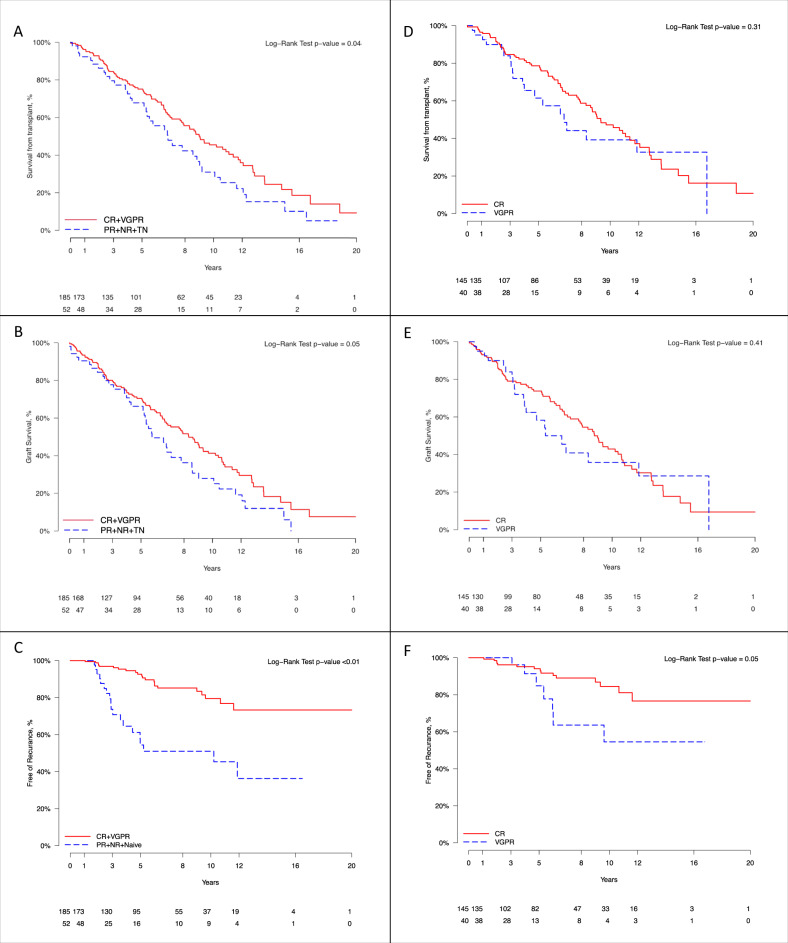
Effective systemic therapies suppress toxic light chain production leading to an increased proportion of patients with light chain (AL) amyloidosis who survive longer albeit with end-stage renal disease. There is a critical need to identify patients in this population who benefit from renal transplantation. This multicenter, observational study from five countries includes 237 patients with AL amyloidosis who underwent renal transplantation between 1987 and 2020. With a median follow-up of 8.5 years, the median overall survival from renal transplantation was 8.6 years and was significantly longer in patients with complete and very good partial hematologic responses (CR + VGPR) compared to less than VGPR (9 versus 6.8 years; HR: 1.5, P = 0.04 [95% CI: 1-2.1]) at renal transplantation. Median graft survival was 7.8 years and was better in the CR + VGPR group (8.3 vs 5.7 years, HR: 1.4, P = 0.05 [95% CI: 1-2]). The frequency and time to amyloid recurrence in the graft was also lower (16% vs 37%, p = 0.01) and longer (median time not achieved vs 10 years, p = 0.001) in the CR + VGPR group. Comparing CR vs. VGPR there was no difference in overall or graft survival. Although 69 patients (29%) experienced hematologic relapse, treatment effectively prevented graft loss in the majority (87%). Renal transplantation in selected AL amyloidosis patients is associated with extended overall and renal graft survival. Patients with hematologic CR or VGPR have the most favorable outcomes, and these patients should be considered for renal transplantation.
有效的全身性治疗可抑制毒性轻链产生,导致更多的淀粉样变性患者(AL)存活时间更长,尽管他们患有终末期肾病。目前迫切需要确定该人群中哪些患者受益于肾移植。这项来自五个国家的多中心观察性研究纳入了 237 名在 1987 年至 2020 年间接受肾移植的 AL 淀粉样变性患者。中位随访 8.5 年后,肾移植后的中位总体生存率为 8.6 年,完全缓解和非常好的部分血液学缓解(CR+VGPR)患者明显长于缓解程度小于 VGPR 的患者(9 年与 6.8 年;HR:1.5,P=0.04[95%CI:1-2.1])。中位移植物存活率为 7.8 年,CR+VGPR 组更好(8.3 年与 5.7 年,HR:1.4,P=0.05[95%CI:1-2])。CR+VGPR 组移植物中淀粉样物质复发的频率和时间也更低(16%比 37%,p=0.01)和更长(中位未达到时间与 10 年,p=0.001)。CR 与 VGPR 相比,总体或移植物存活率无差异。尽管有 69 名患者(29%)发生血液学复发,但治疗有效预防了大多数(87%)的移植物丢失。在选定的 AL 淀粉样变性患者中,肾移植与延长的总体和肾移植存活率相关。血液学上达到 CR 或 VGPR 的患者有最有利的结局,这些患者应考虑进行肾移植。