Department of Cell and Molecular Biology, University of Mississippi Medical Center, 2500 N. State Street, Jackson, MS, 39216-4505, USA.
Mississippi Center of Excellence in Perinatal Research, University of Mississippi Medical Center, Jackson, MS, USA.
Biol Sex Differ. 2022 Aug 19;13(1):45. doi: 10.1186/s13293-022-00455-x.
Polycystic ovary syndrome (PCOS), characterized by androgen excess and ovulatory dysfunction, is associated with a high prevalence of obesity and insulin resistance (IR) in women. We demonstrated that sodium-glucose cotransporter-2 inhibitor (SGLT2i) administration decreases fat mass without affecting IR in the PCOS model. In male models of IR, administration of SGLT2i decreases oxidative stress and improves mitochondrial function in white adipose tissue (WAT). Therefore, we hypothesized that SGLT2i reduces adiposity via improvement in mitochondrial function and oxidative stress in WAT in PCOS model.
Four-week-old female rats were treated with dihydrotestosterone for 90 days (PCOS model), and SGLT2i (empagliflozin) was co-administered during the last 3 weeks. Body composition was measured before and after SGLT2i treatment by EchoMRI. Subcutaneous (SAT) and visceral (VAT) WAT were collected for histological and molecular studies at the end of the study.
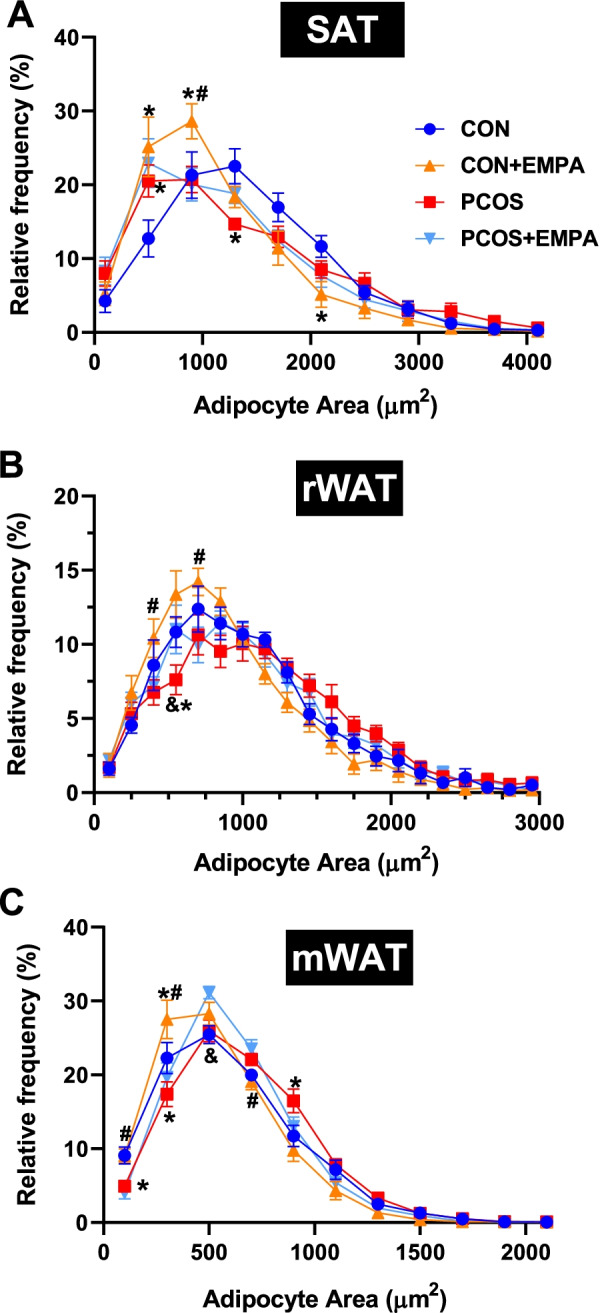
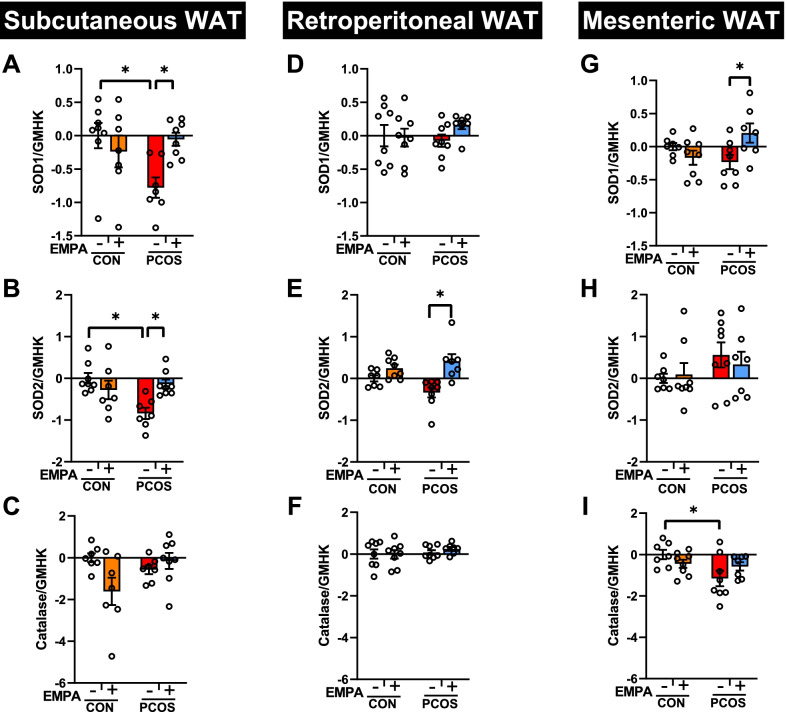
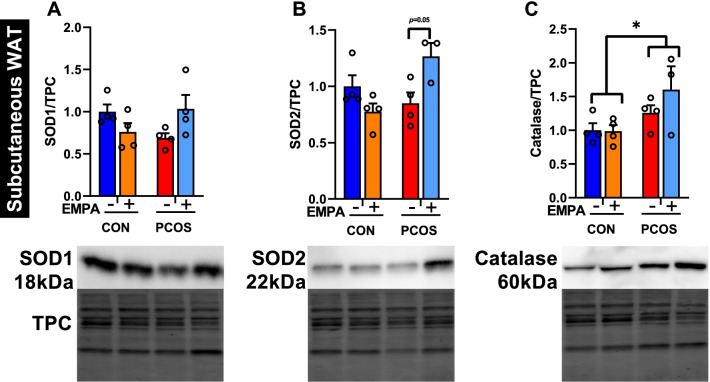
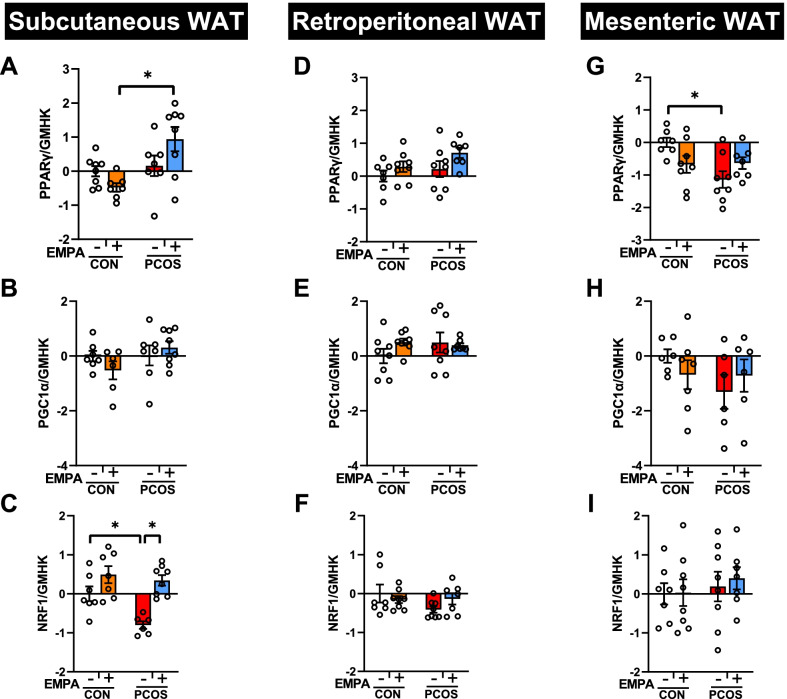
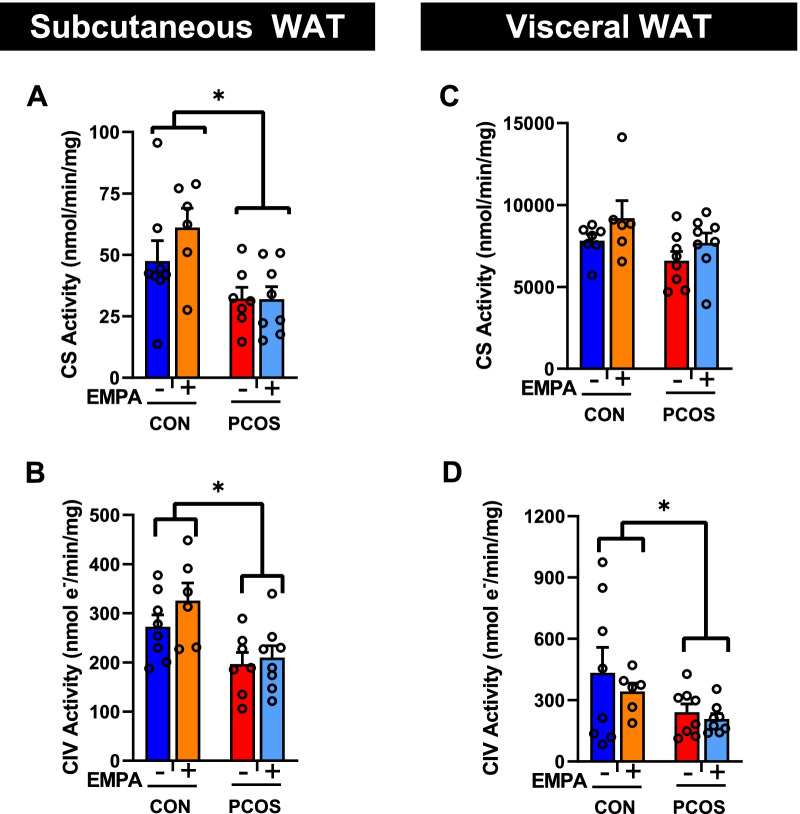
PCOS model had an increase in food intake, body weight, body mass index, and fat mass/lean mass ratio compared to the control group. SGLT2i lowered fat mass/lean ratio in PCOS. Glucosuria was observed in both groups, but had a larger magnitude in controls. The net glucose balance was similar in both SGLT2i-treated groups. The PCOS SAT had a higher frequency of small adipocytes and a lower frequency of large adipocytes. In SAT of controls, SGLT2i increased frequencies of small and medium adipocytes while decreasing the frequency of large adipocytes, and this effect was blunted in PCOS. In VAT, PCOS had a lower frequency of small adipocytes while SGLT2i increased the frequency of small adipocytes in PCOS. PCOS model had decreased mitochondrial content in SAT and VAT without impacting oxidative stress in WAT or the circulation. SGLT2i did not modify mitochondrial function or oxidative stress in WAT in both treated groups.
Hyperandrogenemia in PCOS causes expansion of WAT, which is associated with decreases in mitochondrial content and function in SAT and VAT. SGLT2i increases the frequency of small adipocytes in VAT only without affecting mitochondrial dysfunction, oxidative stress, or IR in the PCOS model. SGLT2i decreases adiposity independently of adipose mitochondrial and oxidative stress mechanisms in the PCOS model.
多囊卵巢综合征(PCOS)的特征是雄激素过多和排卵功能障碍,与肥胖和胰岛素抵抗(IR)的高患病率有关。我们已经证明,钠-葡萄糖共转运蛋白 2 抑制剂(SGLT2i)的给药可在 PCOS 模型中降低脂肪量而不影响 IR。在 IR 的雄性模型中,SGLT2i 的给药可降低白色脂肪组织(WAT)中的氧化应激并改善线粒体功能。因此,我们假设 SGLT2i 通过改善 PCOS 模型中 WAT 的线粒体功能和氧化应激来减少脂肪量。
用二氢睾酮处理 4 周龄雌性大鼠 90 天(PCOS 模型),并在最后 3 周共同给予 SGLT2i(恩格列净)。在 SGLT2i 治疗前后通过 EchoMRI 测量体成分。研究结束时收集皮下(SAT)和内脏(VAT)白色脂肪组织进行组织学和分子研究。
与对照组相比,PCOS 模型的食物摄入量、体重、体重指数和脂肪量/瘦肉量比值增加。SGLT2i 降低了 PCOS 的脂肪量/瘦肉比。两组均观察到糖尿,但对照组的幅度更大。两组的净葡萄糖平衡相似。PCOS SAT 中小脂肪细胞的频率更高,大脂肪细胞的频率更低。在对照组的 SAT 中,SGLT2i 增加了小和中脂肪细胞的频率,同时降低了大脂肪细胞的频率,而在 PCOS 中这种作用被削弱。在 VAT 中,PCOS 的小脂肪细胞频率较低,而 SGLT2i 增加了 PCOS 中小脂肪细胞的频率。PCOS 模型的 SAT 和 VAT 中线粒体含量降低,而 WAT 和循环中的氧化应激不受影响。SGLT2i 未改变两组治疗中 WAT 的线粒体功能或氧化应激。
PCOS 中的高雄激素血症导致 WAT 扩张,这与 SAT 和 VAT 中线粒体含量和功能降低有关。SGLT2i 仅增加 VAT 中小脂肪细胞的频率,而不影响 PCOS 模型中的线粒体功能障碍、氧化应激或 IR。SGLT2i 在 PCOS 模型中独立于脂肪组织中线粒体和氧化应激机制降低脂肪量。