Department of Biology, Washington University in St. Louis, St. Louis, MO 63130, USA.
Donald Danforth Plant Science Center, St. Louis, MO 63132, USA.
Cell Rep. 2022 Aug 30;40(9):111300. doi: 10.1016/j.celrep.2022.111300. Epub 2022 Aug 15.
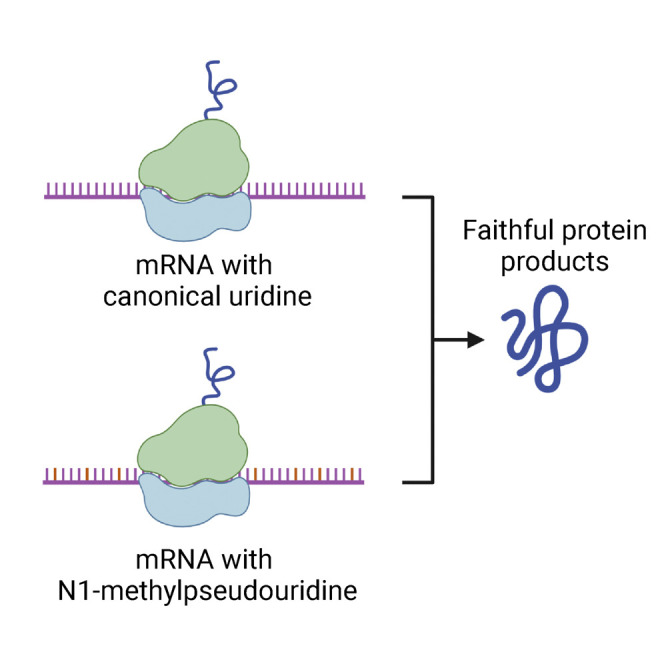
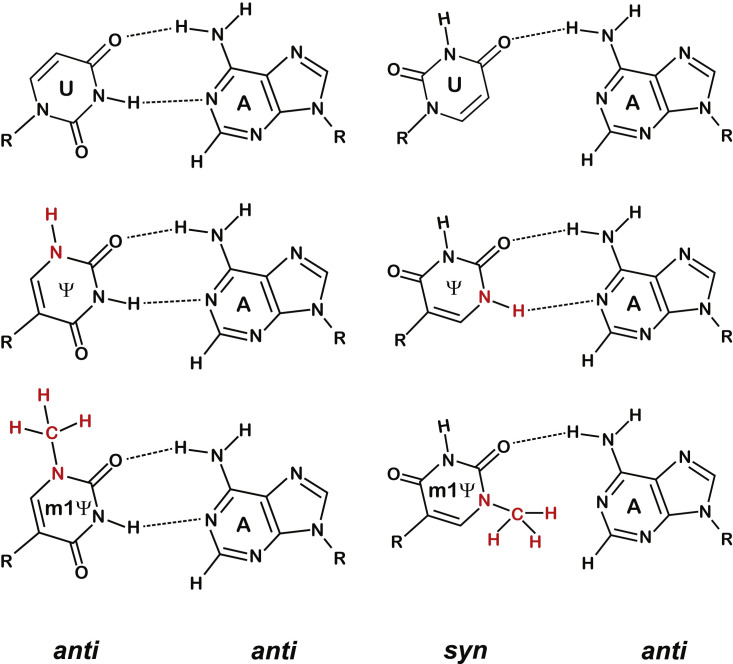
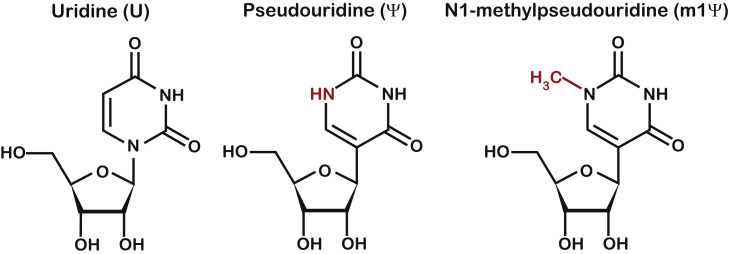
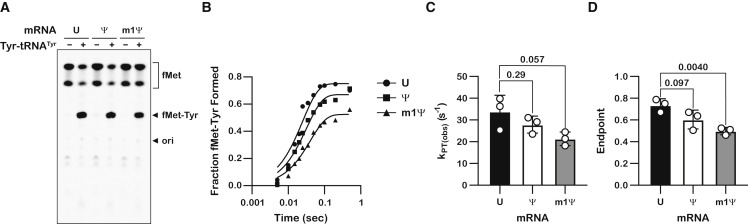
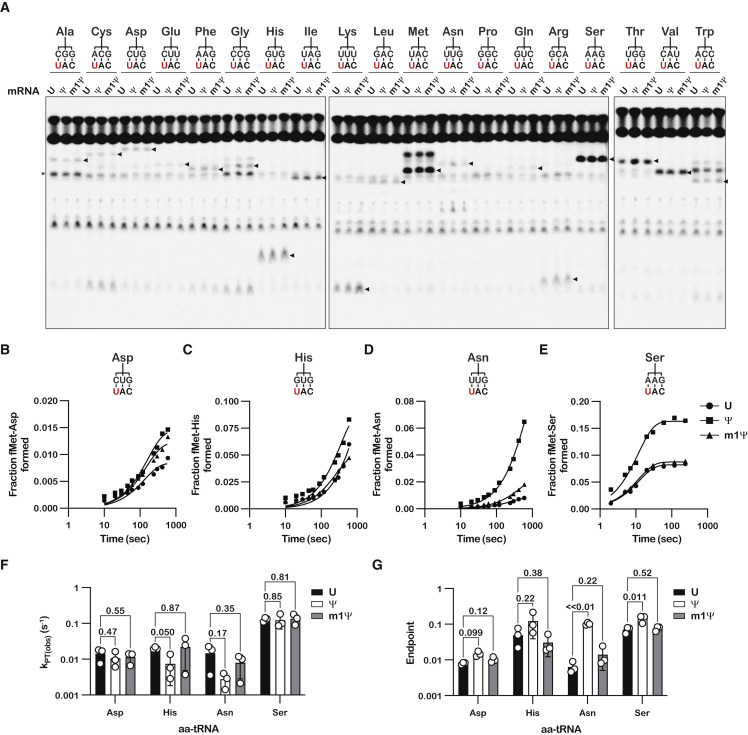
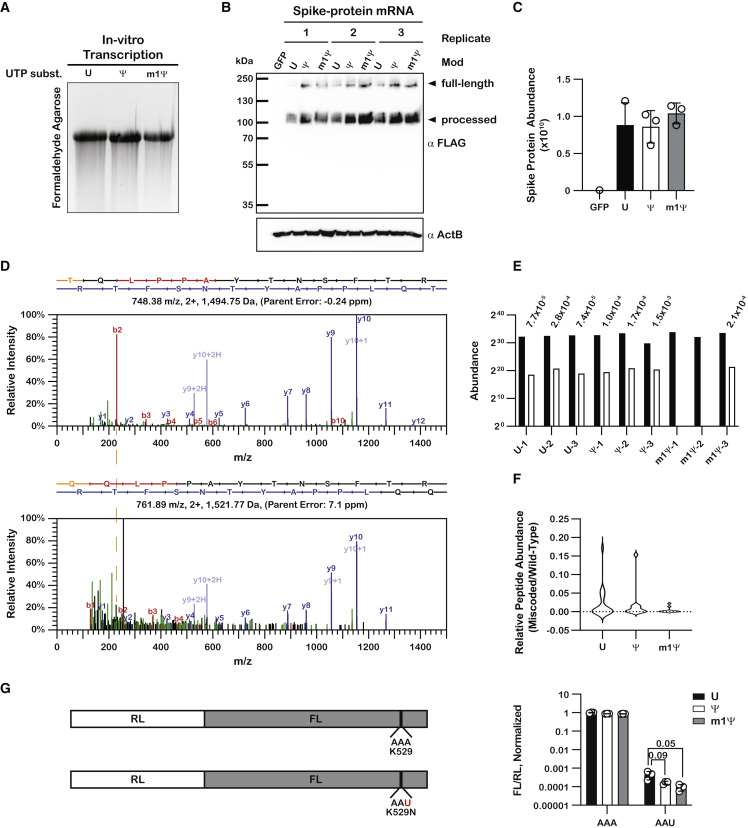
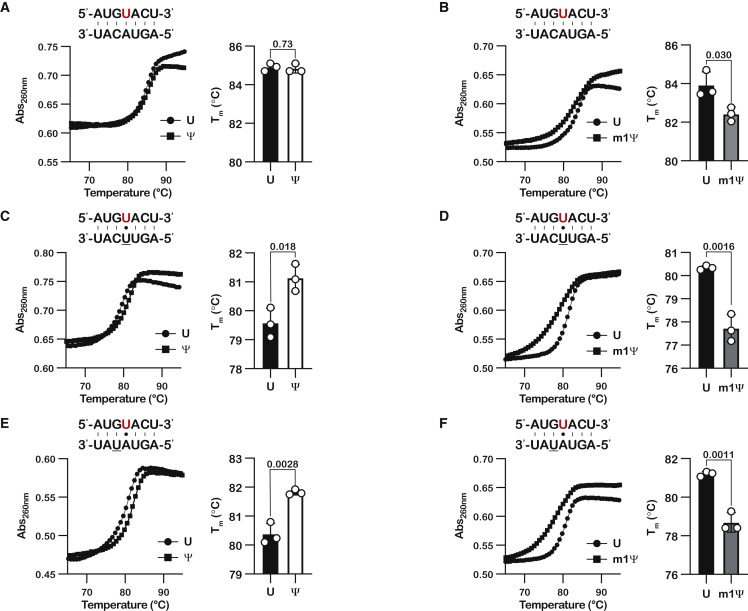
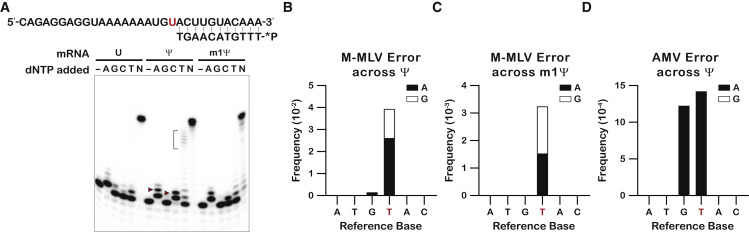
Synthetic mRNA technology is a promising avenue for treating and preventing disease. Key to the technology is the incorporation of modified nucleotides such as N1-methylpseudouridine (m1Ψ) to decrease immunogenicity of the RNA. However, relatively few studies have addressed the effects of modified nucleotides on the decoding process. Here, we investigate the effect of m1Ψ and the related modification pseudouridine (Ψ) on translation. In a reconstituted system, we find that m1Ψ does not significantly alter decoding accuracy. More importantly, we do not detect an increase in miscoded peptides when mRNA containing m1Ψ is translated in cell culture, compared with unmodified mRNA. We also find that m1Ψ does not stabilize mismatched RNA-duplex formation and only marginally promotes errors during reverse transcription. Overall, our results suggest that m1Ψ does not significantly impact translational fidelity, a welcome sign for future RNA therapeutics.
合成 mRNA 技术是治疗和预防疾病的有前途的途径。该技术的关键是掺入修饰核苷酸,如 N1-甲基假尿嘧啶(m1Ψ),以降低 RNA 的免疫原性。然而,相对较少的研究涉及修饰核苷酸对解码过程的影响。在这里,我们研究了 m1Ψ 和相关修饰假尿嘧啶(Ψ)对翻译的影响。在重建的系统中,我们发现 m1Ψ 不会显著改变解码精度。更重要的是,与未修饰的 mRNA 相比,当含有 m1Ψ 的 mRNA 在细胞培养中翻译时,我们没有检测到误译肽的增加。我们还发现,m1Ψ 不会稳定错配的 RNA-双链体形成,并且仅在逆转录过程中略微促进错误。总的来说,我们的结果表明,m1Ψ 不会显著影响翻译保真度,这是未来 RNA 治疗的一个可喜迹象。