Foakes Callum, Lawrence-Sidebottom Darian, Dralega Aseru T, Harvey Daniel O, Schmidt Michelle A, Davis Christopher J
Elson S. Floyd College of Medicine and Sleep and Performance Research Center, Washington State University, Spokane, WA, USA.
Neurobiol Sleep Circadian Rhythms. 2022 Aug 15;13:100081. doi: 10.1016/j.nbscr.2022.100081. eCollection 2022 Nov.
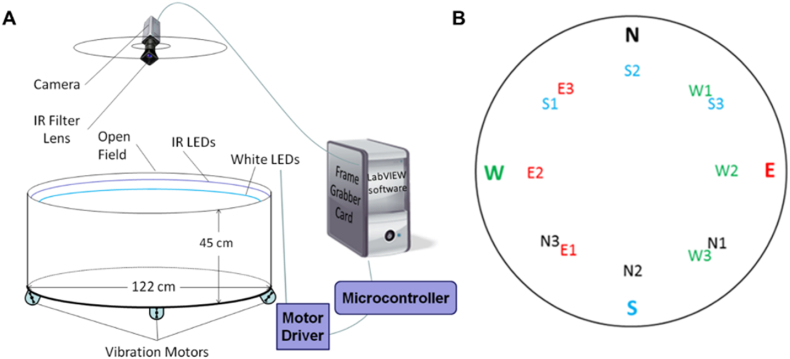
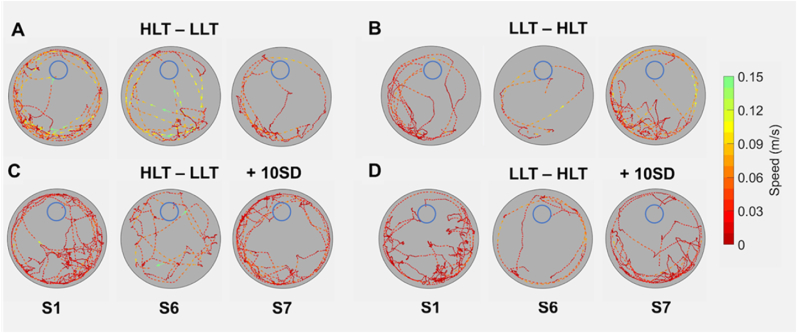
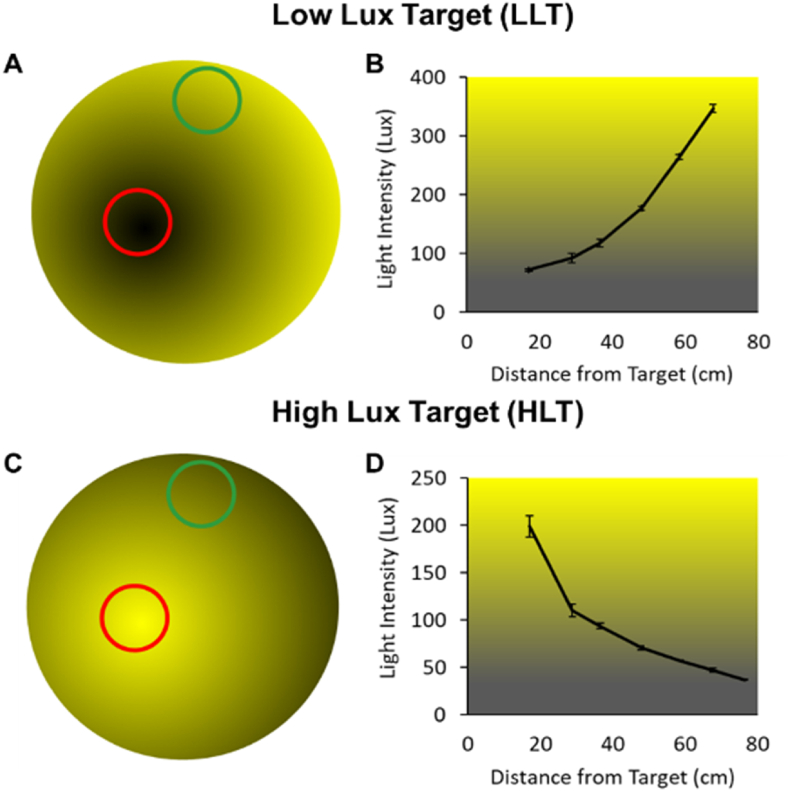
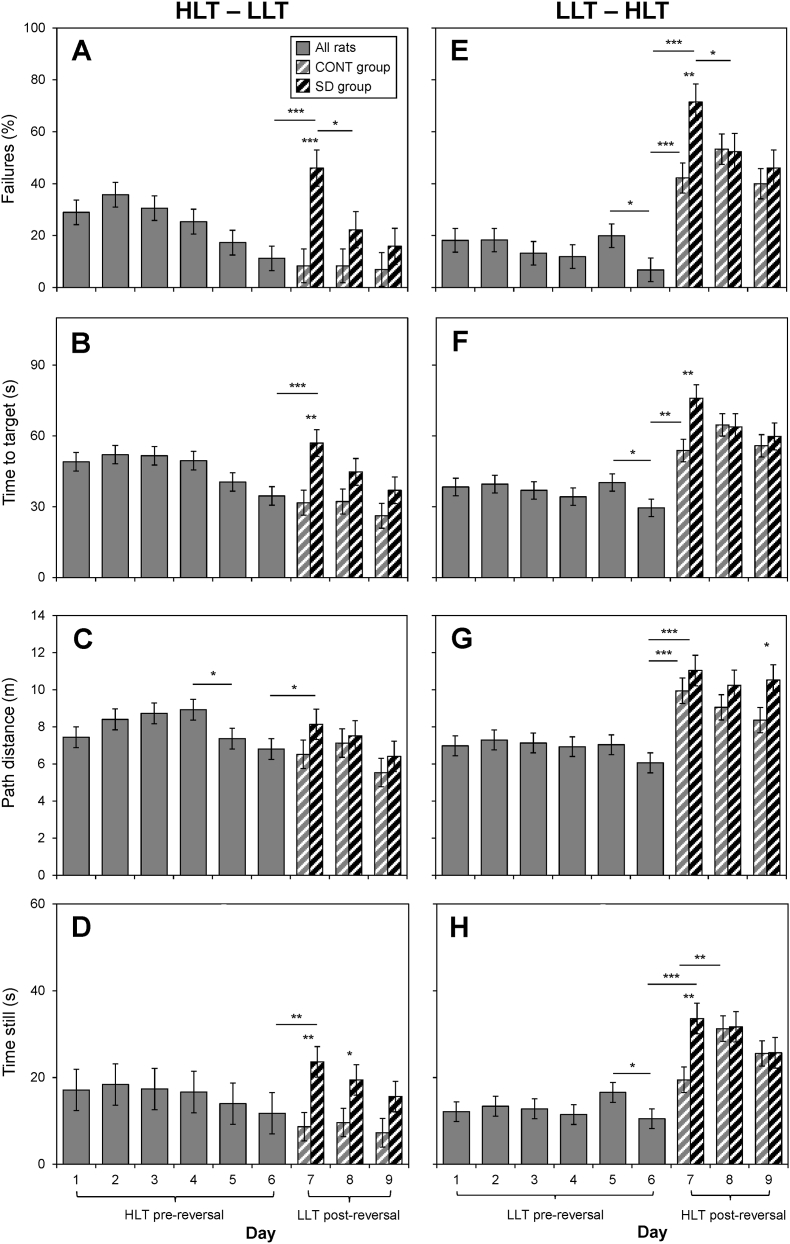
Sleep deprivation (SD) causes significant deficits in multiple aspects of cognition, including sustained attention and working memory. Investigating the neural processes underpinning these cognitive losses has proven challenging due to the confounds of current animal tasks; many employ appetitive or aversive stimuli to motivate behavior, while others lack task complexity that translates to human studies of executive function. We established the Lux Actuating Search Task (LAST) to circumvent these issues. The LAST is performed in a circular, open-field arena that requires rats to find an unmarked, quasi-randomly positioned target. Constant low-level floor vibrations motivate ambulation, while light intensity (determined by the rodent's proximity to the target destination) provides continuous visual feedback. The task has two paradigms that differ based on the relationship between the light intensity and target proximity: the Low Lux Target (LLT) paradigm and the High Lux Target paradigm (HLT). In this study, on days 1-6, the rats completed nine trials per day on one of the two paradigms. On day 7, the rats were either sleep deprived by gentle handling or were left undisturbed before undertaking the opposite (reversal) paradigm on days 7-9. Our results showed that SD significantly impeded the ability of Long Evans rats to learn the reversal paradigm, as indicated by increased times to target and increased failure percentages compared to rats whose sleep was undisturbed. Rats also showed reduced learning with the HLT paradigm, as the initial task or as the reversal task, likely due to the rodents' photophobia limiting their motivation to navigate toward a bright light, which is required to succeed.
睡眠剥夺(SD)会导致认知的多个方面出现显著缺陷,包括持续注意力和工作记忆。由于当前动物任务存在诸多混淆因素,研究这些认知损失背后的神经过程颇具挑战性;许多任务采用奖赏性或厌恶性刺激来激发行为,而其他一些任务则缺乏可转化为人类执行功能研究的任务复杂性。我们建立了勒克斯驱动搜索任务(LAST)以规避这些问题。LAST在一个圆形的开放场地中进行,要求大鼠找到一个无标记、近似随机定位的目标。持续的低强度地板振动促使大鼠走动,而光强度(由啮齿动物与目标目的地的接近程度决定)提供连续的视觉反馈。该任务有两种基于光强度与目标接近程度关系的范式:低勒克斯目标(LLT)范式和高勒克斯目标范式(HLT)。在本研究中,第1至6天,大鼠每天在两种范式之一上完成九次试验。第7天,大鼠要么通过轻柔处理被剥夺睡眠,要么在第7至9天进行相反(反转)范式之前不被打扰。我们的结果表明,与睡眠未受干扰大鼠相比,睡眠剥夺显著阻碍了长 Evans 大鼠学习反转范式的能力,表现为到达目标的时间增加和失败百分比上升。大鼠在HLT范式中作为初始任务或反转任务时的学习能力也有所下降,这可能是由于啮齿动物的畏光性限制了它们朝着强光导航的动机,而这是成功所必需的。