Falls Cody J, Page Paul S, Greeneway Garret P, Stadler James A
Orthopedic Surgery, Baylor University Medical Center, Dallas, USA.
Neurological Surgery, University of Wisconsin, Madison, USA.
Cureus. 2022 Jul 19;14(7):e27020. doi: 10.7759/cureus.27020. eCollection 2022 Jul.
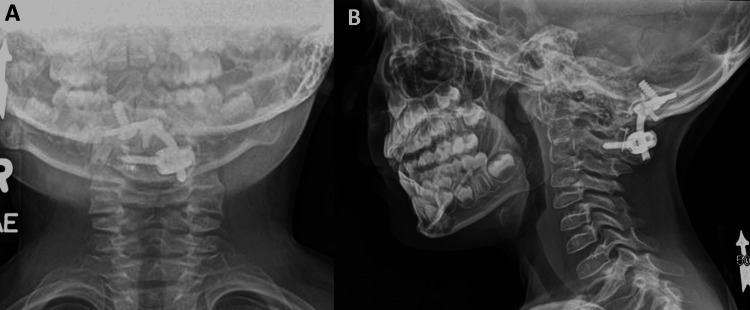
Spondyloepiphyseal dysplasia congenita (SEDC) is a rare autosomal dominant skeletal dysplasia resulting in impairment of type II collagen function. Phenotypically, this results in various skeletal, ligamentous, ocular, and otologic abnormalities. Platyspondyly, scoliosis, ligamental laxity, and odontoid hypoplasia are common, resulting in myelopathy in a high number of patients due to atlantoaxial instability. Despite patients undergoing surgical fixation, complication rates such as nonunion have been reported to be high. Here within, we present two patients treated with occipitocervical fusion for atlantoaxial instability and early symptoms of progressive myelopathy. We additionally provide a detailed review of the literature to inform practitioners of the spinal manifestations and clinical considerations in SEDC.
先天性脊柱骨骺发育不良(SEDC)是一种罕见的常染色体显性遗传性骨骼发育不良疾病,会导致II型胶原蛋白功能受损。在表型上,这会导致各种骨骼、韧带、眼部和耳部异常。椎体扁平、脊柱侧弯、韧带松弛和齿状突发育不全很常见,由于寰枢椎不稳定,大量患者会出现脊髓病。尽管患者接受了手术固定,但据报道骨不连等并发症发生率很高。在此,我们介绍两名因寰枢椎不稳定和进行性脊髓病早期症状接受枕颈融合术治疗的患者。我们还对文献进行了详细综述,以便让从业者了解SEDC的脊柱表现和临床注意事项。