Laboratory of Clinical Immunology, Department of Biomedicine, University of Basel, Basel, Switzerland.
Division of Internal Medicine, University Hospital Basel, Basel, Switzerland.
Front Immunol. 2022 Aug 3;13:958273. doi: 10.3389/fimmu.2022.958273. eCollection 2022.
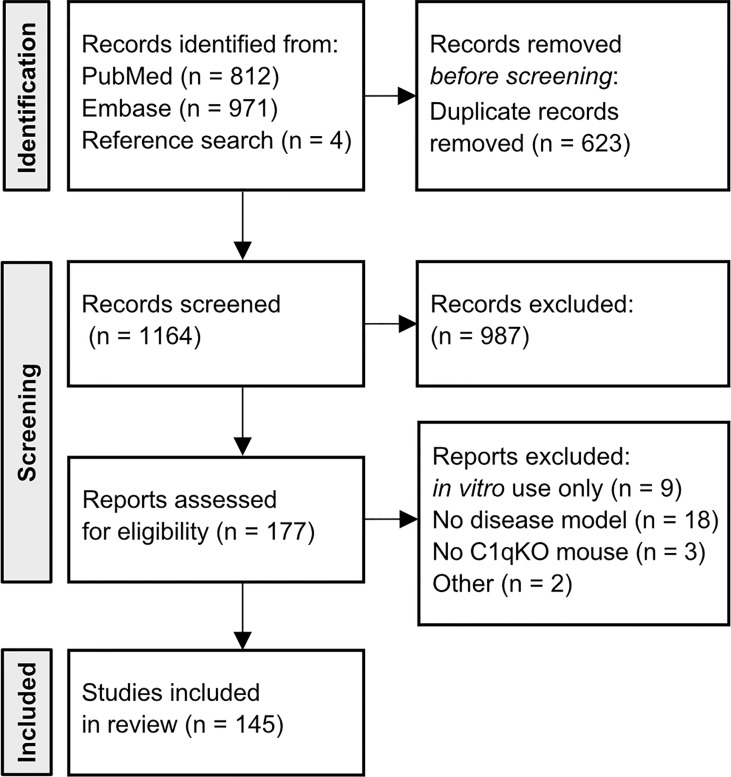
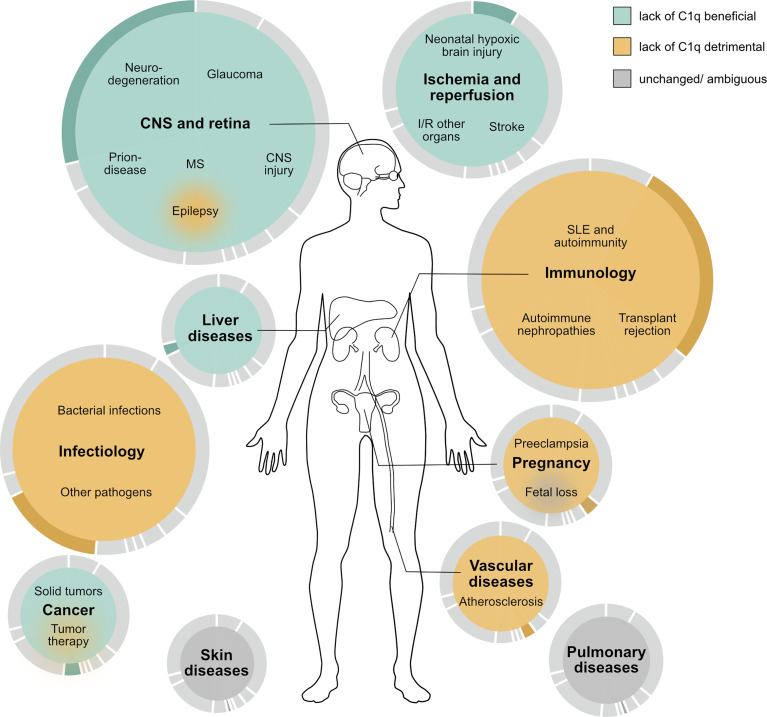
The complement system is a field of growing interest for pharmacological intervention. Complement protein C1q, the pattern recognition molecule at the start of the classical pathway of the complement cascade, is a versatile molecule with additional non-canonical actions affecting numerous cellular processes. Based on observations made in patients with hereditary C1q deficiency, C1q is protective against systemic autoimmunity and bacterial infections. Accordingly, C1q deficient mice reproduce this phenotype with susceptibility to autoimmunity and infections. At the same time, beneficial effects of C1q deficiency on disease entities such as neurodegenerative diseases have also been described in murine disease models. This systematic review provides an overview of all currently available literature on the C1q knockout mouse in disease models to identify potential target diseases for treatment strategies focusing on C1q, and discusses potential side-effects when depleting and/or inhibiting C1q.
补体系统是药理学干预的一个研究热点。补体蛋白 C1q 是补体级联经典途径起始的模式识别分子,是一种多功能分子,具有影响众多细胞过程的额外非经典作用。基于遗传性 C1q 缺乏症患者的观察结果,C1q 可预防全身性自身免疫和细菌感染。因此,C1q 缺乏的小鼠表现出自身免疫和感染易感性的表型。与此同时,在神经退行性疾病等疾病的小鼠疾病模型中也描述了 C1q 缺乏对疾病的有益影响。本系统评价综述了所有关于补体 C1q 敲除小鼠在疾病模型中的现有文献,以确定以 C1q 为靶点的治疗策略的潜在目标疾病,并讨论了耗尽和/或抑制 C1q 时的潜在副作用。