Kaga Akari, Ikeda Tetsuya, Tachibana Keisei, Tanaka Ryota, Kondo Haruhiko, Kawabata Takanori, Yorozu Tomoko, Saito Koichiro
Department of Oral Surgery, Kyorin University School of Medicine, Tokyo, Japan.
Department of General Thoracic Surgery, Kyorin University School of Medicine, Tokyo, Japan.
JTCVS Open. 2022 Feb 16;10:442-453. doi: 10.1016/j.xjon.2022.01.021. eCollection 2022 Jun.
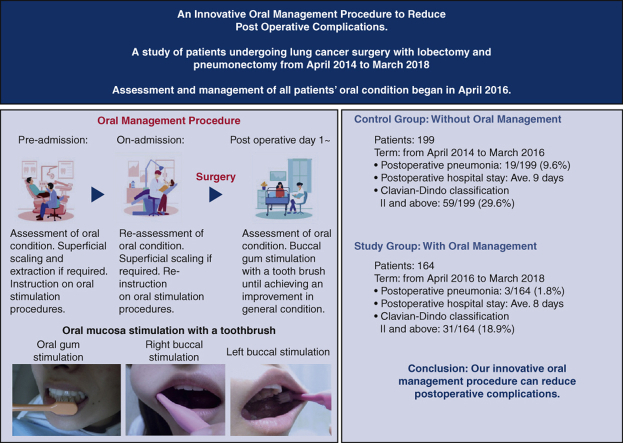
Numerous studies have shown that improving oral hygiene contributes to a reduction in the risk of postoperative complications in patients with head and neck cancer, cardiac disease, and esophageal cancer. However, the beneficial standard for oral management procedures during the perioperative period has not yet been established. Therefore, our aim was to determine whether or not their innovative oral management intervention contributed to a reduction in postoperative complications in lung cancer.
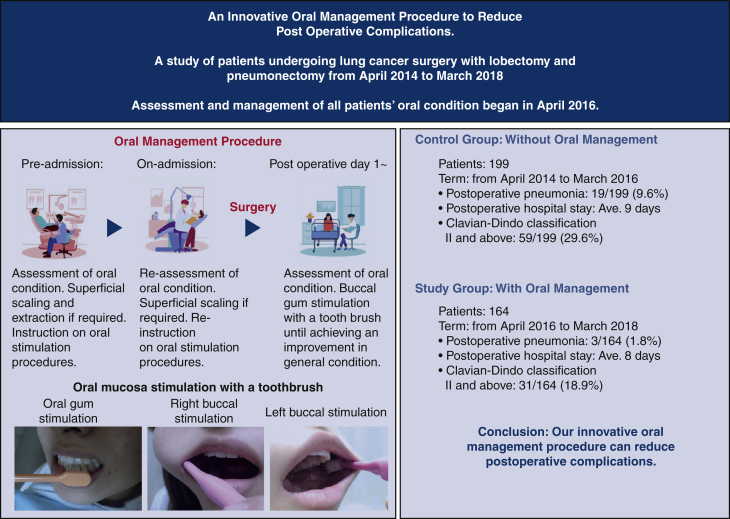
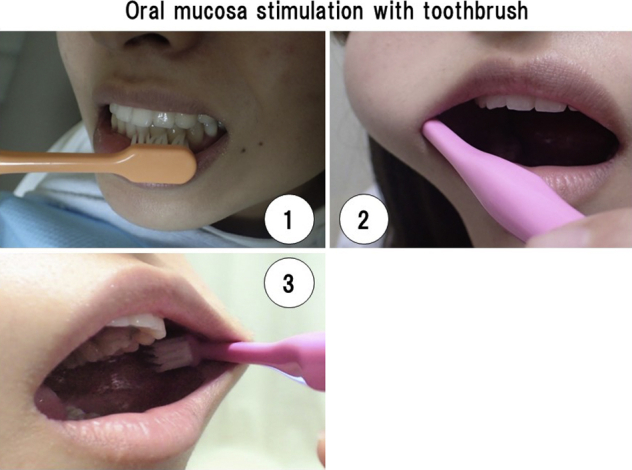
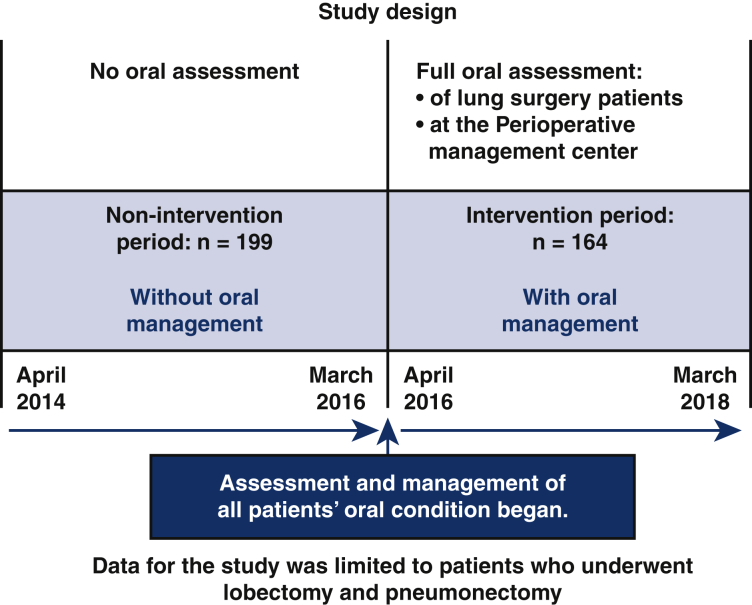
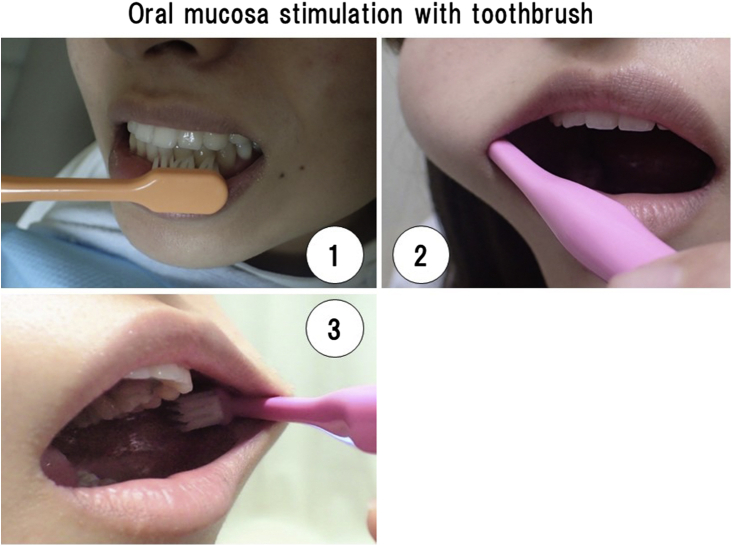
We performed a retrospective analysis of medical records of patients who underwent lung cancer surgery with lobectomy and pneumonectomy at Kyorin University Hospital. Patients were divided into 2 groups: a perioperative oral management intervention group that underwent lung cancer surgery from April 2016 to March 2018 (n = 164), and a control group without oral management that underwent surgery from April 2014 to March 2016 (n = 199). In particular, our oral management procedure emphasized oral mucosa stimulation to induce saliva discharge as in gum chewing, rather than simply using teeth brushing to reduce oral microbiome. Therefore, our oral management procedure is different from traditional oral care.
This study demonstrated that our oral management practice was associated with a decline in the occurrence of postoperative pneumonia (odds ratio, 0.184; 95% CI, 0.042-0.571; = .009), postoperative hospital stay duration (β coefficient, -4.272; 95% CI, -6.390 to -2.155; < .001) and Clavian-Dindo classification grade II or above (odds ratio, 0.503; 95% CI, 0.298-0.835; = .009).
We propose an innovative new strategy using their unique oral management procedure to reduce postoperative complications resulting from pulmonary resection.
大量研究表明,改善口腔卫生有助于降低头颈癌、心脏病和食管癌患者术后并发症的风险。然而,围手术期口腔管理程序的有益标准尚未确立。因此,我们的目的是确定他们创新的口腔管理干预措施是否有助于降低肺癌患者的术后并发症。
我们对在杏林大学医院接受肺叶切除术和全肺切除术的肺癌患者的病历进行了回顾性分析。患者分为两组:2016年4月至2018年3月接受肺癌手术的围手术期口腔管理干预组(n = 164),以及2014年4月至2016年3月接受手术的无口腔管理的对照组(n = \199)。特别是,我们的口腔管理程序强调通过刺激口腔黏膜来诱导唾液分泌,如咀嚼口香糖,而不是简单地刷牙来减少口腔微生物群。因此,我们的口腔管理程序与传统口腔护理不同。
本研究表明,我们的口腔管理实践与术后肺炎发生率的下降相关(优势比,0.184;95%置信区间,0.042 - 0.571;P = 0.009),术后住院时间(β系数,-4.272;95%置信区间,-6.390至-2.155;P < 0.001)以及Clavian-Dindo分类二级或以上(优势比,0.503;95%置信区间,0.298 - 0.835;P = 0.009)。
我们提出了一种创新的新策略,即使用他们独特的口腔管理程序来减少肺切除术后的并发症。