Department of Neurosurgery, Peking University Third Hospital, Haidian District, 49 North Garden Rd, Beijing, 100191, China.
Center for Precision Neurosurgery and Oncology of Peking University Health Science Center, Beijing, China.
J Mol Neurosci. 2022 Oct;72(10):2106-2124. doi: 10.1007/s12031-022-02060-4. Epub 2022 Aug 25.
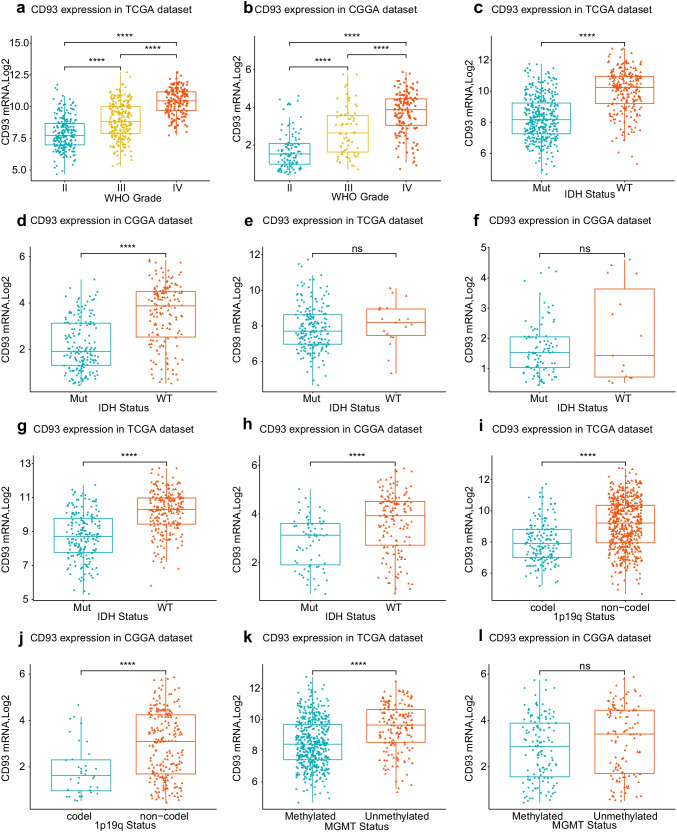
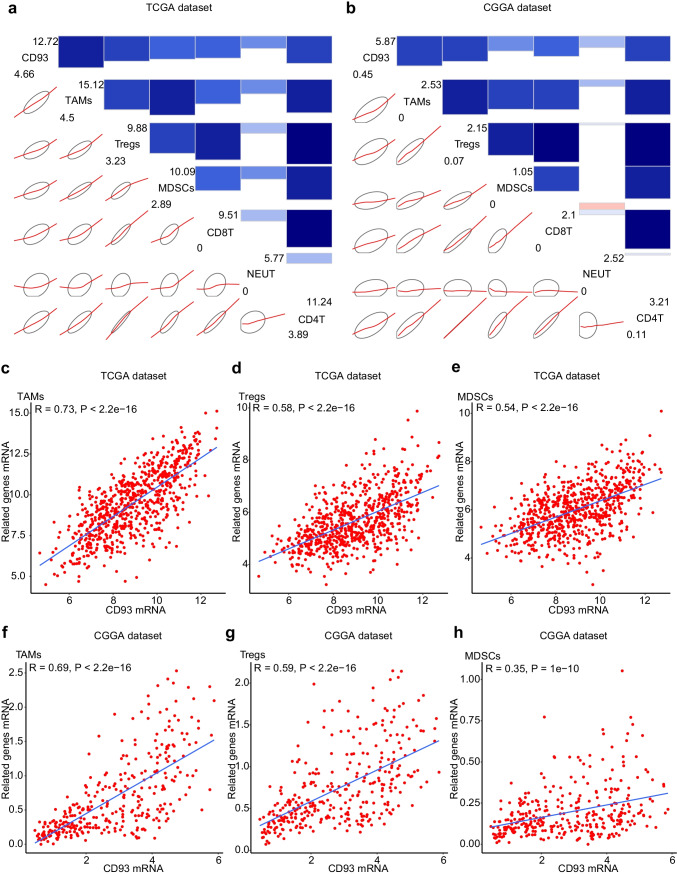
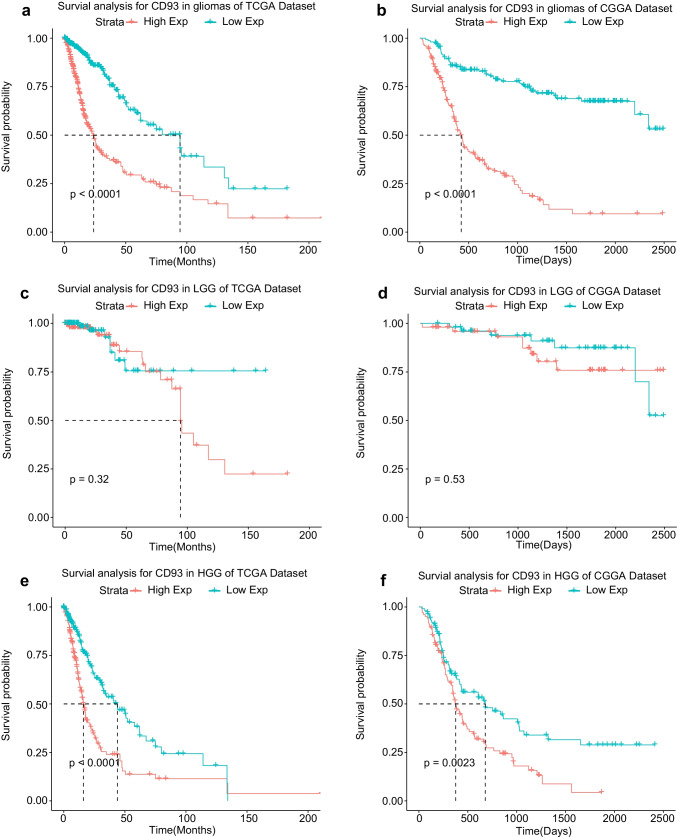
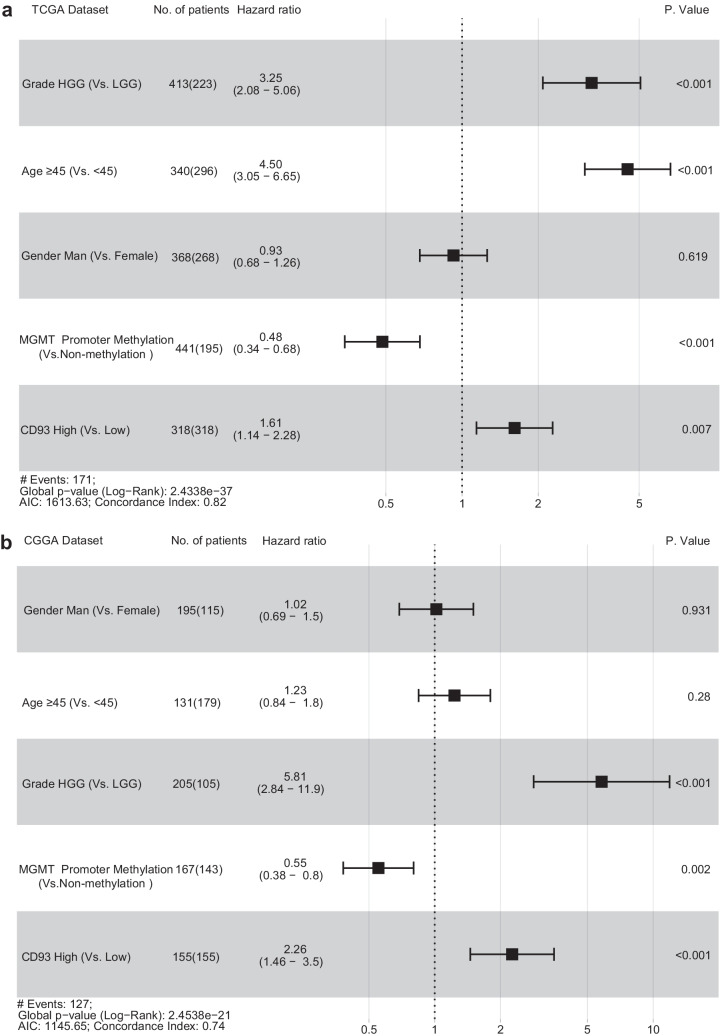
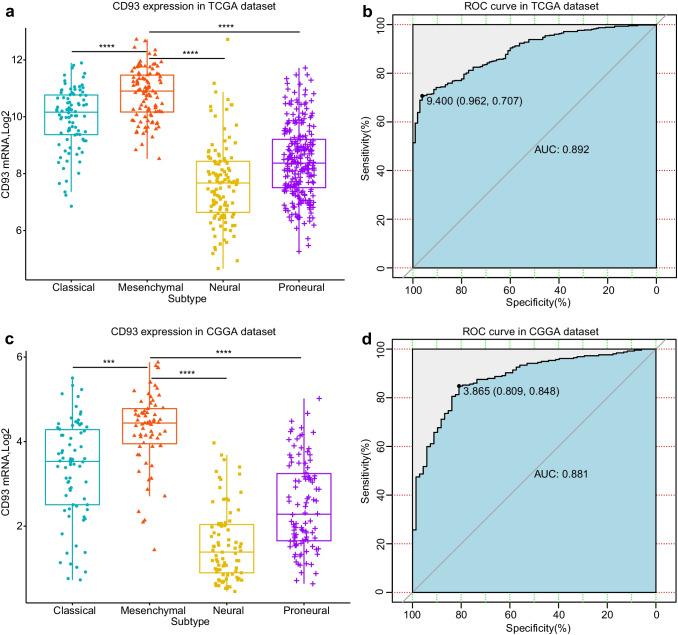
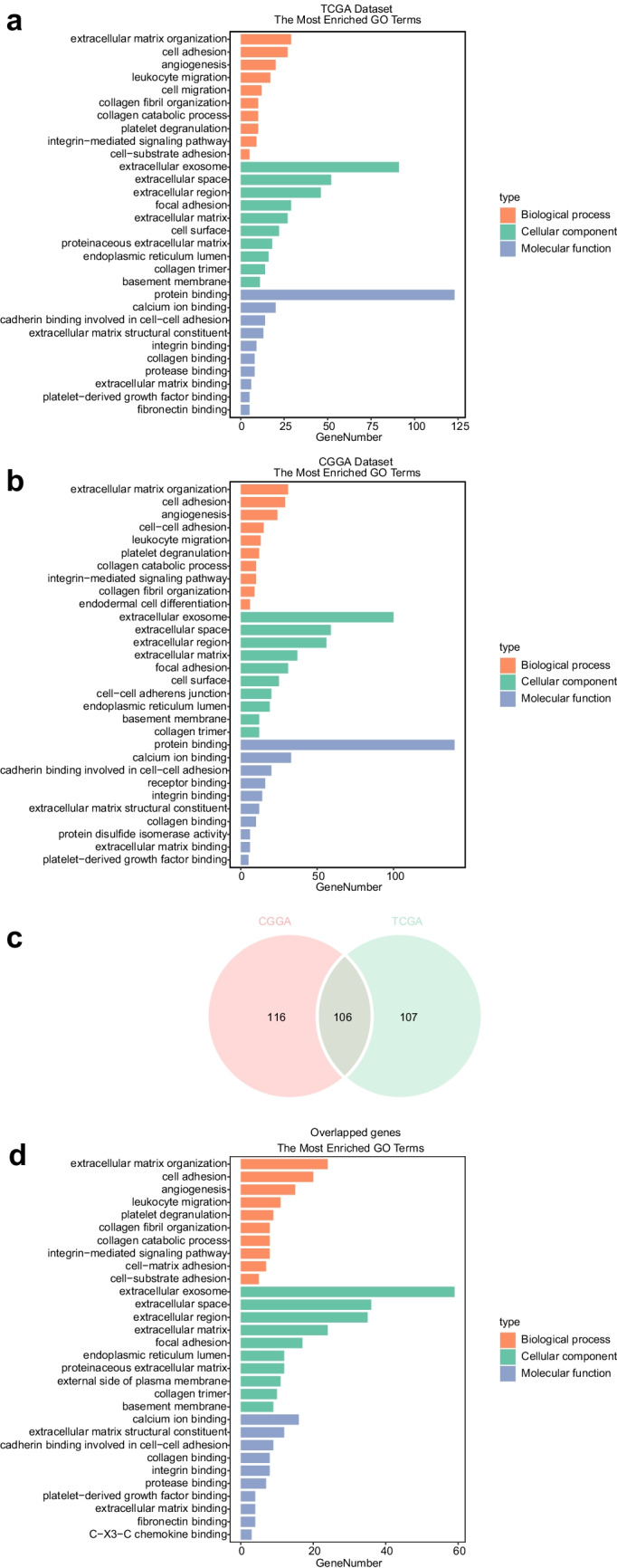
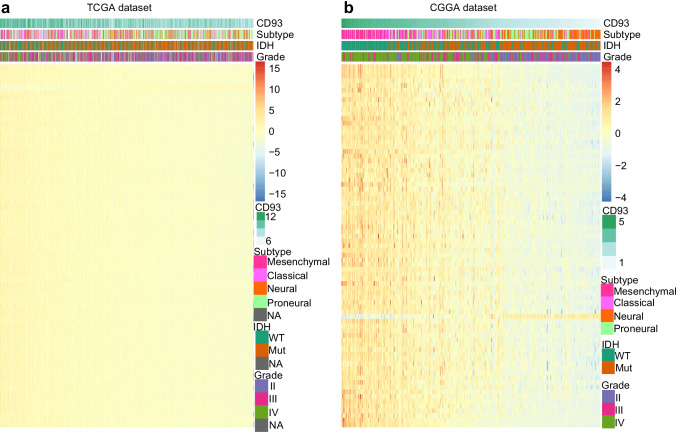
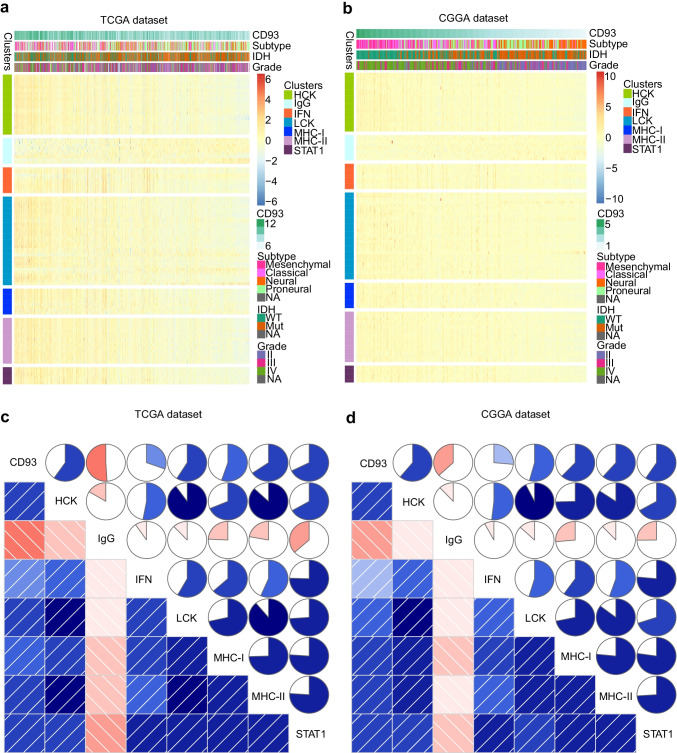
Previous reports have confirmed the significance of CD93 in the progression of multiple tumors; however, there are few studies examining its immune properties for gliomas. Here, we methodically investigated the pathophysiological characteristics and clinical manifestations of gliomas. Six hundred ninety-nine glioma patients in TCGA along with 325 glioma patients in CGGA were correspondingly collected for training and validating. We analyzed and visualized total statistics using RStudio. One-way ANOVA and Student's t-test were used to assess groups' differences. All differences were considered statistically significant at the level of P < 0.05. CD93 markedly upregulated among HGG, MGMT promoter unmethylated subforms, IDH wild forms, 1p19q non-codeletion subforms, and mesenchyme type gliomas. ROC analysis illustrated the favorable applicability of CD93 in estimating mesenchyme subform. Kaplan-Meier curves together with multivariable Cox analyses upon survivance identified high-expression CD93 as a distinct prognostic variable for glioma patients. GO analysis of CD93 documented its predominant part in glioma-related immunobiological processes and inflammation responses. We examined the associations of CD93 with immune-related meta-genes, and CD93 positively correlated with HCK, LCK, MHC I, MHC II, STAT1 and IFN, while adverse with IgG. Association analyses between CD93 and gliomas-infiltrating immunocytes indicated that the infiltrating degrees of most immunocytes exhibited positive correlations with CD93, particularly these immunosuppressive subsets such as TAM, Treg, and MDSCs. CD93 is markedly associated with adverse pathology types, unfavorable survival, and immunosuppressive immunocytes infiltration among gliomas, thus identifying CD93 as a practicable marker and a promising target for glioma-based precise diagnosis and therapeutic strategies.
先前的报告已经证实了 CD93 在多种肿瘤进展中的重要性;然而,关于其在神经胶质瘤中的免疫特性的研究较少。在这里,我们系统地研究了神经胶质瘤的病理生理特征和临床表现。从 TCGA 中收集了 699 名神经胶质瘤患者和 CGGA 中的 325 名神经胶质瘤患者用于训练和验证。我们使用 RStudio 对总统计数据进行了分析和可视化。使用单因素方差分析和 Student's t 检验来评估组间的差异。所有差异均在 P<0.05 水平上具有统计学意义。CD93 在 HGG、MGMT 启动子未甲基化亚型、IDH 野生型、1p19q 非缺失亚型和间充质型神经胶质瘤中明显上调。ROC 分析表明 CD93 在估计间充质亚型方面具有良好的适用性。Kaplan-Meier 曲线和生存分析的多变量 Cox 分析确定高表达 CD93 是神经胶质瘤患者的一个独特预后变量。GO 分析记录了 CD93 在神经胶质瘤相关免疫生物学过程和炎症反应中的主要作用。我们检查了 CD93 与免疫相关基因的关联,CD93 与 HCK、LCK、MHC I、MHC II、STAT1 和 IFN 呈正相关,而与 IgG 呈负相关。CD93 与神经胶质瘤浸润免疫细胞的关联分析表明,大多数免疫细胞的浸润程度与 CD93 呈正相关,特别是 TAM、Treg 和 MDSC 等免疫抑制亚群。CD93 与神经胶质瘤不良病理类型、不良生存和免疫抑制性免疫细胞浸润明显相关,因此鉴定 CD93 为神经胶质瘤精确诊断和治疗策略的一种可行标志物和有前途的靶标。