Key Laboratory of Pig Genetics and Breeding of Ministry of Agriculture and Key Laboratory of Agricultural Animal Genetics, Breeding and Reproduction of Ministry of Education, Huazhong Agricultural University, Wuhan, 430070, People's Republic of China.
Institute of Animal Science and Veterinary Medicine, Hubei Academy of Agricultural Sciences, Wuhan, 430064, People's Republic of China.
Cell Mol Life Sci. 2022 Aug 25;79(9):498. doi: 10.1007/s00018-022-04521-w.
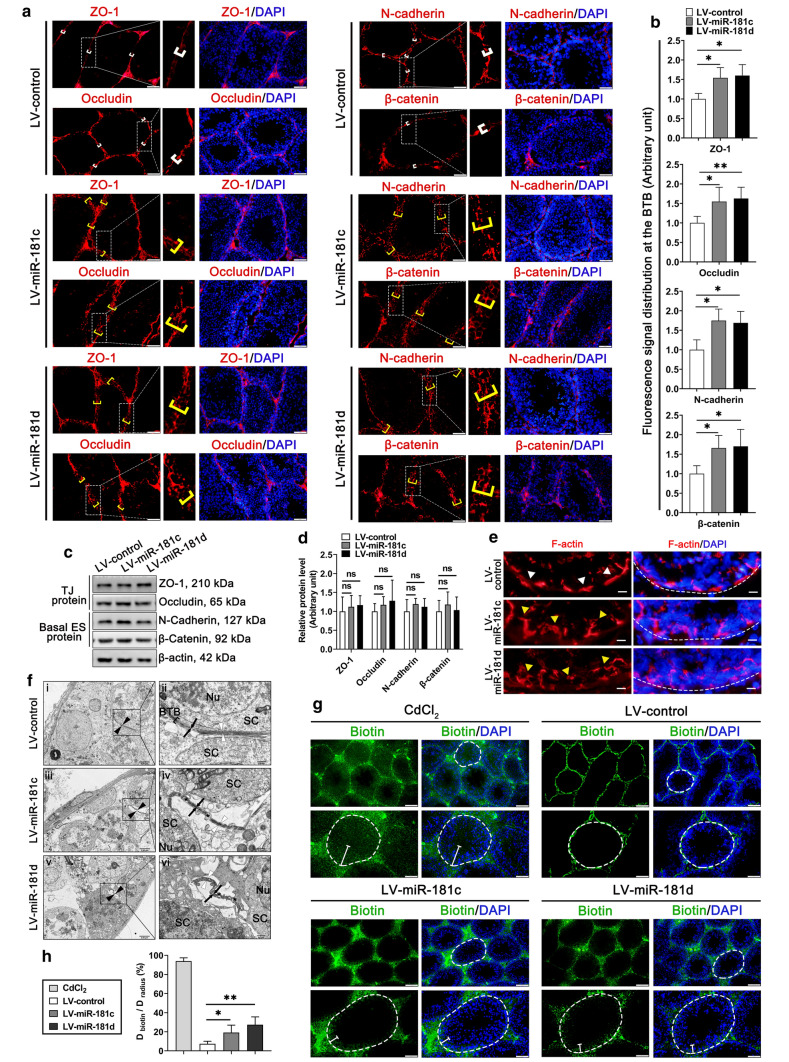
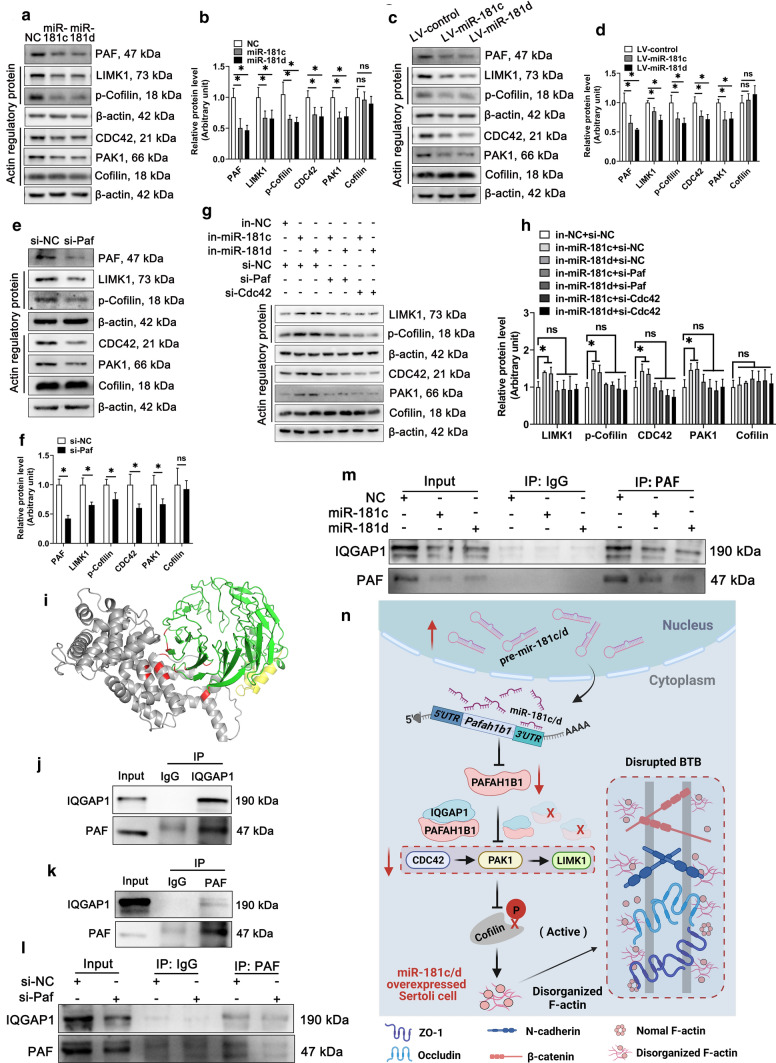
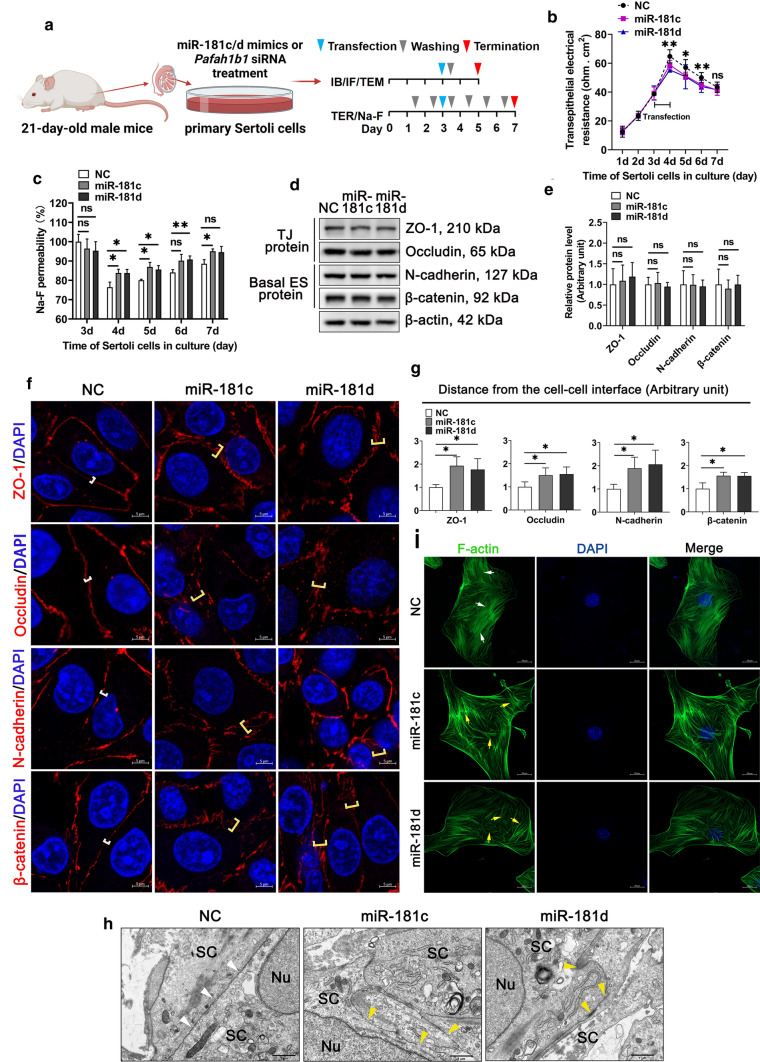
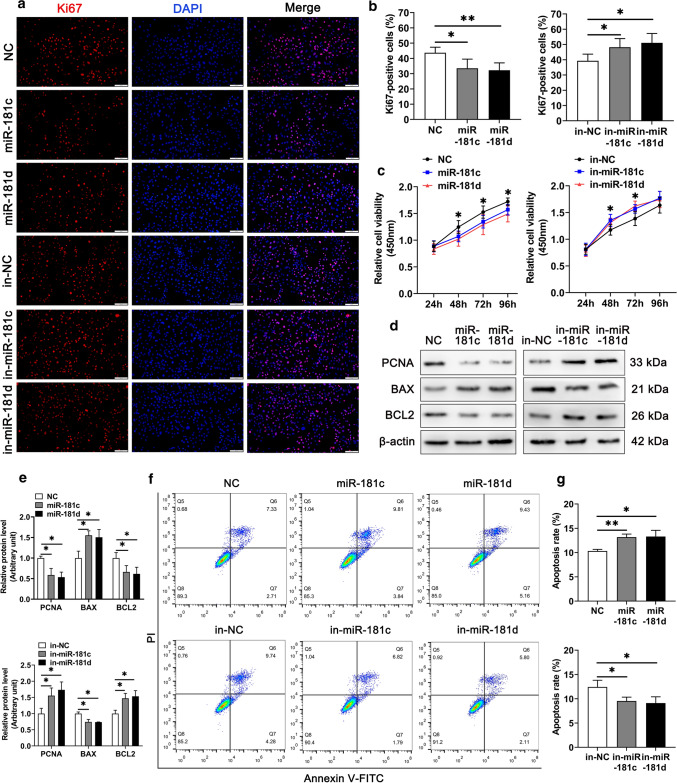
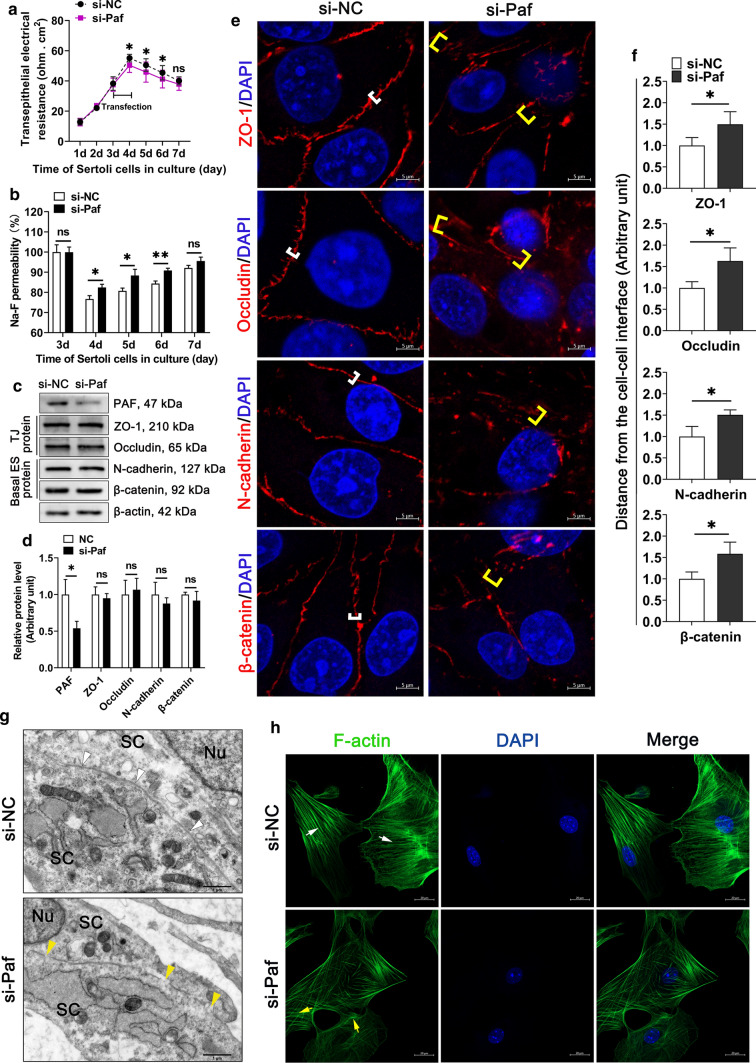
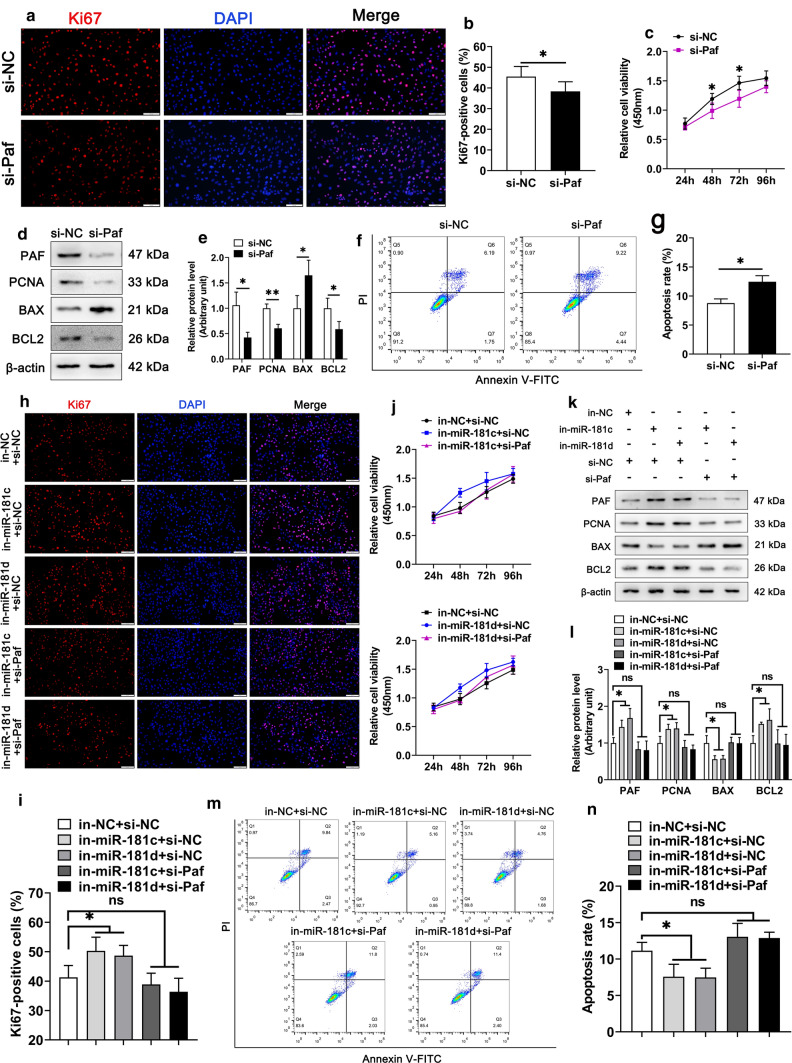
Sertoli cells contribute to the formation of the blood-testis barrier (BTB), which is necessary for normal spermatogenesis. Recently, microRNAs (miRNAs) have emerged as posttranscriptional regulatory elements in BTB function during spermatogenesis. Our previous study has shown that miR-181c or miR-181d (miR-181c/d) is highly expressed in testes from boars at 60 days old compared with at 180 days old. Herein, we found that overexpression of miR-181c/d via miR-181c/d mimics in murine Sertoli cells (SCs) or through injecting miR-181c/d-overexpressing lentivirus in murine testes perturbs BTB function by altering BTB-associated protein distribution at the Sertoli cell-cell interface and F-actin organization, but this in vivo perturbation disappears approximately 6 weeks after the final treatment. We also found that miR-181c/d represses Sertoli cell proliferation and promotes its apoptosis. Moreover, miR-181c/d regulates Sertoli cell survival and barrier function by targeting platelet-activating factor acetylhydrolase 1b regulatory subunit 1 (Pafah1b1) gene. Furthermore, miR-181c/d suppresses PAFAH1B1 expression, reduces the complex of PAFAH1B1 with IQ motif-containing GTPase activating protein 1, and inhibits CDC42/PAK1/LIMK1/Cofilin pathway which is required for F-actin stabilization. In total, our results reveal the regulatory axis of miR-181c/d-Pafah1b1 in cell survival and barrier function of Sertoli cells and provide additional insights into miRNA functions in mammalian spermatogenesis.
支持细胞有助于形成血睾屏障(BTB),这对于正常精子发生是必要的。最近,microRNAs(miRNAs)已成为精子发生过程中 BTB 功能的转录后调节因子。我们之前的研究表明,与 180 天大的公猪相比,60 天大的公猪睾丸中 miR-181c 或 miR-181d(miR-181c/d)高度表达。在此,我们发现通过 miR-181c/d 模拟物在小鼠支持细胞(SCs)中的过表达或通过注射 miR-181c/d 过表达慢病毒在小鼠睾丸中过表达 miR-181c/d 会扰乱 BTB 功能,改变支持细胞-细胞界面的 BTB 相关蛋白分布和 F-肌动蛋白组织,但这种体内扰动在最后一次处理后约 6 周后消失。我们还发现 miR-181c/d 抑制支持细胞增殖并促进其凋亡。此外,miR-181c/d 通过靶向血小板激活因子乙酰水解酶 1b 调节亚基 1(Pafah1b1)基因来调节支持细胞的存活和屏障功能。此外,miR-181c/d 抑制 PAFAH1B1 表达,减少 PAFAH1B1 与 IQ 基序包含 GTPase 激活蛋白 1 的复合物,并抑制 CDC42/PAK1/LIMK1/Cofilin 通路,该通路对于 F-肌动蛋白的稳定是必需的。总的来说,我们的结果揭示了 miR-181c/d-Pafah1b1 在支持细胞存活和屏障功能中的调节轴,并为 miRNA 在哺乳动物精子发生中的功能提供了更多的见解。