Abu Leyah Naser Aldain A, Hasan Abeer A, Juneau John N, Al Jammal Maryam Ali, Jaber Ghada A, Wilding Gregory E, Roberts Kari D, Guthrie Scott O
Department of Pediatrics, Division of Neonatology, Maternity and Children's Hospital at Al Bashir Hospital, Amman 11151, Jordan.
Department of Pediatrics, Division of Neonatology, University of Louisville, Louisville, KY 40202, USA.
Children (Basel). 2022 Jul 30;9(8):1147. doi: 10.3390/children9081147.
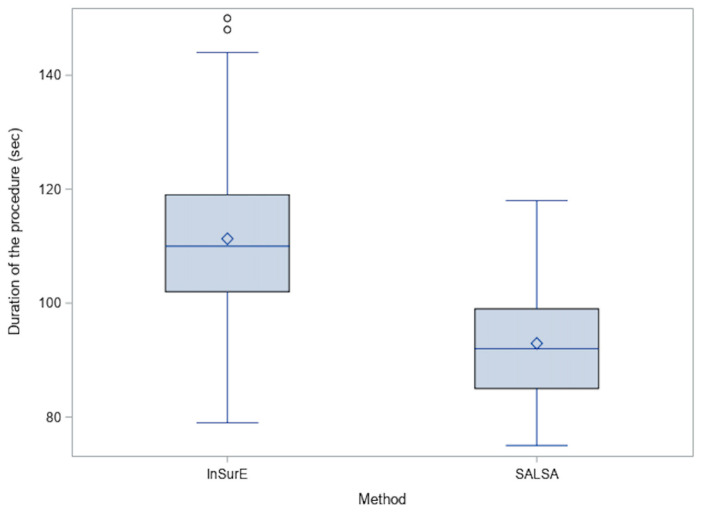
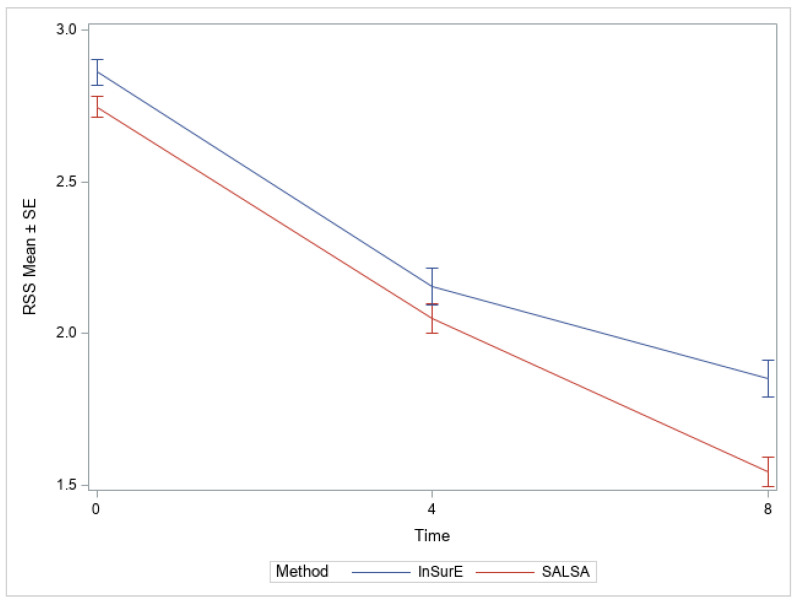
Administration of liquid surfactant through an endotracheal tube for the treatment of respiratory distress syndrome has been the standard of care for decades. Surfactant administration through laryngeal or supraglottic airways (SALSA) is a simplified procedure for delivery of surfactant that is less invasive and better tolerated. The Al Bashir Maternity and Children’s Hospital NICU in Amman, Jordan, implemented SALSA as a potentially better practice in 2019 with the objective to effectively and efficiently deliver surfactant in a minimally invasive way and to decrease the adverse events associated with intubation−surfactant−extubation (InSurE) and laryngoscopy. The quality improvement initiative was conducted from March 2019 to December 2019. All infants who weighed 750 g or more who required surfactant were eligible. As physicians were trained in the technique and use expanded, we were able to use plan−do−study−act cycles to observe differences between SALSA and InSurE. The primary aim was the optimization of non-invasive ventilation by the effective and efficient delivery of surfactant. Balancing measures included episodes of bradycardia while receiving surfactant or the need for a second dose of surfactant. We evaluated 220 infants who received surfactant by SALSA or InSurE with a mean gestational age of 32 weeks and a mean birth weight of 1.8 kg. The Respiratory Severity Score (RSS) prior to surfactant administration was 2.7 in the SALSA group compared to 2.9 in the InSurE group (p = 0.024). Those in the InSurE group had a lower mean heart rate during the procedure (p =< 0.0001) and were more likely to need a second dose of surfactant (p = 0.026) or require intubation for mechanical ventilation (p = 0.022). Both groups were effectively delivered surfactant as evidenced by improvement in their RSS over an 8 h period. SALSA was a more time efficient surfactant delivery method (93 vs. 111 secs, p =< 0.0001). Implementation of SALSA into the Al Bashir NICU was successful. We found that it was equally effective to InSurE, but was a more efficient method of delivery. Infants who received surfactant by this method tolerated it well.
几十年来,通过气管内导管给予液体表面活性剂治疗呼吸窘迫综合征一直是标准治疗方法。通过喉或声门上气道给予表面活性剂(SALSA)是一种更简化的表面活性剂给药程序,侵入性更小且耐受性更好。约旦安曼的阿尔巴希尔妇产儿童医院新生儿重症监护病房(NICU)于2019年将SALSA作为一种可能更好的做法加以实施,目的是以微创方式有效且高效地给予表面活性剂,并减少与插管 - 表面活性剂 - 拔管(InSurE)和喉镜检查相关的不良事件。质量改进计划于2019年3月至12月进行。所有体重750克或以上且需要表面活性剂的婴儿均符合条件。随着医生接受该技术培训并扩大使用范围,我们能够利用计划 - 实施 - 研究 - 行动循环来观察SALSA和InSurE之间的差异。主要目标是通过有效且高效地给予表面活性剂来优化无创通气。平衡指标包括接受表面活性剂时的心动过缓发作次数或是否需要第二剂表面活性剂。我们评估了220名通过SALSA或InSurE接受表面活性剂的婴儿,其平均胎龄为32周,平均出生体重为1.8千克。SALSA组在给予表面活性剂之前的呼吸严重程度评分(RSS)为2.7,而InSurE组为2.9(p = 0.024)。InSurE组在操作过程中的平均心率较低(p <= 0.0001),并且更有可能需要第二剂表面活性剂(p = 0.026)或需要插管进行机械通气(p = 0.022)。两组均有效地给予了表面活性剂,这在8小时内RSS的改善中得到了证明。SALSA是一种更节省时间的表面活性剂给药方法(93秒对111秒,p <= 0.0001)。在阿尔巴希尔NICU实施SALSA是成功的。我们发现它与InSurE同样有效,但却是一种更高效的给药方法。通过这种方法接受表面活性剂的婴儿耐受性良好。