Liang Yingchun, Zhang Xiaohua, Ma Chenkai, Hu Jimeng
Department of Urology, Huashan Hospital, Fudan University, No. 12 WuLuMuQi Middle Road, Shanghai 200040, China.
Fudan Institute of Urology, Huashan Hospital, Fudan University, Shanghai 200040, China.
Cancers (Basel). 2022 Aug 21;14(16):4035. doi: 10.3390/cancers14164035.
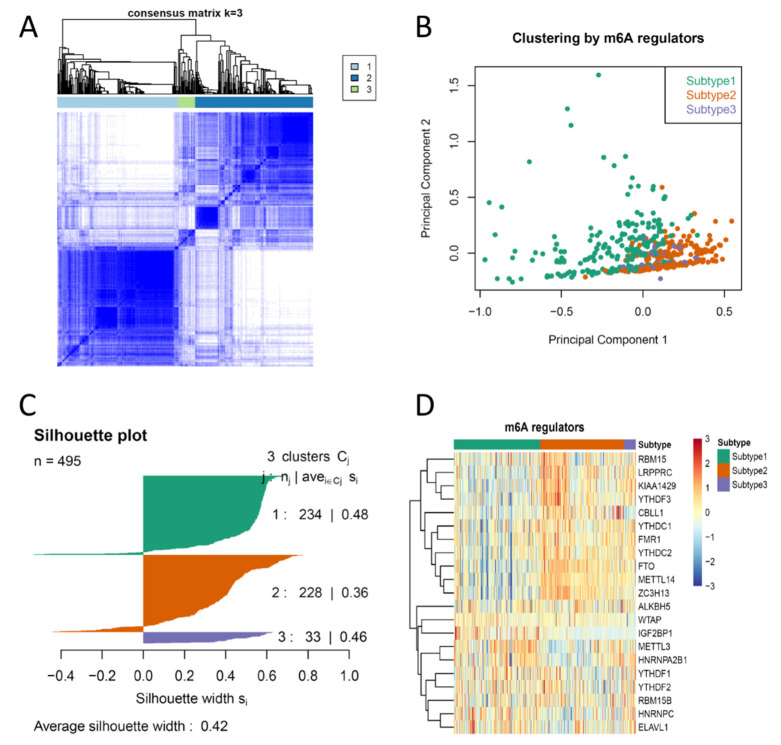
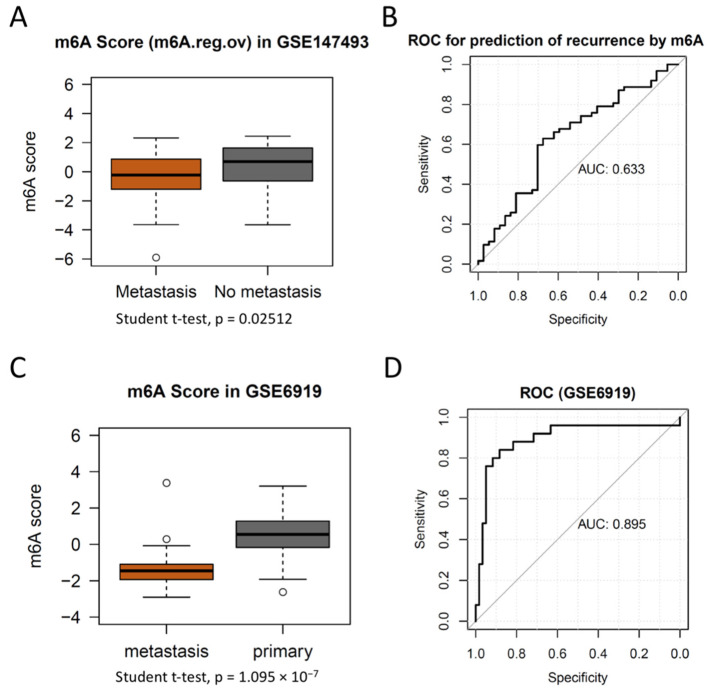
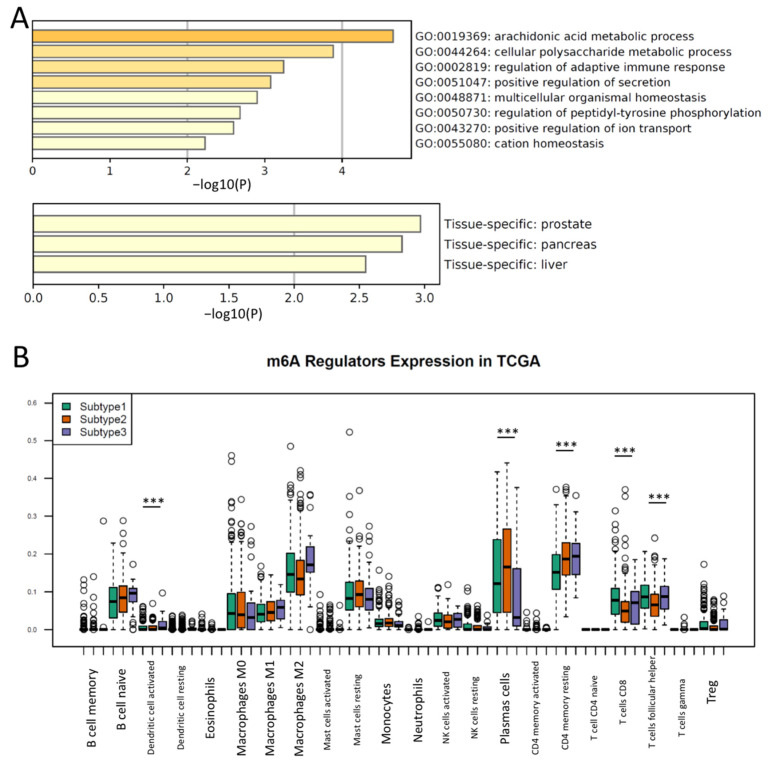
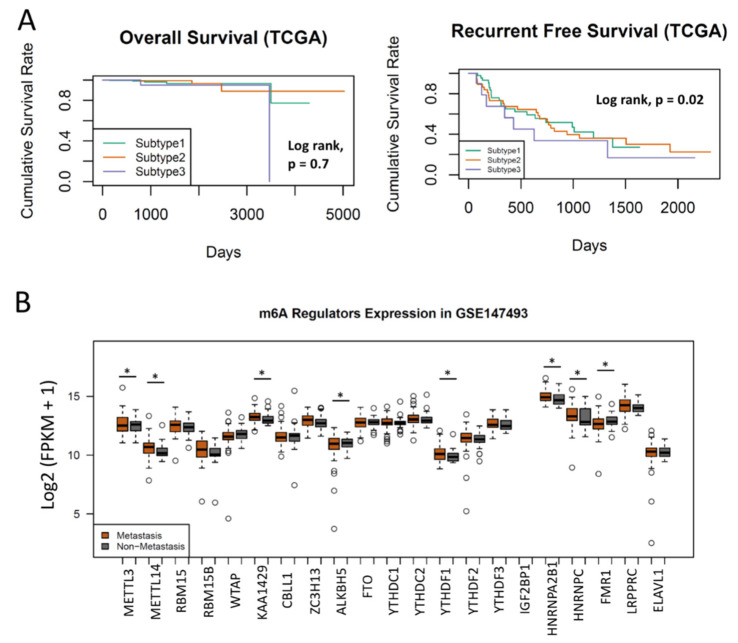
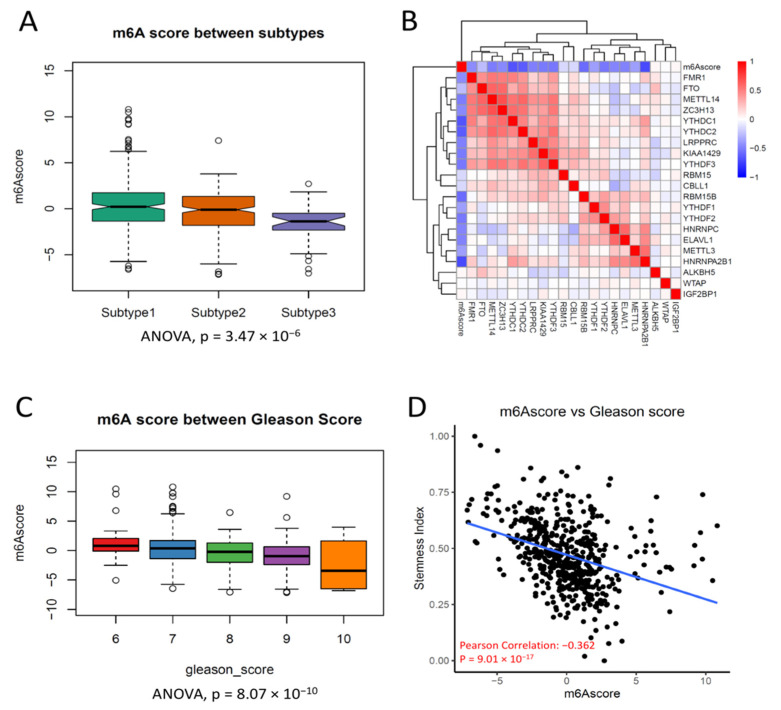
Prostate cancer (PCa) is one of the most common cancers in men. Usually, most PCas at initial diagnosis are localized and hormone-dependent, and grow slowly. Patients with localized PCas have a nearly 100% 5-year survival rate; however, the 5-year survival rate of metastatic or progressive PCa is still dismal. N6-methyladenosine (mA) is the most common post-transcriptional mRNA modification and is dynamically regulated by mA regulators. A few studies have shown that the abnormal expression of mA regulators is significantly associated with cancer progression and immune cell infiltration, but the roles of these regulators in PCa remain unclear. Here, we examined the expression profiles and methylation levels of 21 mA regulators across the Cancer Genome Atlas (TCGA), 495 PCas by consensus clustering, and correlated the expression of mA regulators with PCa progression and immune cell infiltration. Consensus clustering was applied for subtyping Pca samples into clusters based on the expression profiles of mA regulators. Each subtype's signature genes were obtained by a pairwise differential expression analysis. Featured pathways of mA subtypes were predicted by Gene Ontology. The mA score was developed to predict mA activation. The association of the mA score with patients' survival, metastasis and immune cell infiltration was also investigated. We identified three distinct clusters in PCa based on the expression profiles of 21 mA regulators by consensus clustering. The differential expression and pathway analyses on the three clusters uncovered the mA regulators involved in metabolic processes and immune responses in PCa. Moreover, we developed an mA score to evaluate the mA regulator activation for PCa. The mA score is significantly associated with Gleason scores and metastasis in PCa. The predictive capacity of the mA score on PCa metastasis was also validated in another independent cohort with an area under the curve of 89.5%. Hence, our study revealed the critical role of mA regulators in PCa progression and the mA score is a promising predictive biomarker for PCa metastasis.
前列腺癌(PCa)是男性中最常见的癌症之一。通常,大多数初诊时的PCa是局限性的且依赖激素,生长缓慢。局限性PCa患者的5年生存率接近100%;然而,转移性或进展性PCa的5年生存率仍然很低。N6-甲基腺苷(m6A)是最常见的转录后mRNA修饰,并且由m6A调节因子动态调控。一些研究表明,m6A调节因子的异常表达与癌症进展和免疫细胞浸润显著相关,但这些调节因子在PCa中的作用仍不清楚。在此,我们通过一致性聚类分析了癌症基因组图谱(TCGA)中495例PCa样本中21种m6A调节因子的表达谱和甲基化水平,并将m6A调节因子的表达与PCa进展和免疫细胞浸润相关联。基于m6A调节因子的表达谱,应用一致性聚类将PCa样本分为不同的簇。通过成对差异表达分析获得每个亚型的特征基因。通过基因本体论预测m6A亚型的特征通路。开发了m6A评分以预测m6A激活。还研究了m6A评分与患者生存、转移和免疫细胞浸润的关联。通过一致性聚类,基于21种m6A调节因子的表达谱,我们在PCa中鉴定出三个不同的簇。对这三个簇的差异表达和通路分析揭示了参与PCa代谢过程和免疫反应的m6A调节因子。此外,我们开发了一种m6A评分来评估PCa中m6A调节因子的激活情况。m6A评分与PCa中的Gleason评分和转移显著相关。m6A评分对PCa转移的预测能力在另一个独立队列中也得到了验证,曲线下面积为89.5%。因此,我们的研究揭示了m6A调节因子在PCa进展中的关键作用,并且m6A评分是PCa转移的一个有前景的预测生物标志物。