Institute of Chemical Biology and Fundamental Medicine of the Siberian Division of Russian Academy of Sciences, Lavrentiev Ave. 8, 630090 Novosibirsk, Russia.
G. B. Elyakov Pacific Institute of Bioorganic Chemistry, Far East Division, Russian Academy of Sciences, 690022 Vladivostok, Russia.
Int J Mol Sci. 2022 Aug 16;23(16):9182. doi: 10.3390/ijms23169182.
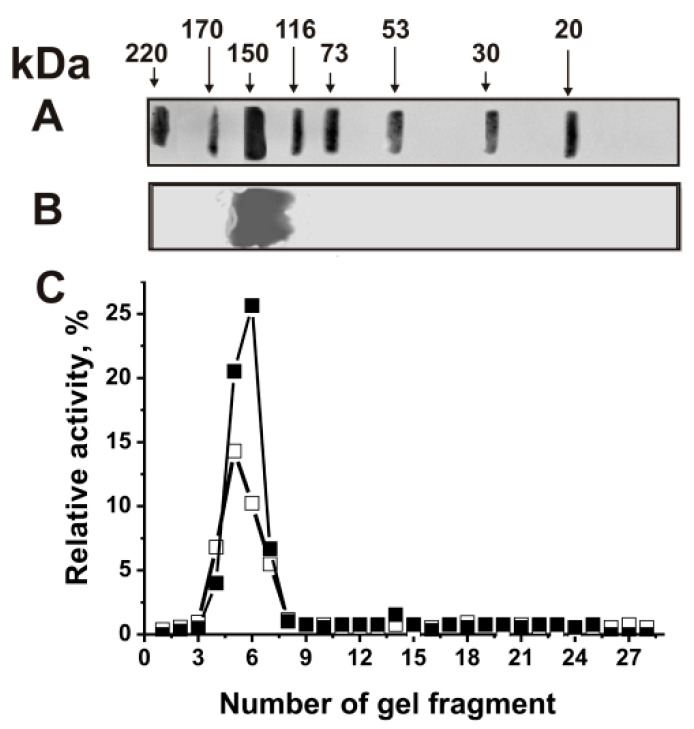
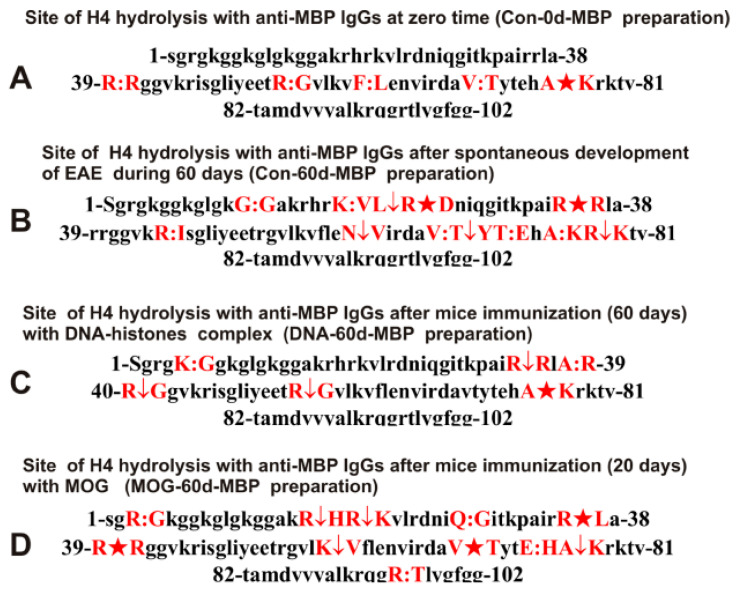
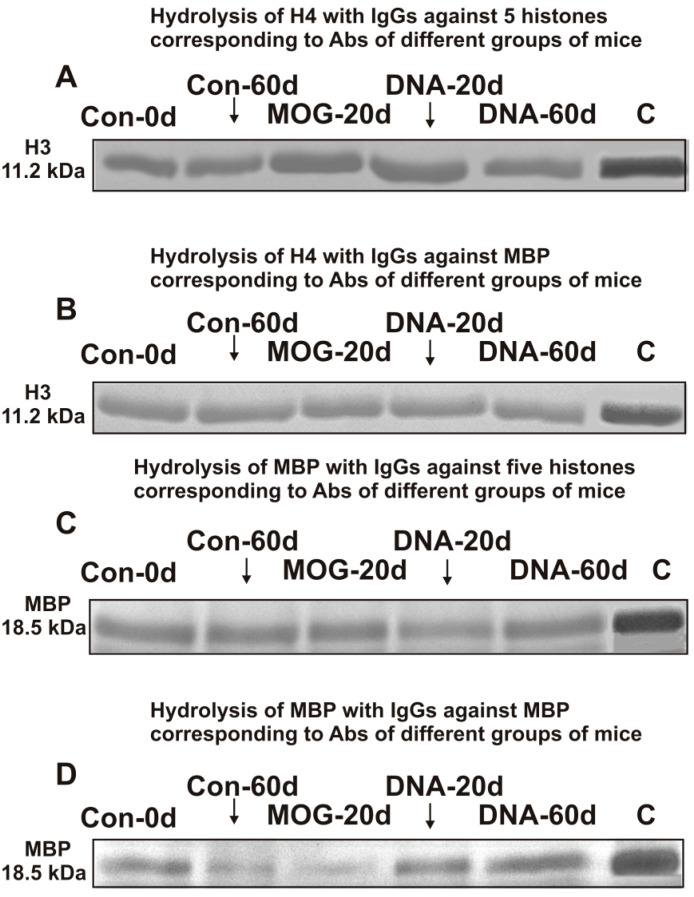
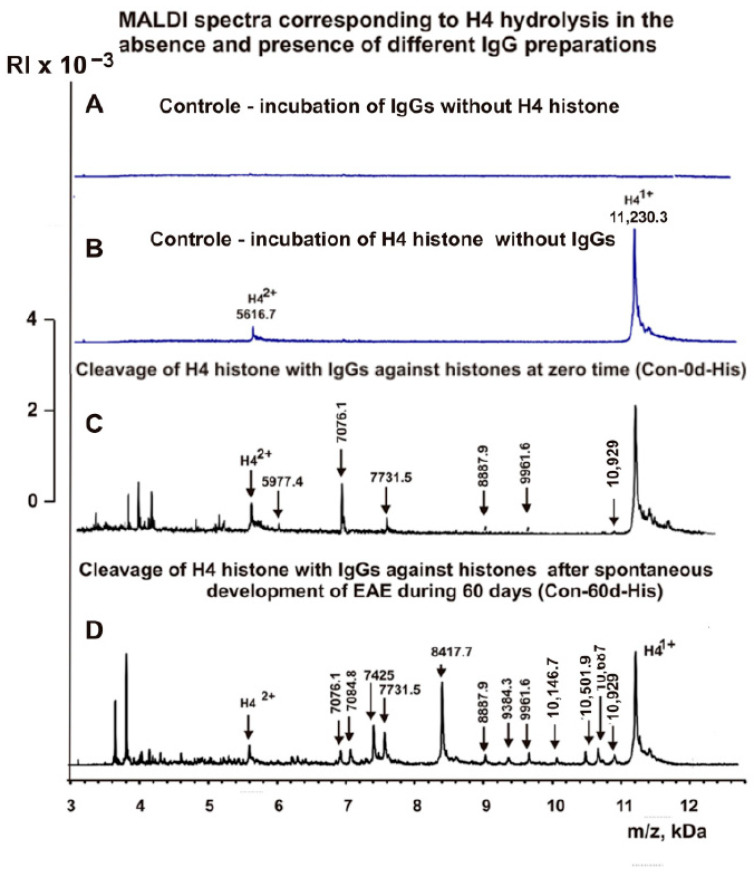
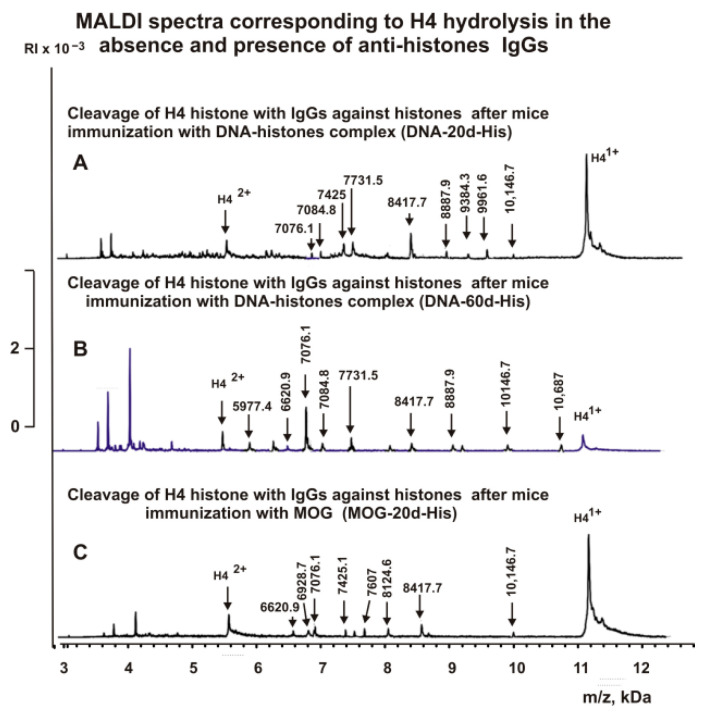
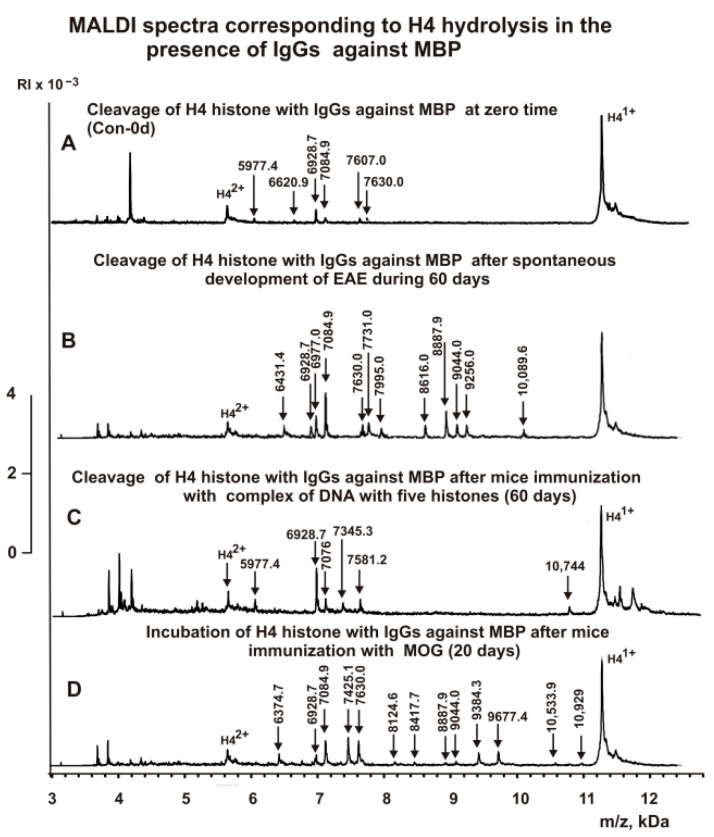
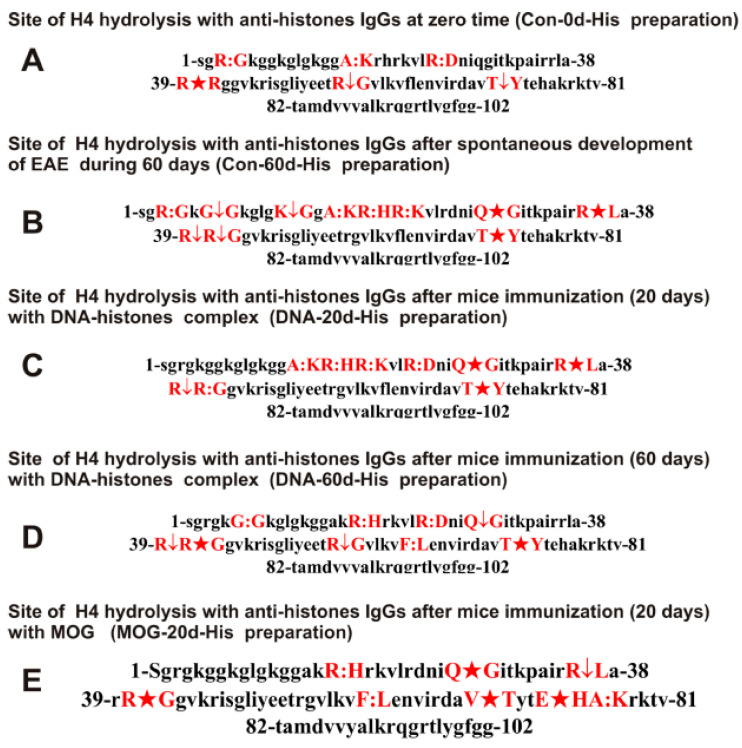
Histones play vital roles in chromatin functioning and gene transcription, but in intercellular space, they are harmful due to stimulating systemic inflammatory and toxic responses. Myelin basic protein (MBP) is the most important protein of the axon myelin-proteolipid sheath. Antibodies-abzymes with different catalytic activities are critical and specific features of some autoimmune diseases. Five IgG preparations against histones (H4, H1, H2A, H2B, and H3) and against MBP corresponding to different spontaneous, MOG (myelin oligodendrocyte glycoprotein of mice), and DNA-histones that accelerated onset, acute, and remission stages of experimental autoimmune encephalomyelitis (EAE; model of human multiple sclerosis) development were obtained from EAE-prone C57BL/6 mice by several affinity chromatographies. IgG-abzymes against five histones and MBP possess unusual polyreactivity in complexation and catalytic cross-reactivity in the hydrolysis of histone H4. IgGs against five histones and MBP corresponding to 3 month-old mice (zero time) in comparison with Abs corresponding to spontaneous development of EAE during 60 days differ in type and number of H4 sites for hydrolysis. Immunization of mice with MOG and DNA-histones complex results in an acceleration of EAE development associated with an increase in the activity of antibodies in H4 hydrolysis. Twenty days after mouse immunization with MOG or DNA-histones complex, the IgGs hydrolyze H4 at other additional sites compared to zero time. The maximum number of different sites of H4 hydrolysis was revealed for IgGs against five histones and MBP at 60 days after immunization of mice with MOG and DNA-histones. Overall, it first showed that at different stages of EAE development, abzymes could significantly differ in specific sites of H4 hydrolysis.
组蛋白在染色质功能和基因转录中发挥着重要作用,但在细胞外空间,由于刺激全身炎症和毒性反应,它们是有害的。髓鞘碱性蛋白 (MBP) 是轴突髓鞘-脂蛋白鞘的最重要的蛋白质。具有不同催化活性的抗体-抗体酶是一些自身免疫性疾病的关键和特异性特征。针对组蛋白 (H4、H1、H2A、H2B 和 H3) 和针对髓鞘碱性蛋白 (MBP) 的五种 IgG 制剂,这些制剂对应于不同的自发性、MOG(小鼠髓鞘少突胶质细胞糖蛋白)和 DNA-组蛋白,这些抗体-抗体酶加速了实验性自身免疫性脑脊髓炎 (EAE;人类多发性硬化症的模型) 的发病、急性和缓解阶段的发展,是从易患 EAE 的 C57BL/6 小鼠中通过几种亲和层析获得的。针对五种组蛋白和 MBP 的 IgG-抗体酶在复合物中的异常多反应性和在组蛋白 H4 水解中的催化交叉反应性。与在 60 天内自发发展的 EAE 相对应的针对 3 个月大的小鼠(零时间)的针对五种组蛋白和 MBP 的 IgG 与针对组蛋白 H4 水解的类型和数量不同。用 MOG 和 DNA-组蛋白复合物免疫小鼠可加速 EAE 的发展,同时增加 H4 水解抗体的活性。在用 MOG 或 DNA-组蛋白复合物免疫小鼠 20 天后,与零时间相比,IgG 水解 H4 的其他额外位点增加。在用 MOG 和 DNA-组蛋白免疫小鼠 60 天后,针对五种组蛋白和 MBP 的 IgG 显示出 H4 水解的不同位点数量最多。总的来说,这首先表明,在 EAE 发展的不同阶段,抗体酶在 H4 水解的特定位点上可能存在显著差异。