Koukaki Evangelia, Rovina Nikoletta, Tzannis Kimon, Sotiropoulou Zoi, Loverdos Konstantinos, Koutsoukou Antonia, Dimopoulos George
ICU, 1st Department of Pulmonary Medicine, Sotiria Hospital, National and Kapodistrian University of Athens, 11527 Athens, Greece.
2nd Propaedeutic Department of Internal Medicine, ATTIKON University Hospital, National and Kapodistrian University of Athens, 12462 Athens, Greece.
J Fungi (Basel). 2022 Aug 21;8(8):881. doi: 10.3390/jof8080881.
COVID-19-associated fungal infections seem to be a concerning issue. The aim of this study was to assess the incidence of fungal infections, the possible risk factors, and their effect on outcomes of critically ill patients with COVID-19.
A retrospective observational study was conducted in the COVID-19 ICU of the First Respiratory Department of National and Kapodistrian University of Athens in Sotiria Chest Diseases Hospital between 27 August 2020 and 10 November 2021.
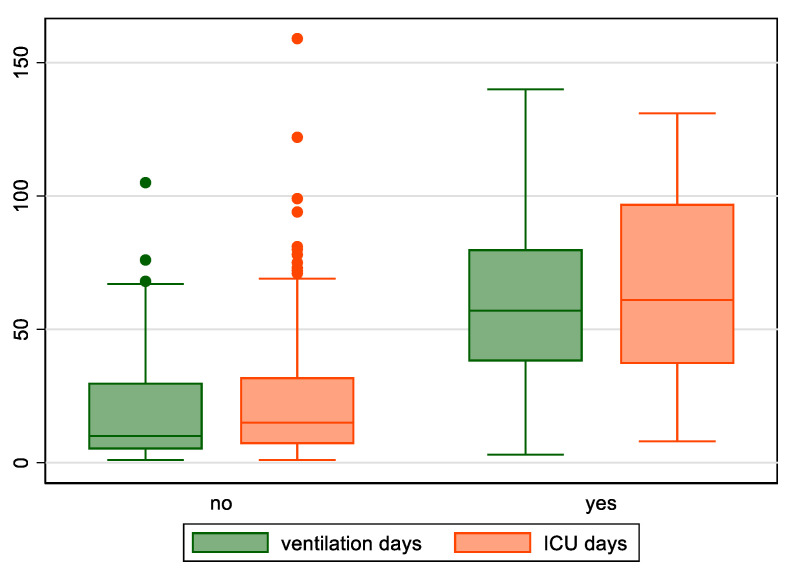
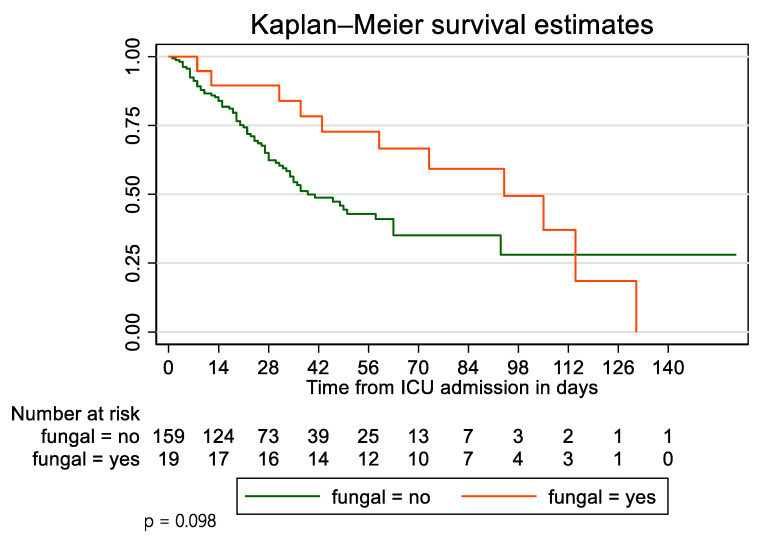
Here, 178 patients were included in the study. Nineteen patients (10.7%) developed fungal infection, of which five had COVID-19 associated candidemia, thirteen had COVID-19 associated pulmonary aspergillosis, and one had both. Patients with fungal infection were younger, had a lower Charlson Comorbidity Index, and had a lower PaO/FiO ratio upon admission. Regarding health-care factors, patients with fungal infections were treated more frequently with Tocilizumab, a high regimen of dexamethasone, continuous renal replacement treatment, and were supported more with ECMO. They also had more complications, especially infections, and subsequently developed septic shock more frequently. Finally, patients with fungal infections had a longer length of ICU stay, as well as length of mechanical ventilation, although no statistically significant difference was reported on 28-day and 90-day mortality.
Fungal infections seem to have a high incidence in COVID-19 critically ill patients and specific risk factors are identified. However, fungal infections do not seem to burden on mortality.
新型冠状病毒肺炎(COVID-19)相关真菌感染似乎是一个令人担忧的问题。本研究的目的是评估真菌感染的发生率、可能的危险因素及其对COVID-19重症患者预后的影响。
于2020年8月27日至2021年11月10日在雅典国立与卡波迪斯特里亚大学第一呼吸科位于索蒂里亚胸科医院的COVID-19重症监护病房进行了一项回顾性观察研究。
本研究共纳入178例患者。19例患者(10.7%)发生真菌感染,其中5例为COVID-19相关念珠菌血症,13例为COVID-19相关肺曲霉病,1例两者均有。发生真菌感染的患者更年轻,入院时查尔森合并症指数更低,动脉血氧分压/吸入氧分数值(PaO/FiO)更低。在医疗因素方面,发生真菌感染的患者更频繁地接受托珠单抗、高剂量地塞米松、持续肾脏替代治疗,且更多地接受体外膜肺氧合(ECMO)支持。他们也有更多并发症,尤其是感染,随后更频繁地发生感染性休克。最后,发生真菌感染的患者重症监护病房住院时间以及机械通气时间更长,尽管在28天和90天死亡率方面未报告有统计学显著差异。
真菌感染在COVID-19重症患者中似乎有较高发生率,且确定了特定危险因素。然而,真菌感染似乎并未增加死亡率。