Department of Veterinary Medical Sciences, Alma Mater Studiorum, University of Bologna, Cesenatico (FC), Italy.
Facultat de Veterinària, Universitat Autònoma de Barcelona, Barcelona, Spain.
PLoS One. 2022 Aug 26;17(8):e0273802. doi: 10.1371/journal.pone.0273802. eCollection 2022.
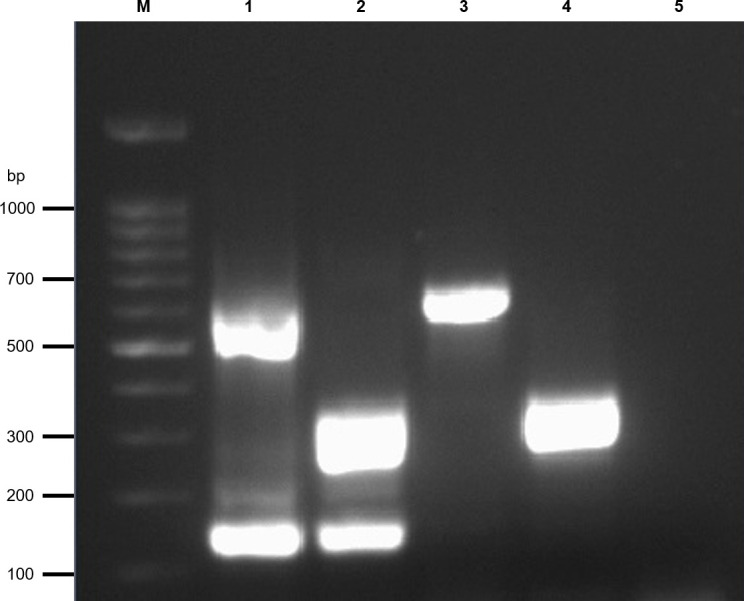
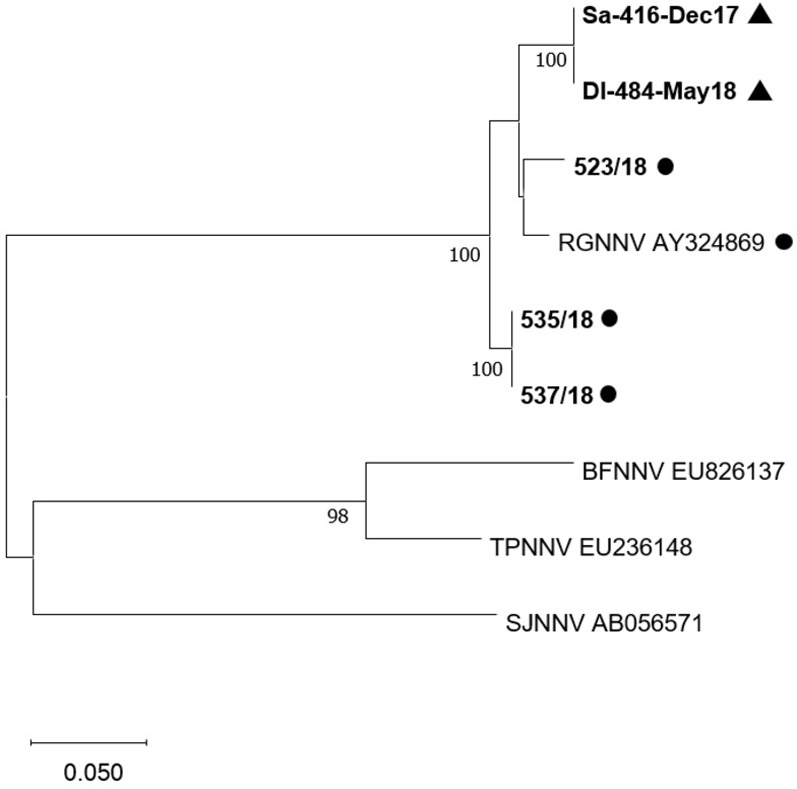
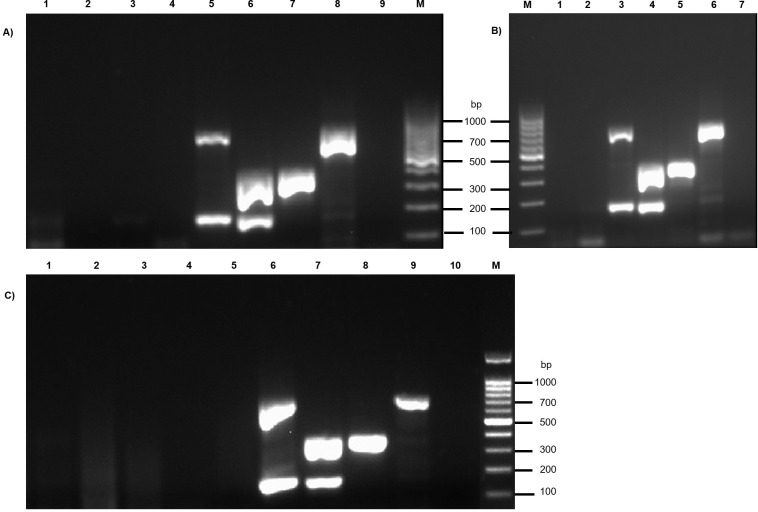
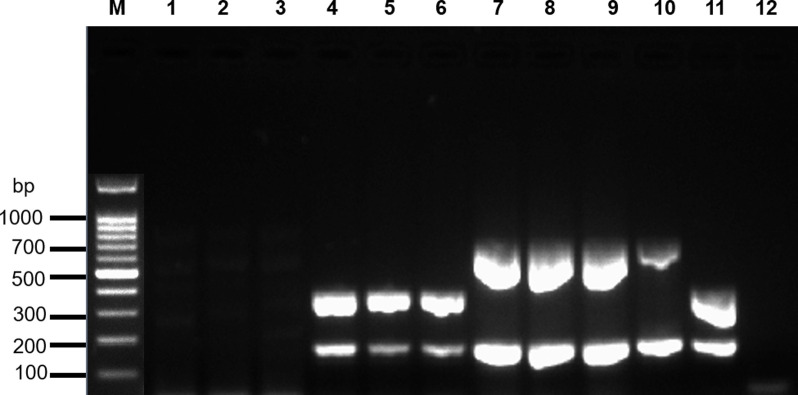
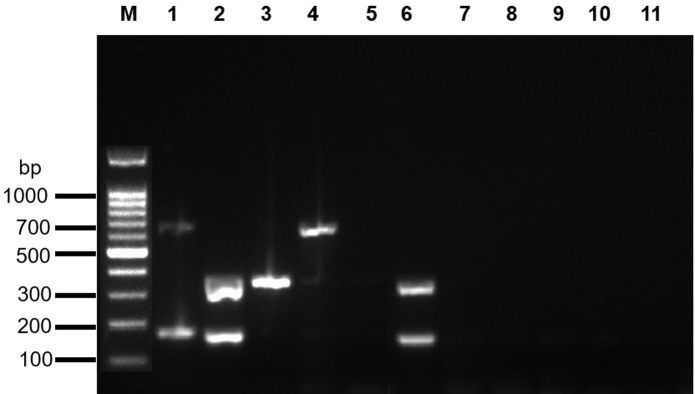
Nervous Necrosis Virus (NNV) represents one of the most threatening pathogens for Mediterranean aquaculture. Several NNV strains are currently co-circulating in the Mediterranean Basin with a high prevalence of the RGNNV genotype and the RGNNV/SJNNV reassortant strain and a more limited diffusion of the SJNNV genotype and the SJNNV/RGNNV reassortant. In the present study, a one-step multiplex RT-PCR (mRT-PCR) assay was developed as an easy, cost-effective and rapid diagnostic technique to detect RGNNV and the reassortant RGNNV/SJNNV strain and to distinguish them from SJNNV and the reassortant SJNNV/RGNNV strain in a single RT-PCR reaction. A unique amplification profile was obtained for each genotype/reassortant enabling their rapid identification from cell culture lysates or directly from brain tissues of suspected fish. The method's detection limit varied between 102.3 and 103.4 TCID50 ml-1 depending on viral strains. No cross-reacitivty with viruses and bacteria frequently associated with gilthead seabream, European seabass and marine environment was observed. The mRT-PCR was shown to be an accurate, rapid and affordable method to support traditional diagnostic techniques in the diagnosis of VNN, being able to reduce considerably the time to identify the viral genotype or the involvement of reassortant strains.
神经坏死病毒(NNV)是地中海水产养殖中最具威胁的病原体之一。目前,地中海盆地中有几种 NNV 毒株在共同传播,其中 RGNNV 基因型和 RGNNV/SJNNV 重组株的流行率较高,而 SJNNV 基因型和 SJNNV/RGNNV 重组株的流行率则较低。在本研究中,开发了一种一步多重 RT-PCR(mRT-PCR)检测方法,该方法易于操作、成本效益高且快速,可在单次 RT-PCR 反应中检测 RGNNV 和重组 RGNNV/SJNNV 株,并将其与 SJNNV 和重组 SJNNV/RGNNV 株区分开来。每种基因型/重组体都具有独特的扩增谱,可从细胞培养物裂解物或疑似鱼类的脑组织中快速识别它们。该方法的检测限因病毒株而异,在 102.3 到 103.4 TCID50 ml-1 之间。该方法与经常与金头鲷、欧洲鲈鱼和海洋环境相关的病毒和细菌无交叉反应性。mRT-PCR 是一种准确、快速且经济实惠的方法,可支持传统诊断技术对 VNN 的诊断,能够大大缩短识别病毒基因型或重组株参与的时间。