Institute of Cardiovascular Sciences, College of Medical and Dental Sciences, University of Birmingham, Birmingham, United Kingdom.
Center for Physiology and Pharmacology, Medical University of Vienna, Vienna, Austria.
Blood. 2022 Dec 15;140(24):2626-2643. doi: 10.1182/blood.2021014966.
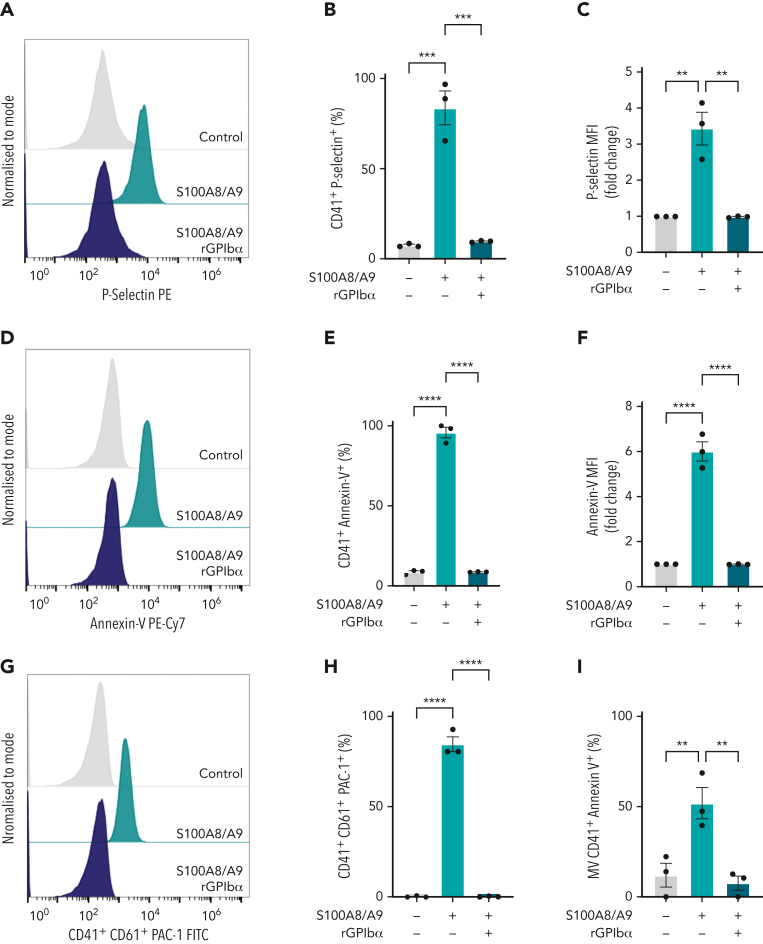
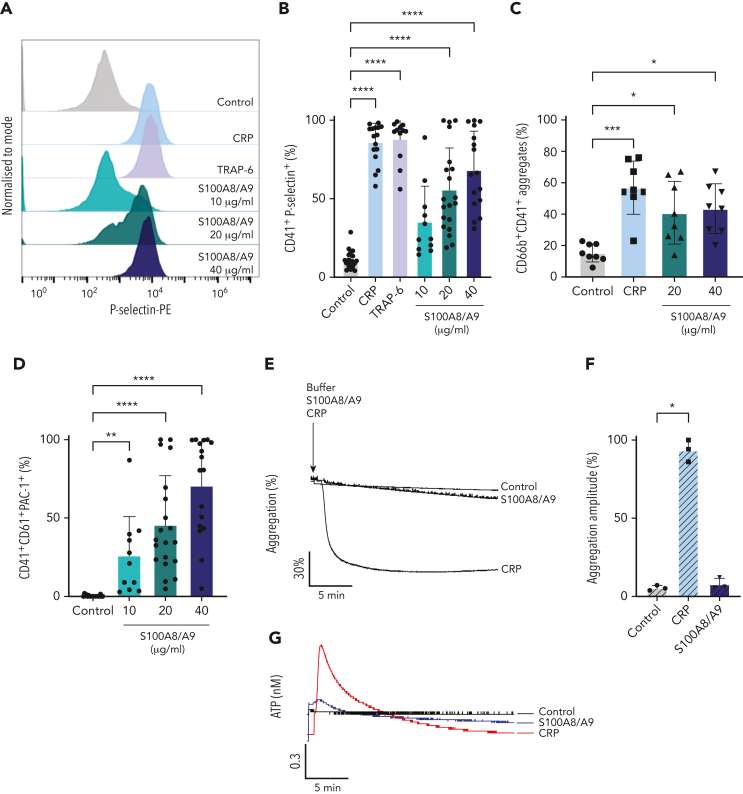
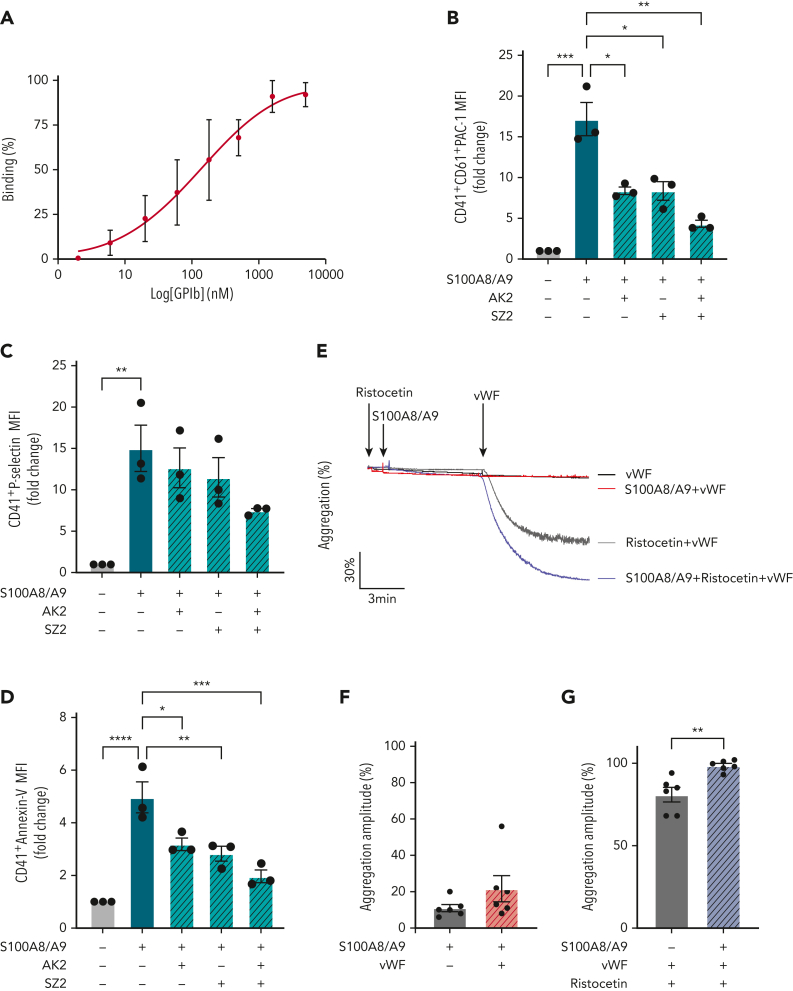
S100A8/A9, also known as "calprotectin" or "MRP8/14," is an alarmin primarily secreted by activated myeloid cells with antimicrobial, proinflammatory, and prothrombotic properties. Increased plasma levels of S100A8/A9 in thrombo-inflammatory diseases are associated with thrombotic complications. We assessed the presence of S100A8/A9 in the plasma and lung autopsies from patients with COVID-19 and investigated the molecular mechanism by which S100A8/A9 affects platelet function and thrombosis. S100A8/A9 plasma levels were increased in patients with COVID-19 and sustained high levels during hospitalization correlated with poor outcomes. Heterodimeric S100A8/A9 was mainly detected in neutrophils and deposited on the vessel wall in COVID-19 lung autopsies. Immobilization of S100A8/A9 with collagen accelerated the formation of a fibrin-rich network after perfusion of recalcified blood at venous shear. In vitro, platelets adhered and partially spread on S100A8/A9, leading to the formation of distinct populations of either P-selectin or phosphatidylserine (PS)-positive platelets. By using washed platelets, soluble S100A8/A9 induced PS exposure but failed to induce platelet aggregation, despite GPIIb/IIIa activation and alpha-granule secretion. We identified GPIbα as the receptor for S100A8/A9 on platelets inducing the formation of procoagulant platelets with a supporting role for CD36. The effect of S100A8/A9 on platelets was abolished by recombinant GPIbα ectodomain, platelets from a patient with Bernard-Soulier syndrome with GPIb-IX-V deficiency, and platelets from mice deficient in the extracellular domain of GPIbα. We identified the S100A8/A9-GPIbα axis as a novel targetable prothrombotic pathway inducing procoagulant platelets and fibrin formation, in particular in diseases associated with high levels of S100A8/A9, such as COVID-19.
S100A8/A9,也称为“钙卫蛋白”或“MRP8/14”,是一种主要由激活的髓样细胞分泌的警报素,具有抗菌、促炎和促血栓形成的特性。在血栓炎症性疾病中,血浆 S100A8/A9 水平升高与血栓并发症有关。我们评估了 COVID-19 患者血浆和肺尸检中 S100A8/A9 的存在,并研究了 S100A8/A9 影响血小板功能和血栓形成的分子机制。COVID-19 患者的 S100A8/A9 血浆水平升高,住院期间持续高水平与不良预后相关。异二聚体 S100A8/A9 主要在中性粒细胞中检测到,并在 COVID-19 肺尸检中沉积在血管壁上。S100A8/A9 与胶原蛋白固定后,在静脉剪切下再钙化血液灌注后加速富含纤维蛋白的网络形成。在体外,血小板黏附和部分铺展在 S100A8/A9 上,导致形成明显的 P-选择素或磷脂酰丝氨酸(PS)阳性血小板群体。使用洗涤后的血小板,可溶性 S100A8/A9 诱导 PS 暴露,但未能诱导血小板聚集,尽管 GPIIb/IIIa 激活和α颗粒分泌。我们确定 GPIbα 是血小板上 S100A8/A9 的受体,诱导形成具有辅助作用的促凝血小板 CD36。S100A8/A9 对血小板的作用被重组 GPIbα 细胞外结构域、缺乏 GPIb-IX-V 的 Bernard-Soulier 综合征患者的血小板和缺乏 GPIbα 细胞外结构域的小鼠的血小板所废除。我们确定了 S100A8/A9-GPIbα 轴作为一种新的可靶向促血栓形成途径,诱导促凝血小板和纤维蛋白形成,特别是在与 S100A8/A9 水平升高相关的疾病中,如 COVID-19。