Department of Human Development and Family Studies, The Pennsylvania State University, University Park, PA 16802, United States.
Department of Human Development and Family Studies, The Pennsylvania State University, University Park, PA 16802, United States.
Infant Behav Dev. 2022 Nov;69:101756. doi: 10.1016/j.infbeh.2022.101756. Epub 2022 Aug 23.
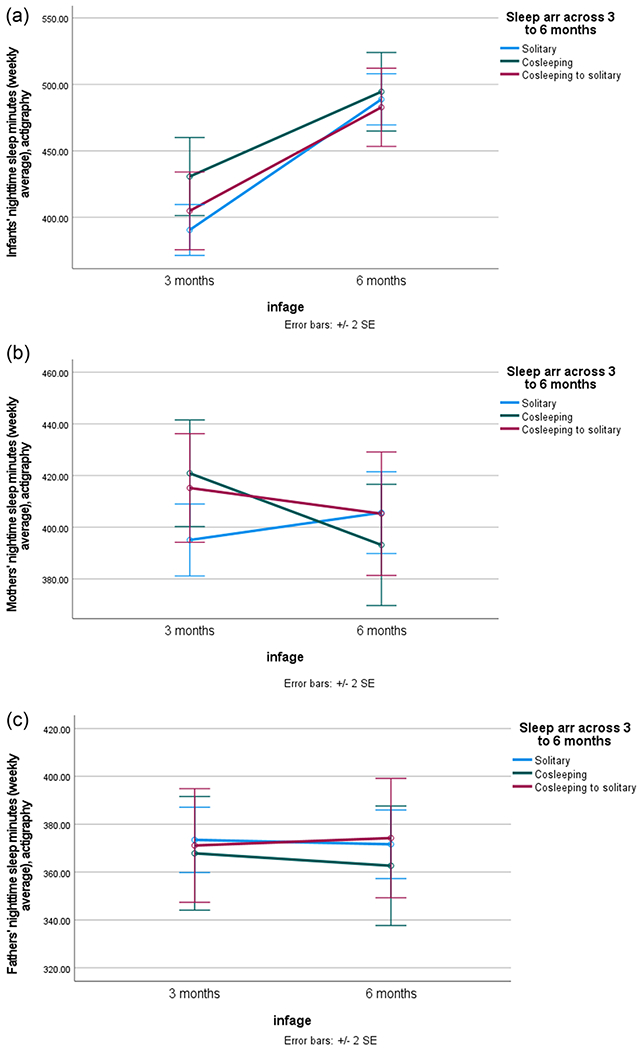
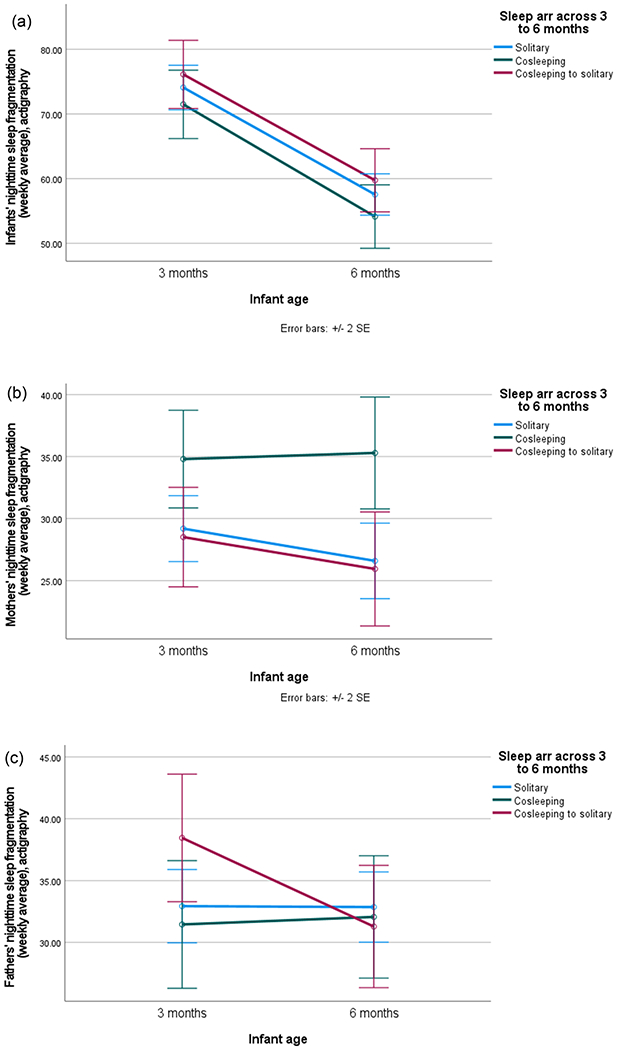
The present study of 124 families examined linkages between patterns of sleep arrangement use across the first 6 months post-partum and (a) family socio-demographics, (b) nighttime sleep of infants, mothers, and fathers, and (c) coparenting distress, and mothers' emotional availability with infants and bedtime. Families were recruited when infants were 1-month-old, and infants were classified, from video data available at 3 and 6 months post-partum, into one of three sleep arrangement pattern groups: Solitary sleep, cosleeping, and cosleeping (at 3 months)-to-solitary sleep (at 6 months). Mothers in cosleeping arrangements were more likely to be at higher socioeconomic risk, non-White, unemployed, and to have completed fewer years of education. Controlling for these variables and for duration of breast feeding and parental depressive and anxiety symptoms, subsequent 3 (sleep arrangement pattern) X 2 (infant age: 3 and 6 months) mixed-model analyses of covariance revealed that sleep arrangement patterns were more robustly linked with maternal sleep than with infant and father sleep. Mothers in cosleeping arrangements experienced more fragmented sleep and greater variability in fragmented sleep relative to mothers of infants in solitary sleep, and fathers in cosleeping arrangements showed greater variability across the week in the number of minutes of nighttime sleep. Cosleeping was associated with mother reports of less positive and more negative coparenting, and mothers in cosleeping arrangements were independently observed to be less emotionally available with their infants at bedtime compared to mothers in the other two sleep arrangement groups. These linkages were largely upheld after statistically controlling for mothers' stated preference for sleep arrangements they were using.
本研究对 124 个家庭进行了研究,考察了产后头 6 个月内不同的睡眠安排方式与(a)家庭社会人口统计学特征、(b)婴儿、母亲和父亲的夜间睡眠、(c)共同养育困扰以及母亲对婴儿的情感投入和就寝时间之间的关系。在婴儿 1 个月大时招募家庭,并根据产后 3 个月和 6 个月的视频数据,将婴儿分为 3 种睡眠安排模式组之一:单独睡眠、同睡和同睡(3 个月)-单独睡眠(6 个月)。同睡安排的母亲更有可能处于较高的社会经济风险中、非裔美国人、失业,以及受教育程度较低。在控制这些变量以及母乳喂养时间、父母抑郁和焦虑症状后,随后进行的 3(睡眠安排模式)x2(婴儿年龄:3 个月和 6 个月)混合模型方差分析显示,睡眠安排模式与母亲的睡眠更为相关,而与婴儿和父亲的睡眠相关性较低。与单独睡眠的婴儿的母亲相比,同睡的母亲睡眠更为碎片化且波动更大,同睡的父亲夜间睡眠的分钟数在一周内波动更大。同睡与母亲报告的共同养育关系更消极、更积极有关,与其他两种睡眠安排组的母亲相比,同睡安排的母亲在就寝时间与婴儿的情感投入较低。在统计控制了母亲对正在使用的睡眠安排的偏好后,这些关联仍然成立。