Kojima Sunao, Yamamoto Takeshi, Kikuchi Migaku, Hanada Hiroyuki, Mano Toshiaki, Nakashima Takahiro, Hashiba Katsutaka, Tanaka Akihito, Yamaguchi Junichi, Matsuo Kunihiro, Nakayama Naoki, Nomura Osamu, Matoba Tetsuya, Tahara Yoshio, Nonogi Hiroshi
Department of Internal Medicine, Sakurajyuji Yatsushiro Rehabilitation Hospital Yatsushiro Japan.
Division of Cardiovascular Intensive Care, Nippon Medical School Hospital Tokyo Japan.
Circ Rep. 2022 Jul 6;4(8):335-344. doi: 10.1253/circrep.CR-22-0031. eCollection 2022 Aug 10.
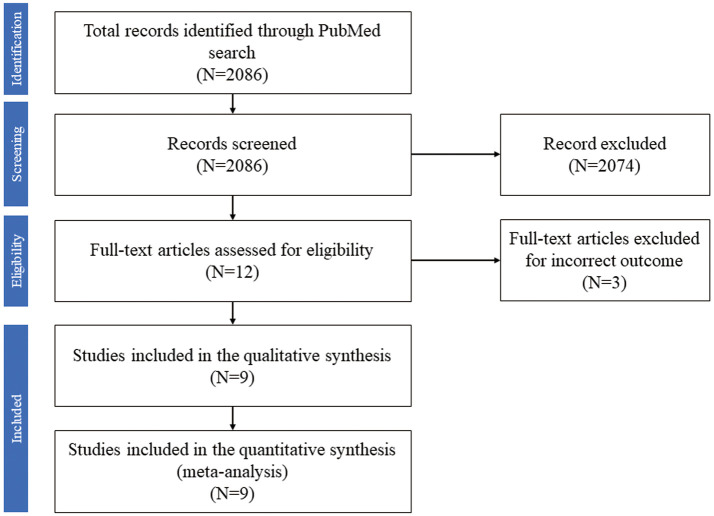
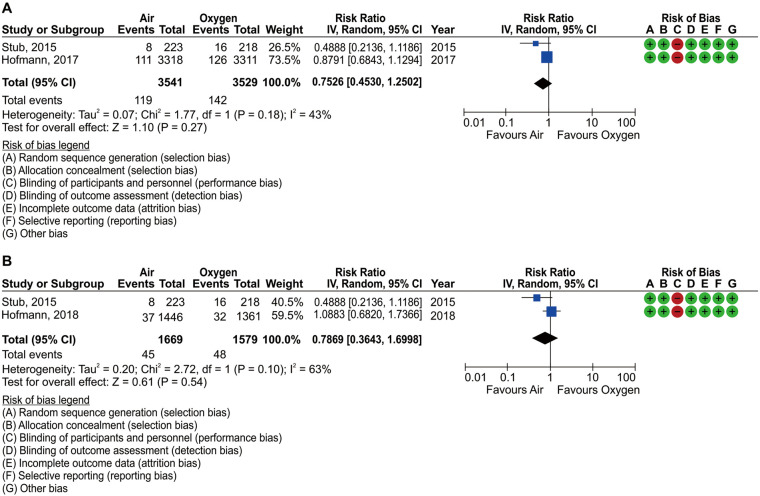
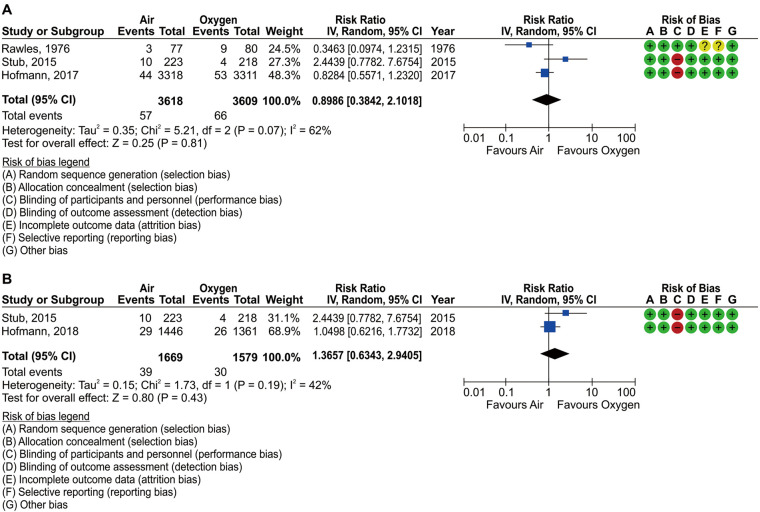
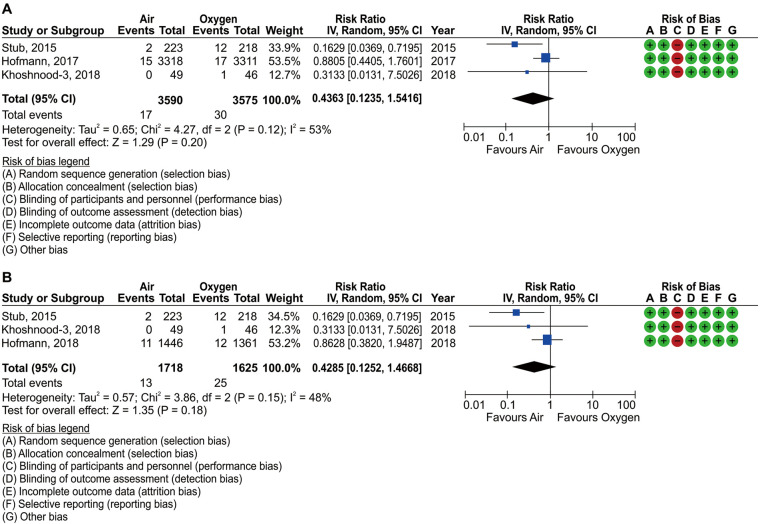
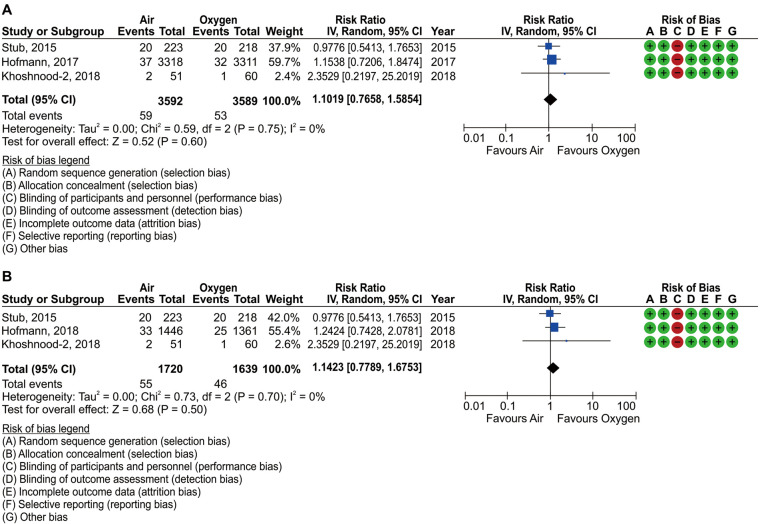
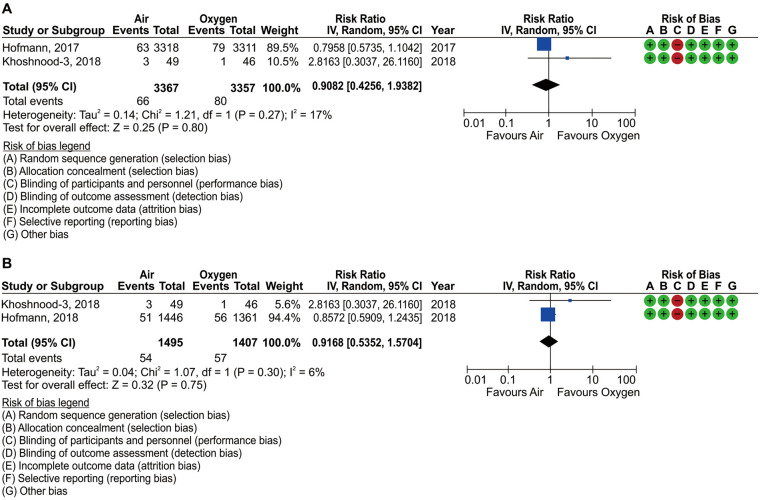
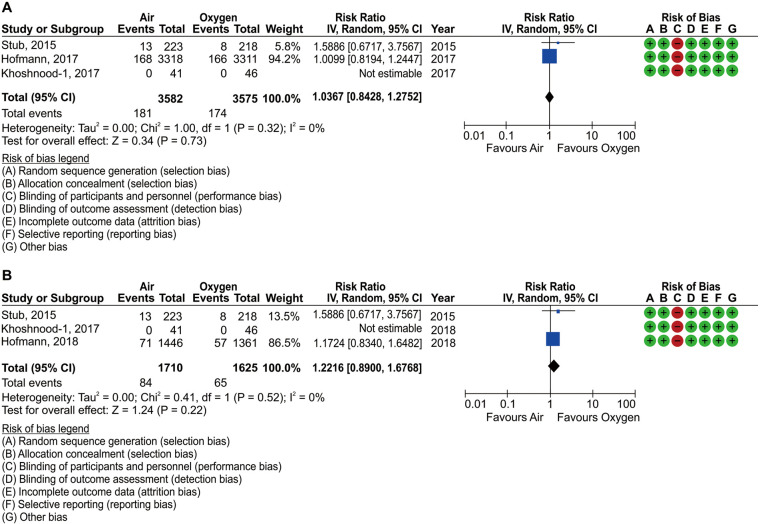
In Japan, oxygen is commonly administered during the acute phase of myocardial infarction (MI) to patients without oxygen saturation monitoring. In this study we assessed the effects of supplemental oxygen therapy, compared with ambient air, on mortality and cardiac events by synthesizing evidence from randomized controlled trials (RCTs) of patients with suspected or confirmed acute MI. PubMed was systematically searched for full-text RCTs published in English before June 21, 2020. Two reviewers independently screened the search results and appraised the risk of bias. The estimates for each outcome were pooled using a random-effects model. In all, 2,086 studies retrieved from PubMed were screened. Finally, 7,322 patients from 9 studies derived from 4 RCTs were analyzed. In-hospital mortality in the oxygen and ambient air groups was 1.8% and 1.6%, respectively (risk ratio [RR] 0.90; 95% confidence interval [CI] 0.38-2.10]); 0.8% and 0.5% of patients, respectively, experienced recurrent MI (RR 0.44; 95% CI 0.12-1.54), 1.5% and 1.6% of patients, respectively, experienced cardiac shock (RR 1.10; 95% CI 0.77-1.59]), and 2.4% and 2.0% of patients, respectively, experienced cardiac arrest (RR 0.91; 95% CI 0.43-1.94). Routine supplemental oxygen administration may not be beneficial or harmful, and high-flow oxygen may be unnecessary in normoxic patients in the acute phase of MI.
在日本,心肌梗死(MI)急性期通常会在未进行血氧饱和度监测的情况下给患者吸氧。在本研究中,我们通过综合疑似或确诊急性MI患者的随机对照试验(RCT)证据,评估了与吸入环境空气相比,补充氧气疗法对死亡率和心脏事件的影响。我们系统检索了截至2020年6月21日以英文发表在PubMed上的全文RCT。两名审稿人独立筛选检索结果并评估偏倚风险。使用随机效应模型汇总每个结局的估计值。总共筛选了从PubMed检索到的2086项研究。最后,分析了来自4项RCT的9项研究中的7322例患者。吸氧组和吸入环境空气组的院内死亡率分别为1.8%和1.6%(风险比[RR]0.90;95%置信区间[CI]0.38 - 2.10);分别有0.8%和0.5%的患者发生心肌梗死复发(RR 0.44;95%CI 0.12 - 1.54);分别有1.5%和1.6%的患者发生心源性休克(RR 1.10;95%CI 0.77 - 1.59);分别有2.4%和2.0%的患者发生心脏骤停(RR 0.91;95%CI 0.43 - 1.94)。常规补充氧气可能既无益处也无害处,对于MI急性期的正常氧合患者可能无需高流量吸氧。