Port Julia R, Morris Dylan H, Riopelle Jade C, Yinda Claude Kwe, Avanzato Victoria A, Holbrook Myndi G, Bushmaker Trenton, Schulz Jonathan E, Saturday Taylor A, Barbian Kent, Russell Colin A, Perry-Gottschalk Rose, Shaia Carl I, Martens Craig, Lloyd-Smith James O, Fischer Robert J, Munster Vincent J
Laboratory of Virology, Division of Intramural Research, National Institute of Allergy and Infectious Diseases, National Institutes of Health, Hamilton, MT, USA.
Department of Ecology and Evolutionary Biology, University of California, Los Angeles, CA, USA.
bioRxiv. 2023 Oct 9:2022.08.15.504010. doi: 10.1101/2022.08.15.504010.
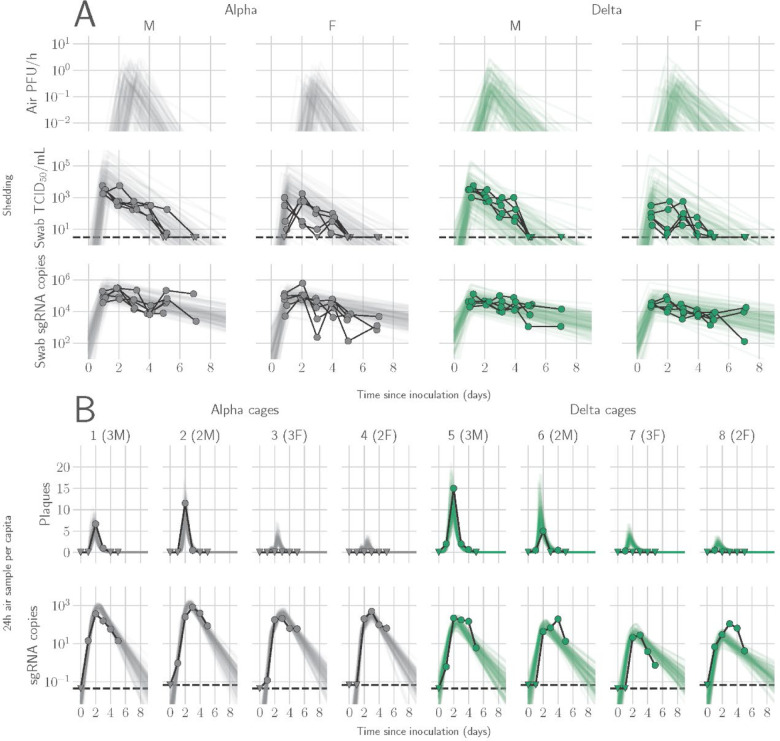
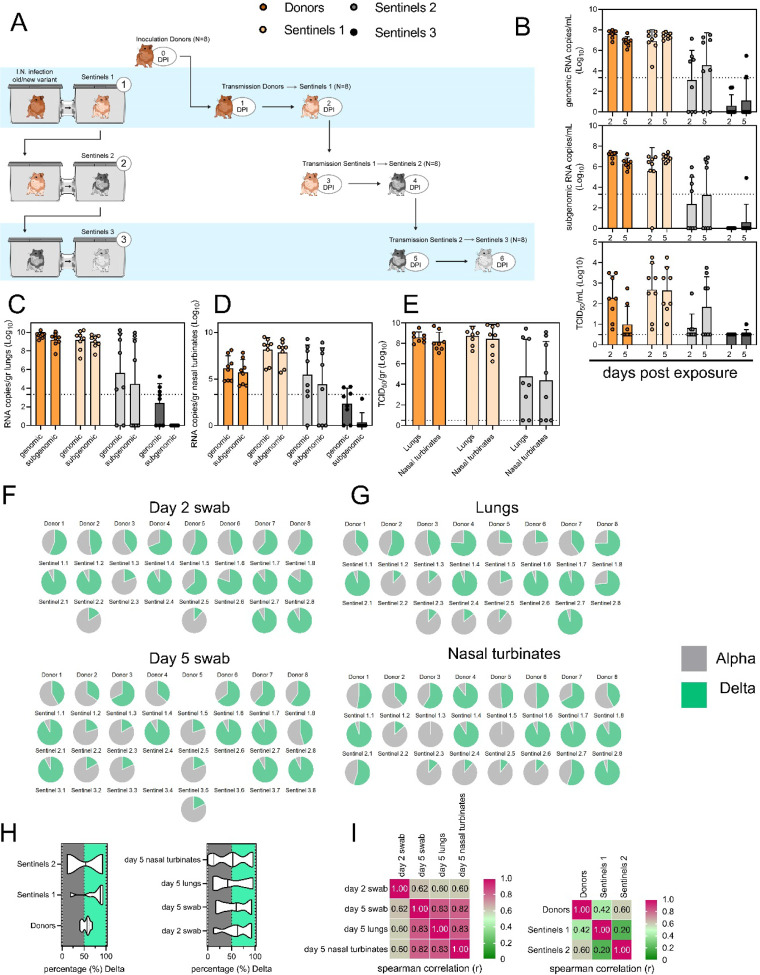
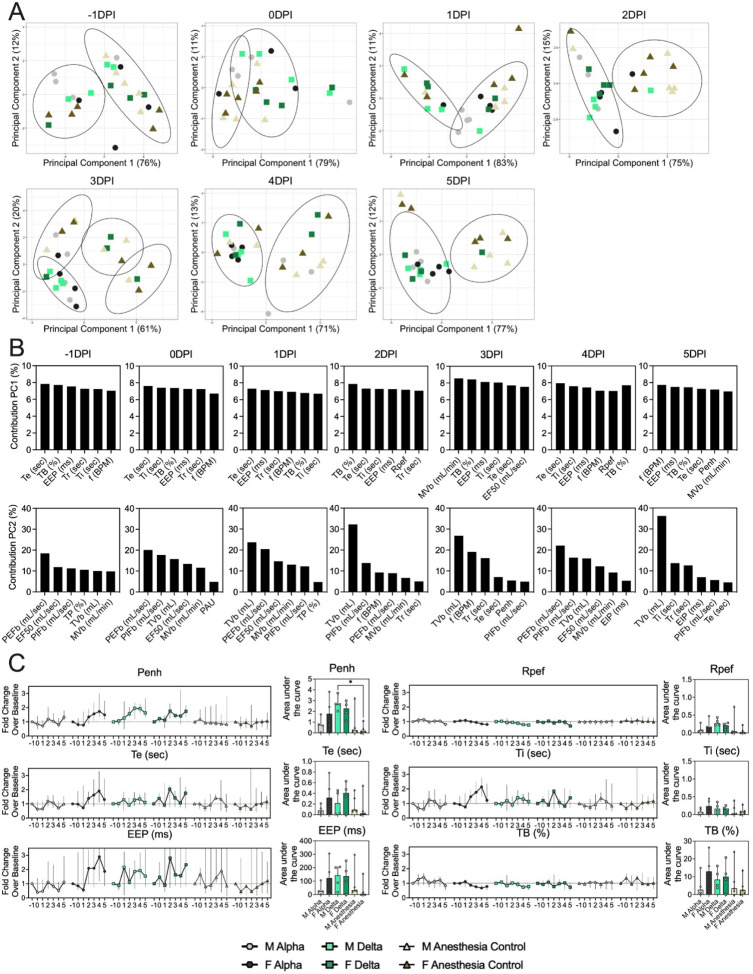
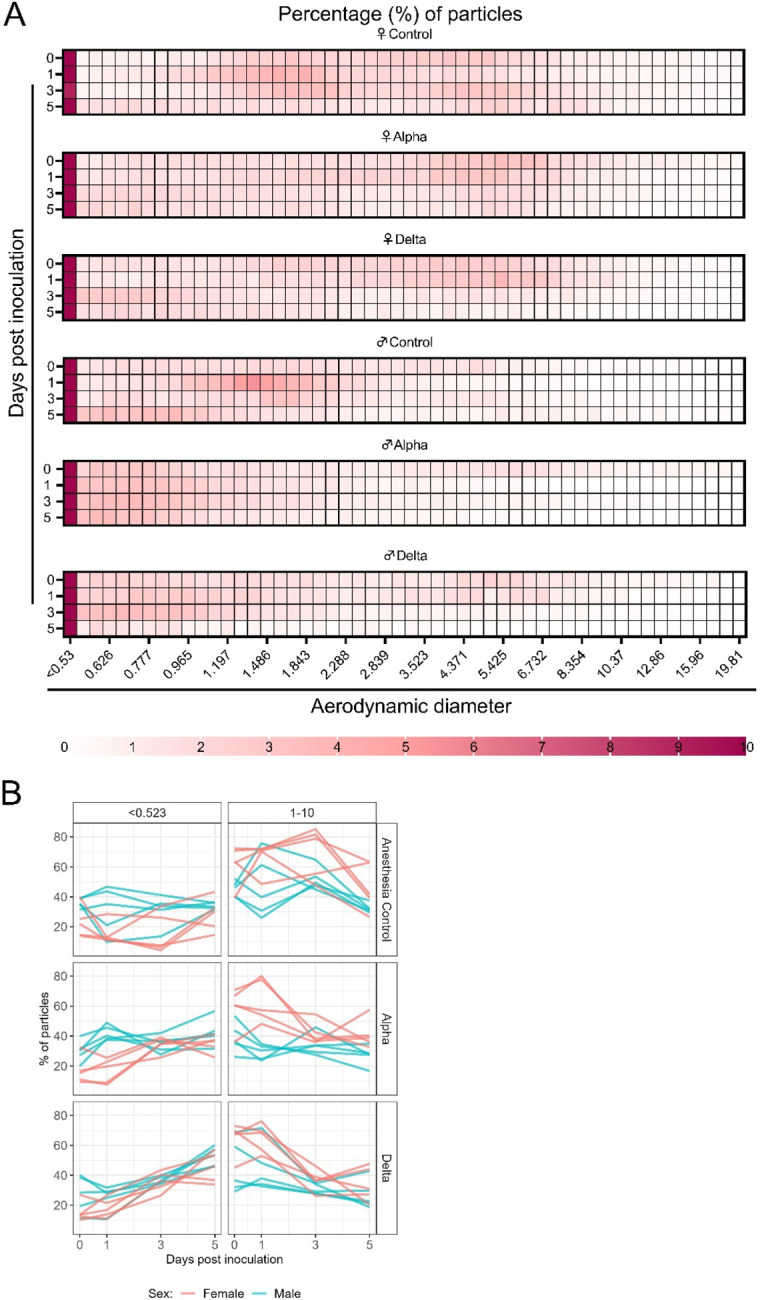
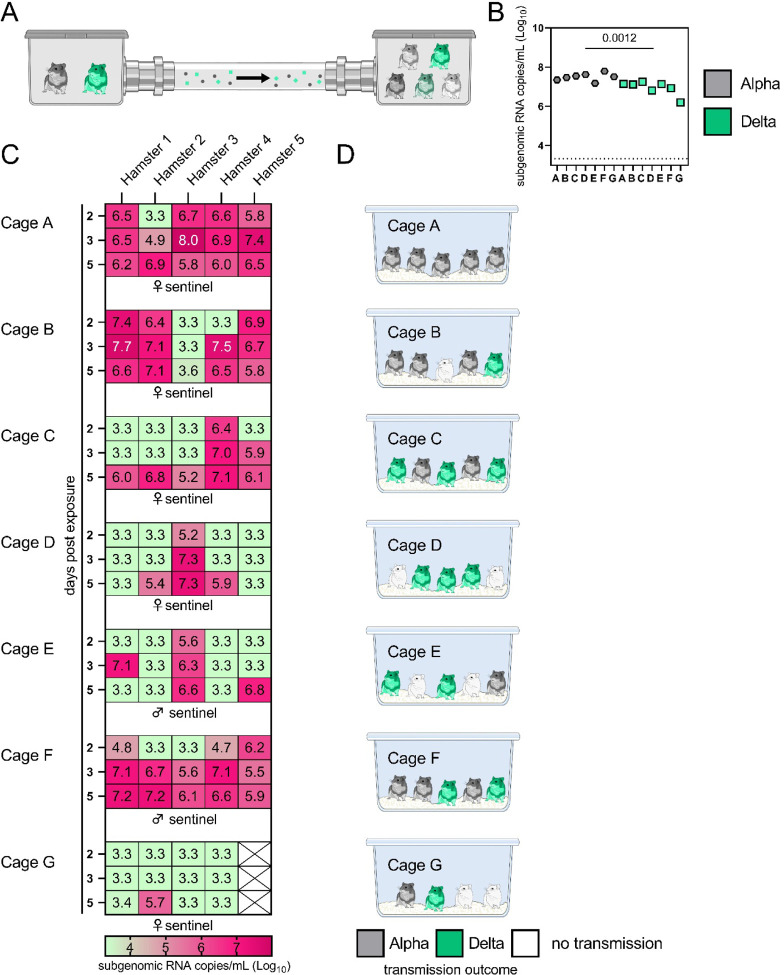
It remains poorly understood how SARS-CoV-2 infection influences the physiological host factors important for aerosol transmission. We assessed breathing pattern, exhaled droplets, and infectious virus after infection with Alpha and Delta variants of concern (VOC) in the Syrian hamster. Both VOCs displayed a confined window of detectable airborne virus (24-48 h), shorter than compared to oropharyngeal swabs. The loss of airborne shedding was linked to airway constriction resulting in a decrease of fine aerosols (1-10μm) produced, which are suspected to be the major driver of airborne transmission. Male sex was associated with increased viral replication and virus shedding in the air. Next, we compared the transmission efficiency of both variants and found no significant differences. Transmission efficiency varied mostly among donors, 0-100% (including a superspreading event), and aerosol transmission over multiple chain links was representative of natural heterogeneity of exposure dose and downstream viral kinetics. Co-infection with VOCs only occurred when both viruses were shed by the same donor during an increased exposure timeframe (24-48 h). This highlights that assessment of host and virus factors resulting in a differential exhaled particle profile is critical for understanding airborne transmission.
目前对于严重急性呼吸综合征冠状病毒2(SARS-CoV-2)感染如何影响气溶胶传播所重要的生理宿主因素仍知之甚少。我们评估了叙利亚仓鼠感染关注的阿尔法(Alpha)和德尔塔(Delta)变异株(VOC)后的呼吸模式、呼出飞沫和传染性病毒。两种变异株均显示出可检测到的空气传播病毒的有限窗口期(24 - 48小时),比口咽拭子检测到病毒的时间短。空气传播病毒脱落与气道收缩有关,导致产生的细气溶胶(1 - 10μm)减少,细气溶胶被怀疑是空气传播的主要驱动因素。雄性与病毒复制增加和空气中病毒脱落增加有关。接下来,我们比较了两种变异株的传播效率,未发现显著差异。传播效率在供体之间差异很大,为0 - 100%(包括一次超级传播事件),并且多链环节的气溶胶传播代表了暴露剂量和下游病毒动力学的自然异质性。只有当两种病毒在同一供体的暴露增加时间段(24 - 48小时)内同时脱落时,才会发生两种变异株的共同感染。这突出表明,评估导致呼出颗粒特征不同的宿主和病毒因素对于理解空气传播至关重要。