Rizaal Muhammad, Nakajima Kunihisa, Saito Takumi, Osaka Masahiko, Okamoto Koji
Nuclear Science and Engineering Center, Japan Atomic Energy Agency, 2-4 Shirane, Shirakata, Tokai-mura, Naka-gun, Ibaraki 319-1195, Japan.
Nuclear Professional School, School of Engineering, The University of Tokyo, 2-22 Shirane, Shirakata, Tokai-mura, Naka-gun, Ibaraki 319-1188, Japan.
ACS Omega. 2022 Aug 8;7(33):29326-29336. doi: 10.1021/acsomega.2c03525. eCollection 2022 Aug 23.
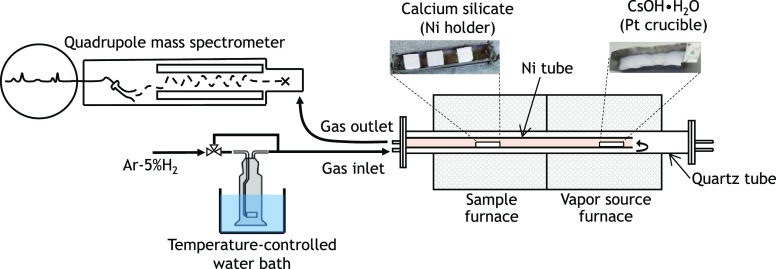
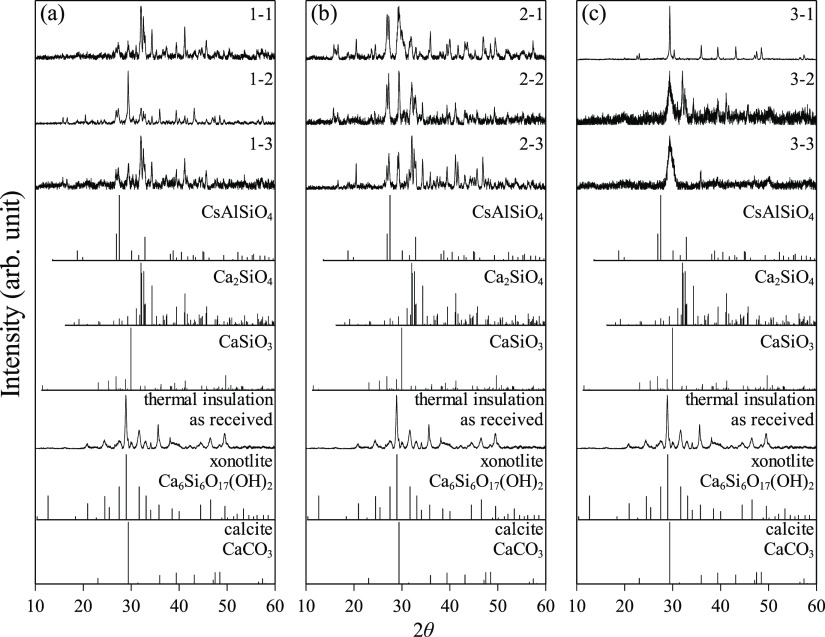
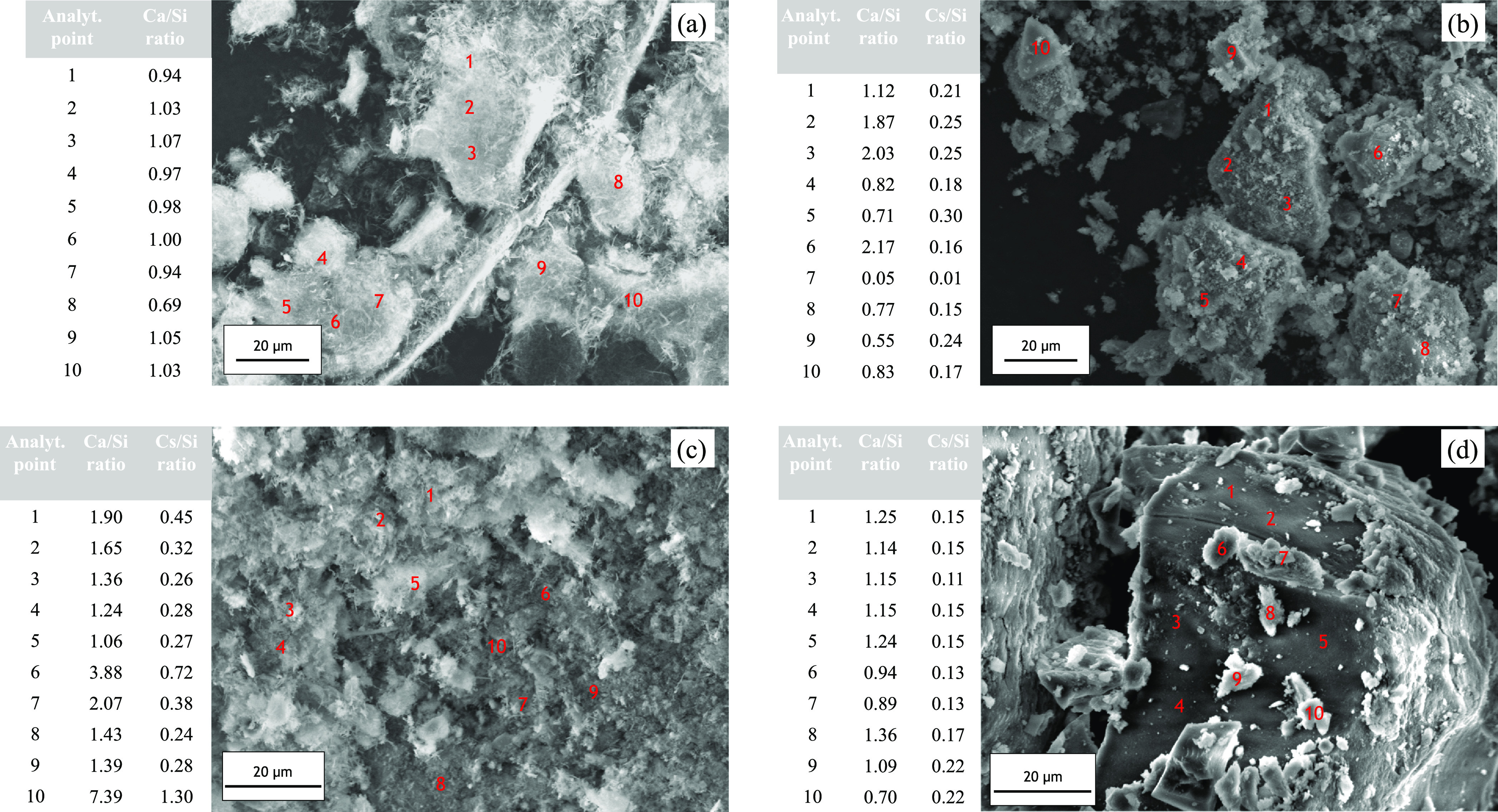
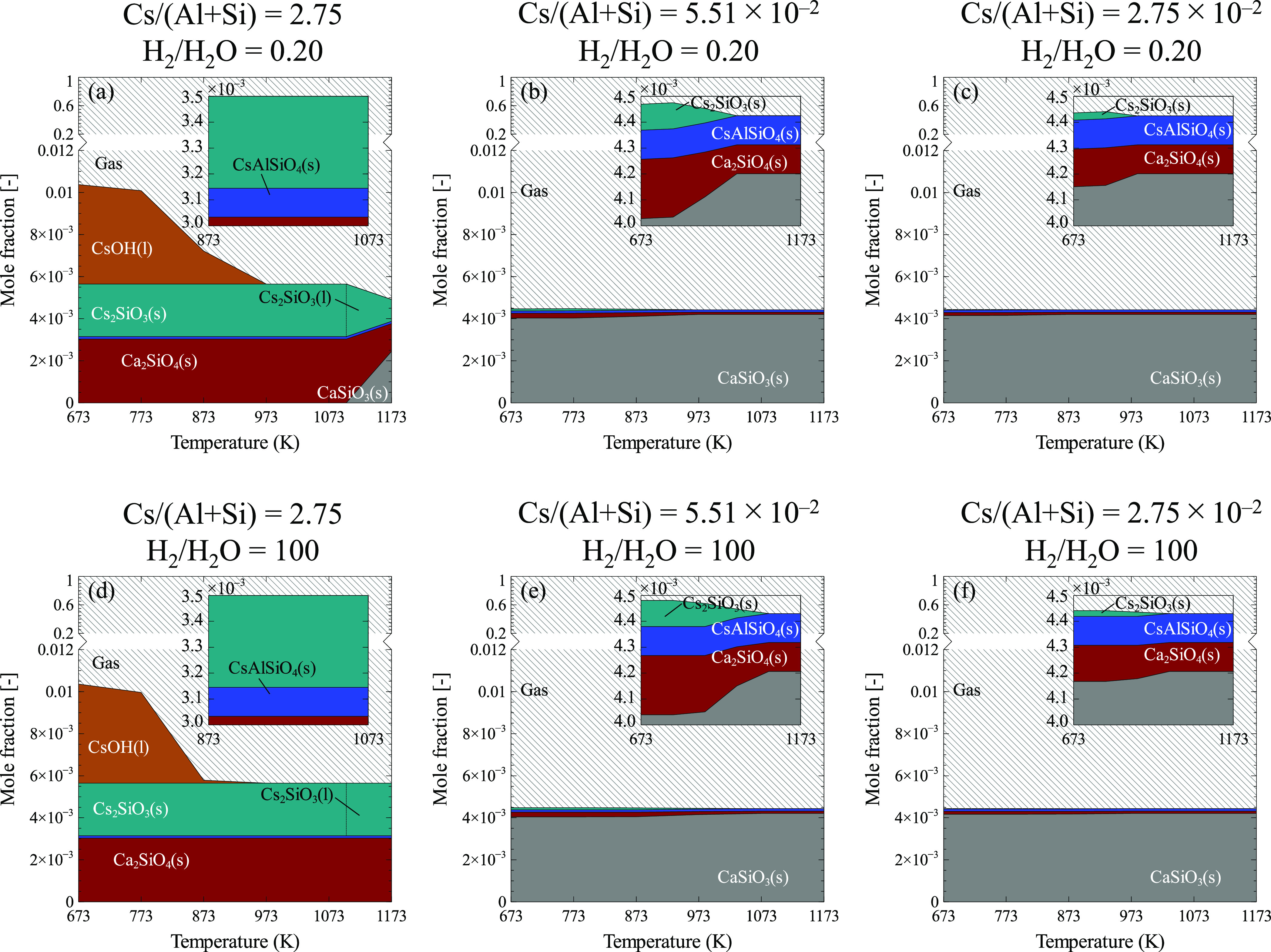
Here, we report an investigation of the gas-solid reaction between cesium hydroxide (CsOH) and siliceous (calcium silicate) thermal insulation at high temperature, which is postulated as the origin for the formation mechanism of cesium-bearing material emitted from the Fukushima Daiichi nuclear power plant. A developed reaction furnace consisting of two heating compartments was used to study the reaction at temperatures of 873, 973, and 1073 K. Under the influence of hydrogen-steam atmospheric conditions (H/HO = 0.2), the reaction between cesium hydroxide vapor and solid thermal insulation was confirmed to occur at temperatures of 973 and 1073 K with the formation of dicalcium silicate (CaSiO) and cesium aluminum silicate (CsAlSiO). Water-dissolution analyses of the reaction products have demonstrated their stability, in particular, CsAlSiO. Constituent similarity of the field-observed cesium-bearing materials near the Fukushima Daiichi nuclear power plants with CsAlSiO suggests for the first time that gaseous reaction between CsOH with calcium silicate thermal insulation could be one of the original formation mechanisms of the cesium-bearing materials.
在此,我们报告了一项关于氢氧化铯(CsOH)与硅质(硅酸钙)隔热材料在高温下的气固反应的研究,该反应被假定为福岛第一核电站排放的含铯物质形成机制的起源。使用一个由两个加热隔室组成的反应炉来研究在873、973和1073 K温度下的反应。在氢-蒸汽大气条件(H/H₂O = 0.2)的影响下,证实氢氧化铯蒸汽与固体隔热材料之间的反应在973和1073 K温度下发生,并形成硅酸二钙(Ca₂SiO₄)和铯铝硅酸盐(CsAlSiO₄)。对反应产物的水溶分析表明了它们的稳定性,特别是CsAlSiO₄。福岛第一核电站附近现场观测到的含铯物质与CsAlSiO₄的成分相似性首次表明,CsOH与硅酸钙隔热材料之间的气态反应可能是含铯物质的原始形成机制之一。