Clarke Shoa L, Parham Matthew, Lankester Joanna, Shadyab Aladdin H, Liu Simin, Kooperberg Charles, Manson JoAnn E, Tcheandjieu Catherine, Assimes Themistocles L
VA Palo Alto Health Care System, Palo Alto, CA USA.
Department of Medicine, Division of Cardiovascular Medicine, Stanford University School of Medicine, Stanford, CA USA.
Commun Med (Lond). 2022 Aug 25;2:108. doi: 10.1038/s43856-022-00171-y. eCollection 2022.
The genetic basis for coronary artery disease (CAD) risk is highly complex. Genome-wide polygenic risk scores (PRS) can help to quantify that risk, but the broader impacts of polygenic risk for CAD are not well characterized.
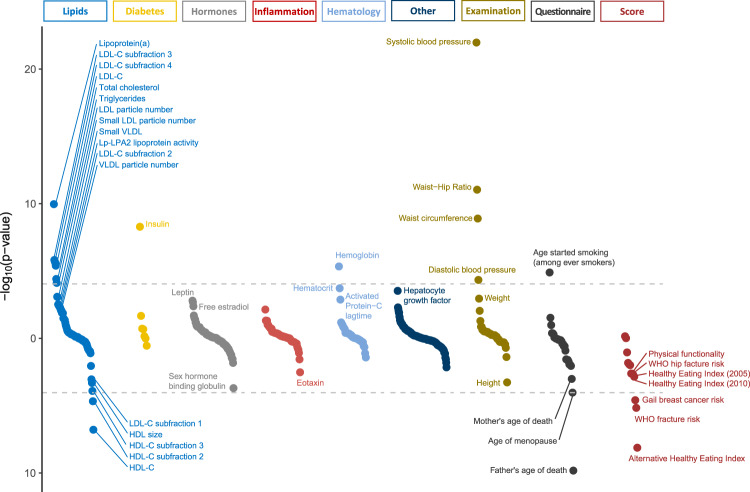
We measured polygenic risk for CAD using the meta genomic risk score, a previously validated genome-wide PRS, in a subset of genotyped participants from the Women's Health Initiative and applied a phenome-wide association study framework to assess associations between the PRS and a broad range of blood biomarkers, clinical measurements, and health outcomes.
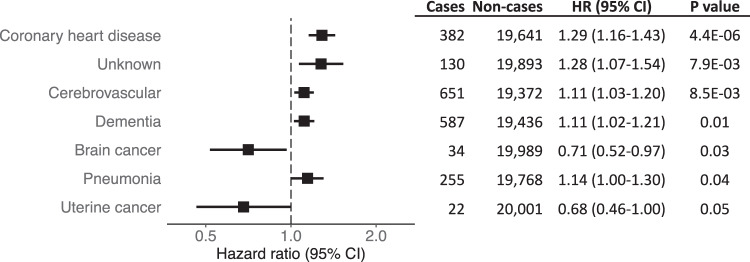
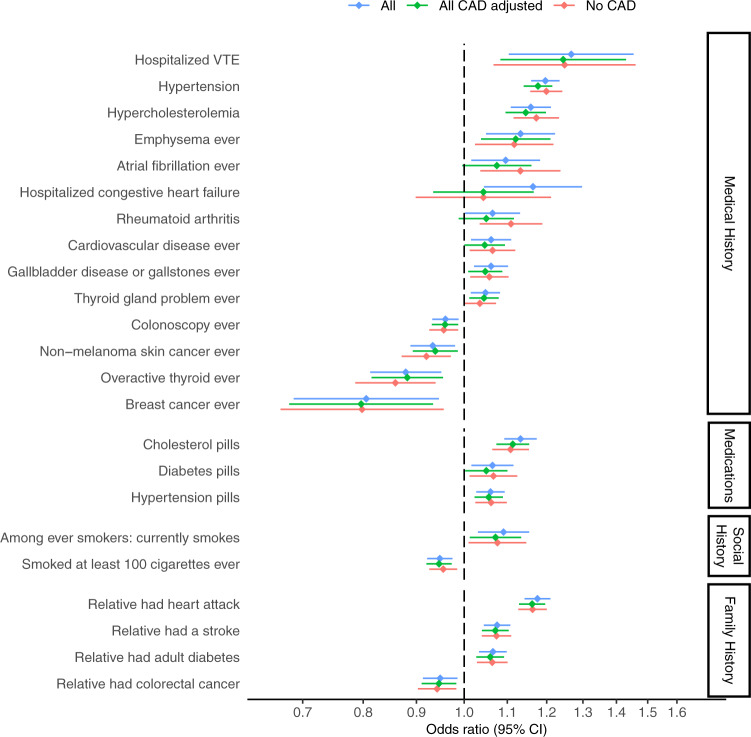
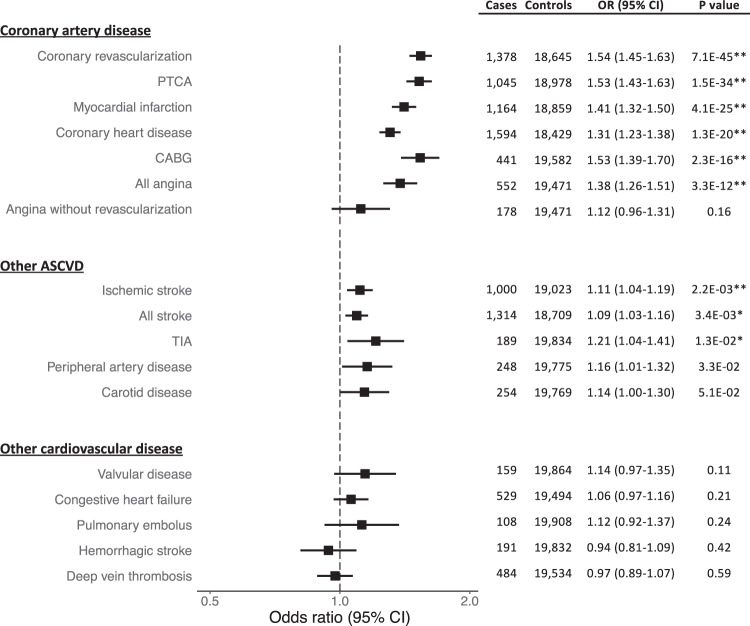
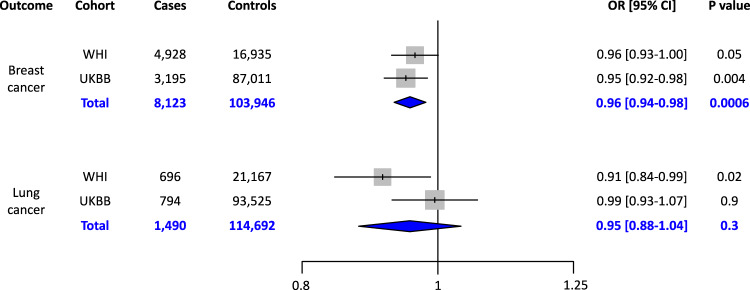
Polygenic risk for CAD is associated with a variety of biomarkers, clinical measurements, behaviors, and diagnoses related to traditional risk factors, as well as risk-enhancing factors. Analysis of adjudicated outcomes shows a graded association between atherosclerosis related outcomes, with the highest odds ratios being observed for the most severe manifestations of CAD. We find associations between increased polygenic risk for CAD and decreased risk for incident breast and lung cancer, with replication of the breast cancer finding in an external cohort. Genetic correlation and two-sample Mendelian randomization suggest that breast cancer association is likely due to horizontal pleiotropy, while the association with lung cancer may be causal.
Polygenic risk for CAD has broad clinical manifestations, reflected in biomarkers, clinical measurements, behaviors, and diagnoses. Some of these associations may represent direct pathways between genetic risk and CAD while others may reflect pleiotropic effects independent of CAD risk.
冠状动脉疾病(CAD)风险的遗传基础高度复杂。全基因组多基因风险评分(PRS)有助于量化该风险,但CAD多基因风险的更广泛影响尚未得到充分描述。
我们在女性健康倡议(Women's Health Initiative)中部分已进行基因分型的参与者中,使用元基因组风险评分(一种先前已验证的全基因组PRS)来测量CAD的多基因风险,并应用全表型组关联研究框架来评估PRS与广泛的血液生物标志物、临床测量指标及健康结局之间的关联。
CAD的多基因风险与多种生物标志物、临床测量指标、行为以及与传统风险因素和风险增强因素相关的诊断有关。对已判定结局的分析显示,动脉粥样硬化相关结局之间存在分级关联,CAD最严重表现的比值比最高。我们发现CAD多基因风险增加与乳腺癌和肺癌发病风险降低之间存在关联,乳腺癌的这一发现已在外部队列中得到重复验证。遗传相关性和双样本孟德尔随机化表明,乳腺癌关联可能是由于水平多效性,而与肺癌的关联可能是因果关系。
CAD的多基因风险具有广泛的临床表现,体现在生物标志物、临床测量指标、行为和诊断中。其中一些关联可能代表遗传风险与CAD之间的直接途径,而其他关联可能反映了独立于CAD风险的多效性效应。