Rutledge Angela C, Johnston Anna, Booth Ronald A, Veljkovic Kika, Bailey Dana, Vandenberghe Hilde, Waite Gayle, Allen Lynn C, Don-Wauchope Andrew, Chan Pak Cheung, Stemp Julia, Edmond Pamela, Leung Victor, Aslan Berna
Institute for Quality Management in Healthcare (IQMH) Endocrinology and Immunology Scientific Committee, Toronto, Ontario, Canada.
Department of Pathology and Laboratory Medicine, London Health Sciences Centre and St. Joseph's Health Care London, London, Ontario, Canada.
Pract Lab Med. 2022 Aug 10;32:e00300. doi: 10.1016/j.plabm.2022.e00300. eCollection 2022 Nov.
Verifying new reagent or calibrator lots is crucial for maintaining consistent test performance. The Institute for Quality Management in Healthcare (IQMH) conducted a patterns-of-practice survey and follow-up case study to collect information on lot verification practices in Ontario.
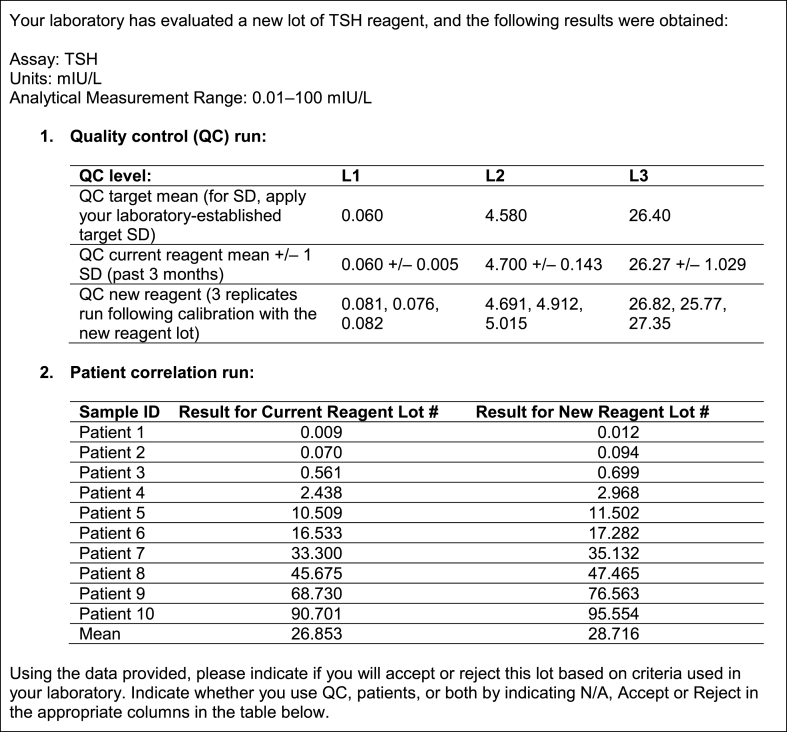
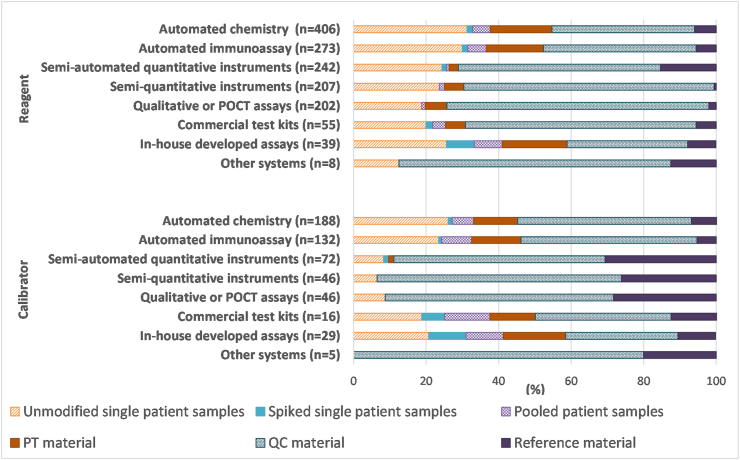
The survey had 17 multiple-choice questions and was distributed to 183 licensed laboratories. Participants provided information on materials used and approval/rejection criteria for their lot verification procedures for eight classes of testing systems. The case study provided a set of lot comparison data and was distributed to 132 laboratories. Responses were reviewed by IQMH scientific committees.
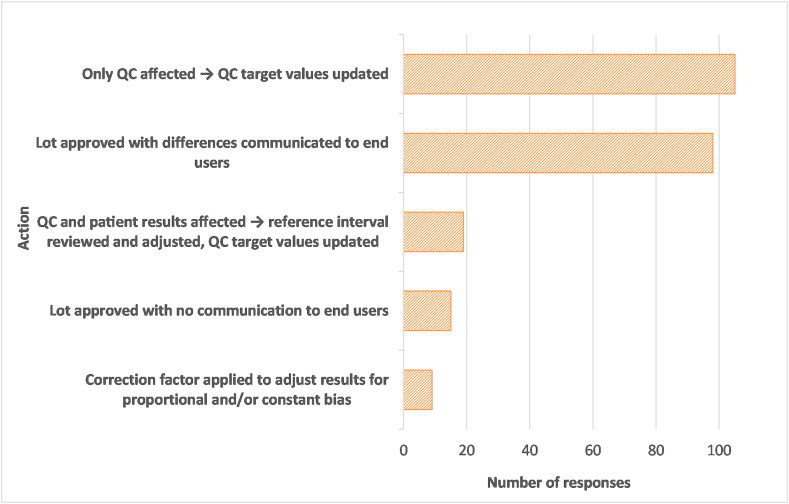
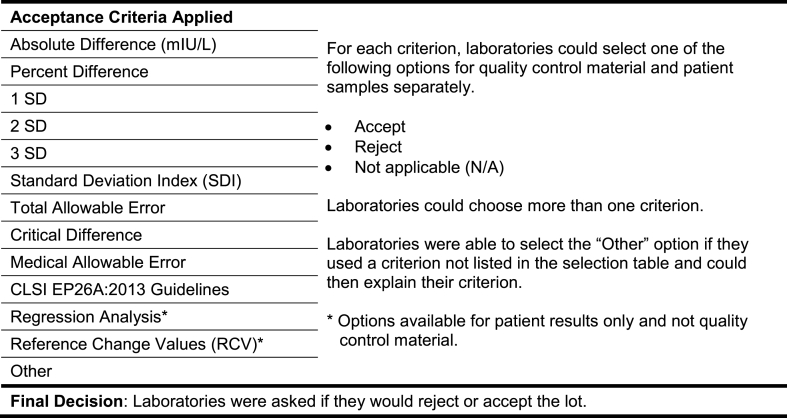
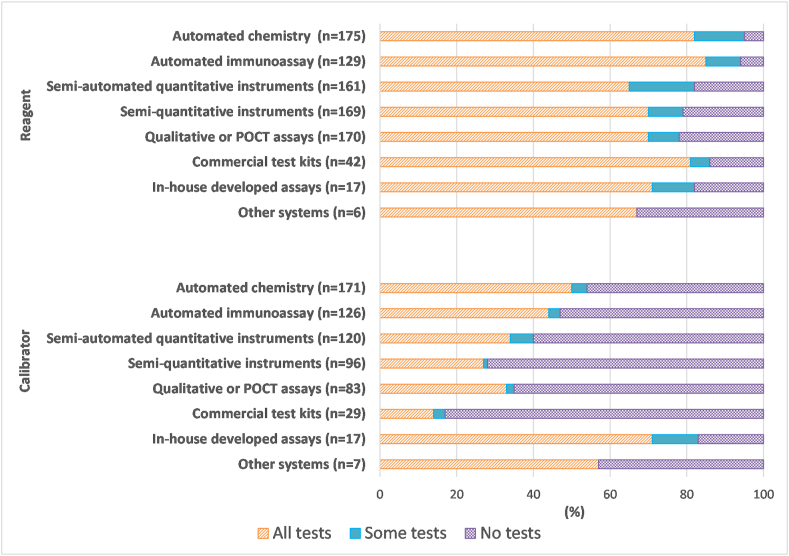
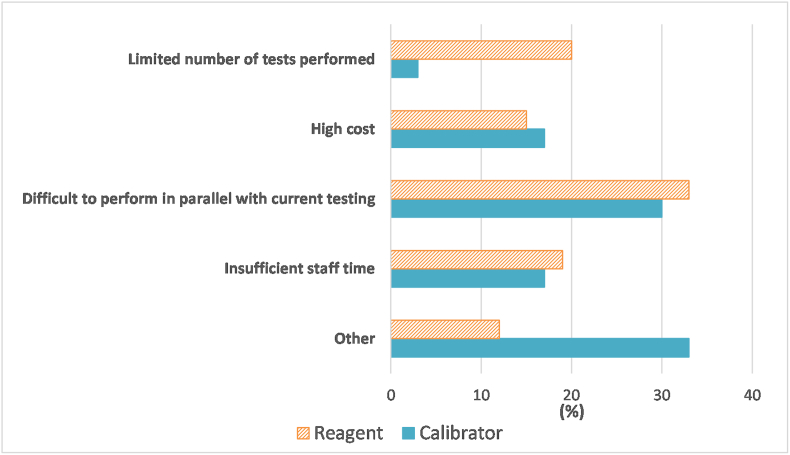
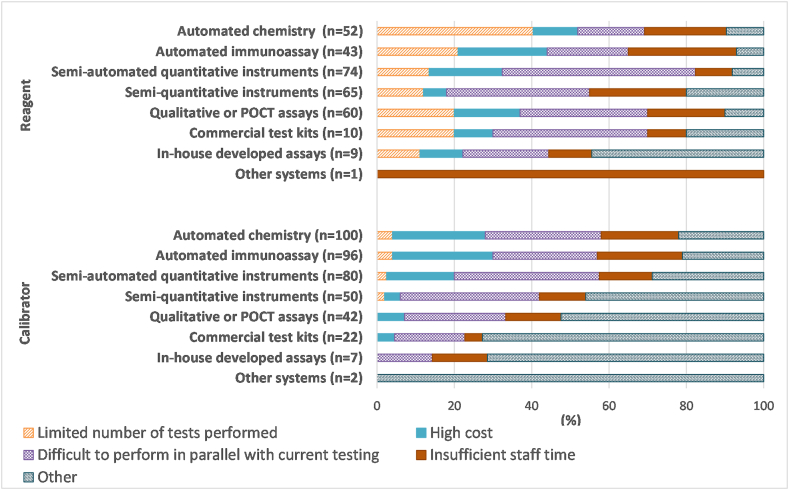
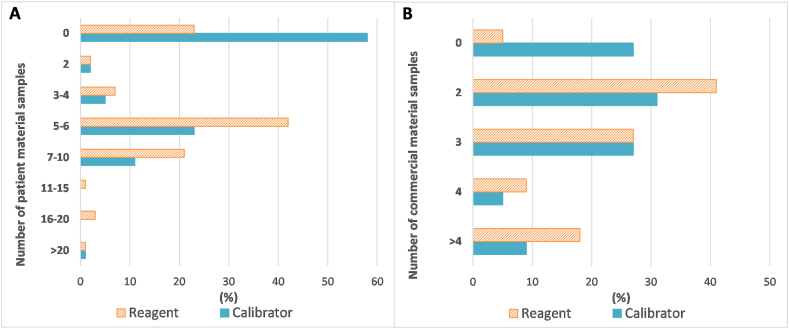
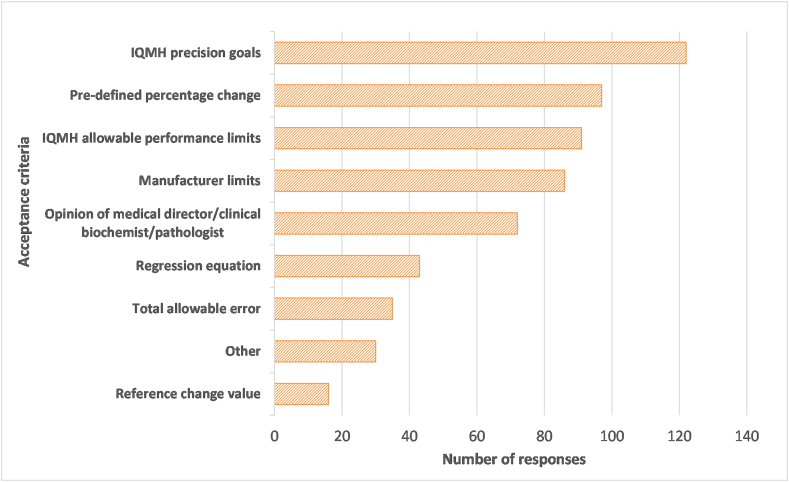
Of the 175 laboratories that responded regarding reagent lot verifications, 74% verified all tests, 11% some, and 15% none. Of the 171 laboratories that responded regarding calibrator lot verifications, 39% verified all calibrators, 4% some, and 57% none. Reasons for not performing verifications ranged from difficulty performing parallel testing to high reagent cost. For automated chemistry assays and immunoassays, 23% of laboratories did not include patient-derived materials in reagent lot verifications and 42% included five to six patient materials; 58% of laboratories did not include patient-derived materials in calibrator lot verifications and 23% included five to six patient materials. Different combinations of test-specific rules were used for acceptance criteria. For a failed lot, 98% of laboratories would investigate further and take corrective actions. Forty-three percent of laboratories would accept the new reagent lot in the case study.
Responses to the survey and case study demonstrated variability in lot verification practices among laboratories.
验证新试剂或校准品批次对于保持一致的检测性能至关重要。医疗质量管理协会(IQMH)开展了一项实践模式调查及后续案例研究,以收集安大略省批次验证实践的相关信息。
该调查有17道多项选择题,分发给了183家获得许可的实验室。参与者提供了八类检测系统所使用材料及其批次验证程序的批准/拒收标准的信息。案例研究提供了一组批次比较数据,并分发给了132家实验室。IQMH科学委员会对回复进行了审查。
在175家回复试剂批次验证情况的实验室中,74%对所有检测进行了验证,11%对部分检测进行了验证,15%未进行任何验证。在171家回复校准品批次验证情况的实验室中,39%对所有校准品进行了验证,4%对部分校准品进行了验证,57%未进行任何验证。不进行验证的原因包括难以进行平行检测到试剂成本高等。对于自动化化学分析和免疫分析,23%的实验室在试剂批次验证中未纳入患者源性材料,42%纳入了五至六份患者材料;58%的实验室在校准品批次验证中未纳入患者源性材料,23%纳入了五至六份患者材料。验收标准采用了不同的特定检测规则组合。对于不合格批次,98%的实验室会进一步调查并采取纠正措施。在案例研究中,43%的实验室会接受新试剂批次。
对调查和案例研究的回复表明,各实验室在批次验证实践方面存在差异。