Fatehi Hassanabad Ali, King Melissa A, Di Martino Elena, Fedak Paul W M, Garcia Julio
Section of Cardiac Surgery, Department of Cardiac Sciences, Cumming School of Medicine, Libin Cardiovascular Institute, Calgary, AB, Canada.
Department of Civil Engineering, University of Calgary, Calgary, AB, Canada.
Front Cardiovasc Med. 2022 Aug 12;9:922353. doi: 10.3389/fcvm.2022.922353. eCollection 2022.
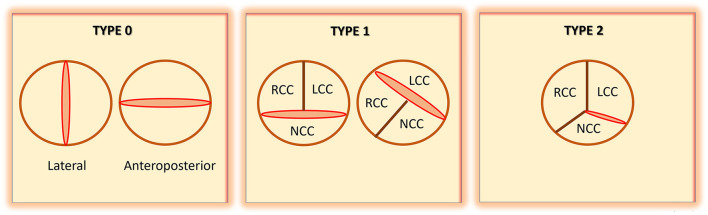
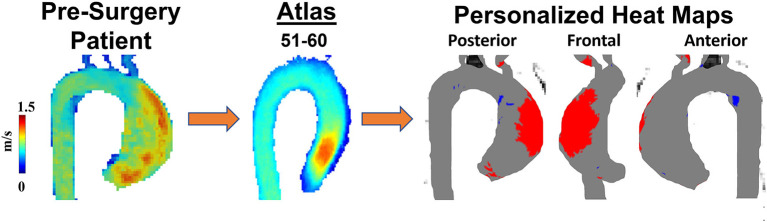
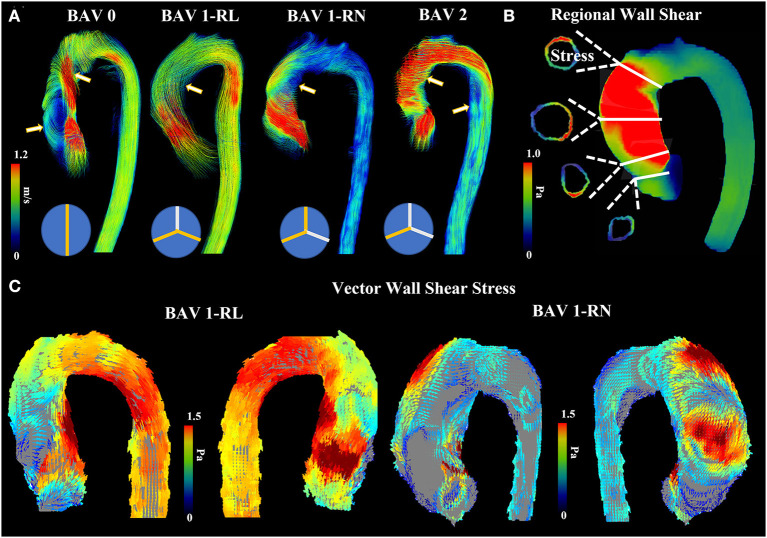
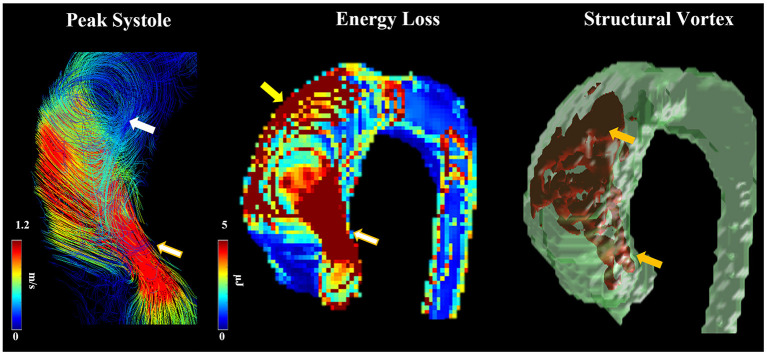
Bicuspid aortic valve (BAV), which affects up to 2% of the general population, results from the abnormal fusion of the cusps of the aortic valve. Patients with BAV are at a higher risk for developing aortic dilatation, a condition known as bicuspid aortopathy, which is associated with potentially life-threatening sequelae such as aortic dissection and aortic rupture. Although BAV biomechanics have been shown to contribute to aortopathy, their precise impact is yet to be delineated. Herein, we present the latest literature related to BAV biomechanics. We present the most recent definitions and classifications for BAV. We also summarize the current evidence pertaining to the mechanisms that drive bicuspid aortopathy. We highlight how aberrant flow patterns can contribute to the development of aortic dilatation. Finally, we discuss the role cardiac magnetic resonance imaging can have in assessing and managing patient with BAV and bicuspid aortopathy.
二叶式主动脉瓣(BAV)影响着高达2%的普通人群,它是由主动脉瓣叶异常融合所致。患有BAV的患者发生主动脉扩张(一种称为二叶式主动脉病变的病症)的风险更高,该病症与诸如主动脉夹层和主动脉破裂等潜在危及生命的后遗症相关。尽管已证明BAV生物力学与主动脉病变有关,但其确切影响尚待阐明。在此,我们介绍与BAV生物力学相关的最新文献。我们给出BAV的最新定义和分类。我们还总结了有关驱动二叶式主动脉病变机制的当前证据。我们强调异常血流模式如何导致主动脉扩张的发展。最后,我们讨论心脏磁共振成像在评估和管理患有BAV和二叶式主动脉病变的患者中所起的作用。