Li Hao-Liang, Li Tao, Chen Zhi-Qing, Li Lang
Department of Cardiology, The First Affiliated Hospital of Guangxi Medical University & Guangxi Key Laboratory Base of Precision Medicine in Cardio-Cerebrovascular Diseases Control and Prevention & Guangxi Clinical Research Center for Cardio-Cerebrovascul.
Korean J Physiol Pharmacol. 2022 Sep 1;26(5):335-345. doi: 10.4196/kjpp.2022.26.5.335.
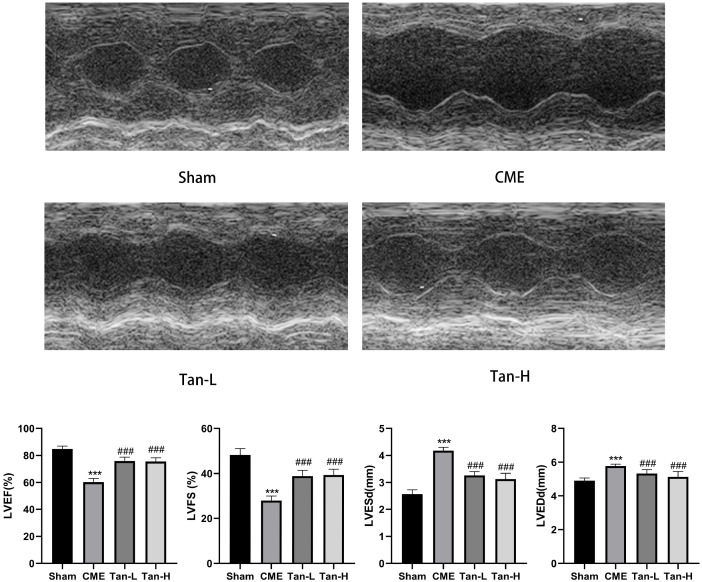
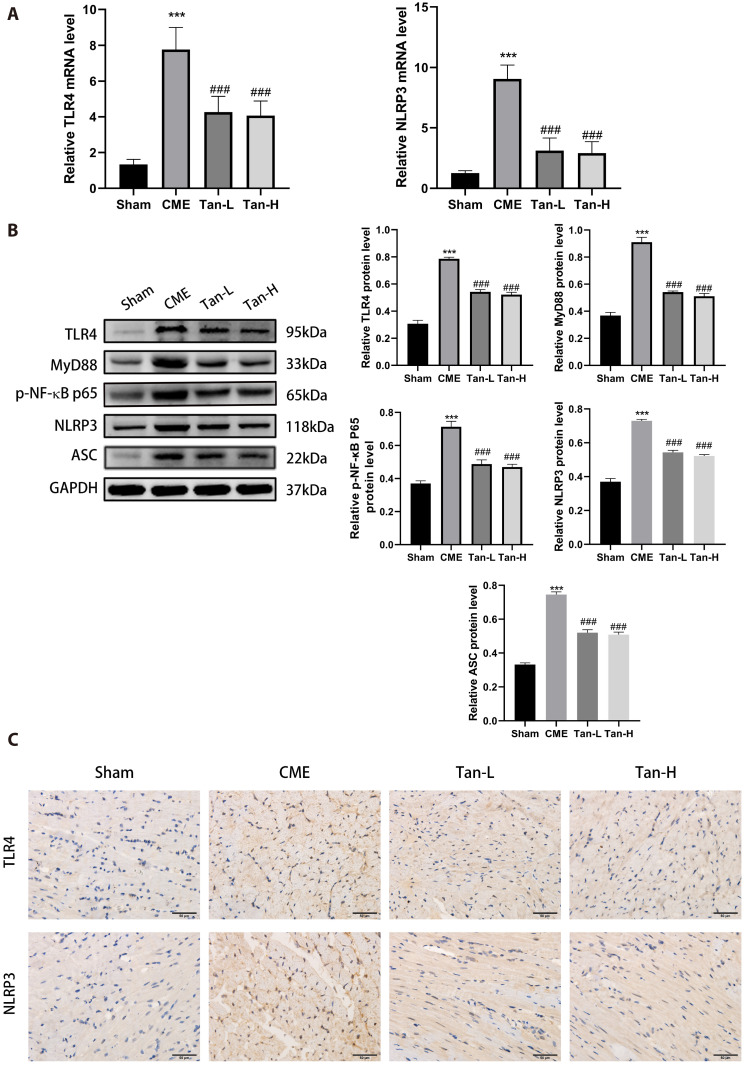
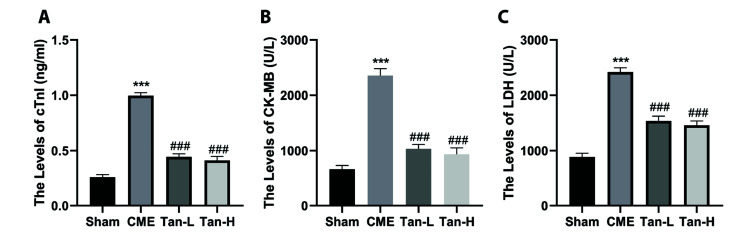
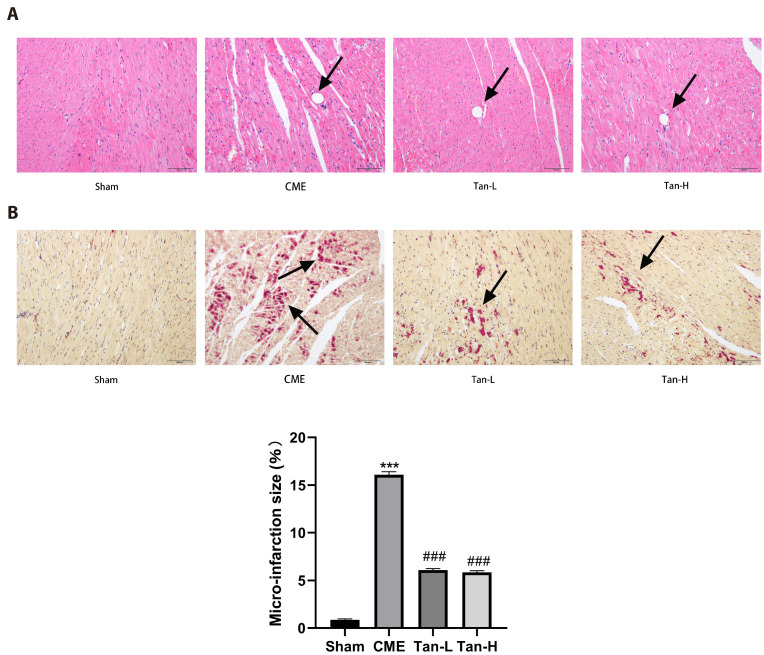
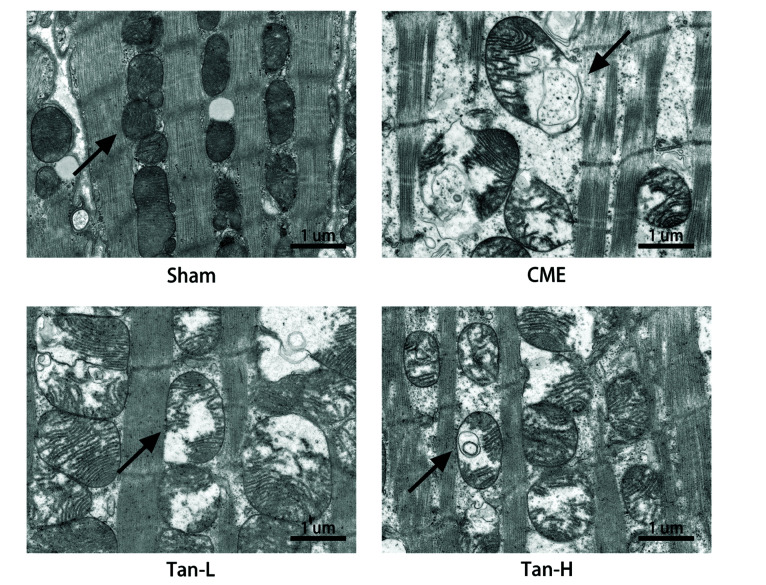
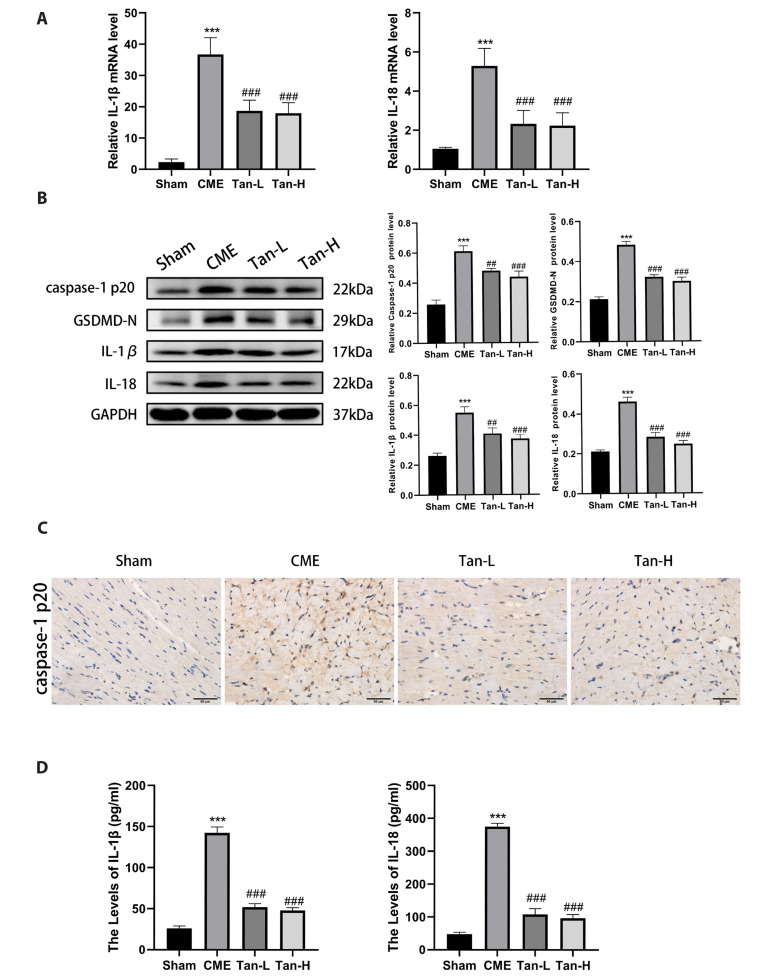
Pyroptosis is an inflammatory form of programmed cell death that is linked with invading intracellular pathogens. Cardiac pyroptosis has a significant role in coronary microembolization (CME), thus causing myocardial injury. Tanshinone IIA (Tan IIA) has powerful cardioprotective effects. Hence, this study aimed to identify the effect of Tan IIA on CME and its underlying mechanism. Forty Sprague-Dawley (SD) rats were randomly grouped into sham, CME, CME + low-dose Tan IIA, and CME + high-dose Tan IIA groups. Except for the sham group, polyethylene microspheres (42 μm) were injected to establish the CME model. The Tan-L and Tan-H groups received intraperitoneal Tan IIA for 7 days before CME. After CME, cardiac function, myocardial histopathology, and serum myocardial injury markers were assessed. The expression of pyroptosis-associated molecules and TLR4/MyD88/NF-κB/NLRP3 cascade was evaluated by qRT-PCR, Western blotting, ELISA, and IHC. Relative to the sham group, CME group's cardiac functions were significantly reduced, with a high level of serum myocardial injury markers, and microinfarct area. Also, the levels of caspase-1 p20, GSDMD-N, IL-18, IL-1β, TLR4, MyD88, p-NF-κB p65, NLRP3, and ASC expression were increased. Relative to the CME group, the Tan-H and Tan-L groups had considerably improved cardiac functions, with a considerably low level of serum myocardial injury markers and microinfarct area. Tan IIA can reduce the levels of pyroptosis-associated mRNA and protein, which may be caused by inhibiting TLR4/MyD88/NF-κB/NLRP3 cascade. In conclusion, Tanshinone IIA can suppress cardiomyocyte pyroptosis probably through modulating the TLR4/MyD88/NF-κB/NLRP3 cascade, lowering cardiac dysfunction, and myocardial damage.
细胞焦亡是一种与入侵的细胞内病原体相关的程序性细胞死亡的炎症形式。心脏细胞焦亡在冠状动脉微栓塞(CME)中起重要作用,从而导致心肌损伤。丹参酮IIA(Tan IIA)具有强大的心脏保护作用。因此,本研究旨在确定Tan IIA对CME的影响及其潜在机制。40只Sprague-Dawley(SD)大鼠被随机分为假手术组、CME组、CME+低剂量Tan IIA组和CME+高剂量Tan IIA组。除假手术组外,注射聚乙烯微球(42μm)以建立CME模型。Tan-L组和Tan-H组在CME前7天腹腔注射Tan IIA。CME后,评估心脏功能、心肌组织病理学和血清心肌损伤标志物。通过qRT-PCR、蛋白质印迹、酶联免疫吸附测定和免疫组织化学评估细胞焦亡相关分子和TLR4/MyD88/NF-κB/NLRP3级联反应的表达。相对于假手术组,CME组的心脏功能显著降低,血清心肌损伤标志物水平和微梗死面积较高。此外,半胱天冬酶-1 p20、Gasdermin D-N、白细胞介素-18、白细胞介素-1β、TLR4、MyD88、磷酸化核因子-κB p65、NLRP3和凋亡相关斑点样蛋白(ASC)的表达水平升高。相对于CME组,Tan-H组和Tan-L组的心脏功能有显著改善,血清心肌损伤标志物水平和微梗死面积显著降低。Tan IIA可以降低细胞焦亡相关的mRNA和蛋白质水平,这可能是通过抑制TLR4/MyD88/NF-κB/NLRP3级联反应引起的。总之,丹参酮IIA可能通过调节TLR4/MyD88/NF-κB/NLRP3级联反应来抑制心肌细胞焦亡,降低心脏功能障碍和心肌损伤。