Department of Rheumatic Immunology, The Third Hospital of Hebei Medical University, Shijiazhuang, Hebei, China.
Department of Respiratory Medicine, The First Hospital of Hebei Medical University, Shijiazhuang, Hebei, China.
Aging (Albany NY). 2022 Aug 29;14(16):6796-6808. doi: 10.18632/aging.204254.
To explore the roles of macrophages' miR-217-5p in the process of PM2.5 induced acute lung injury.
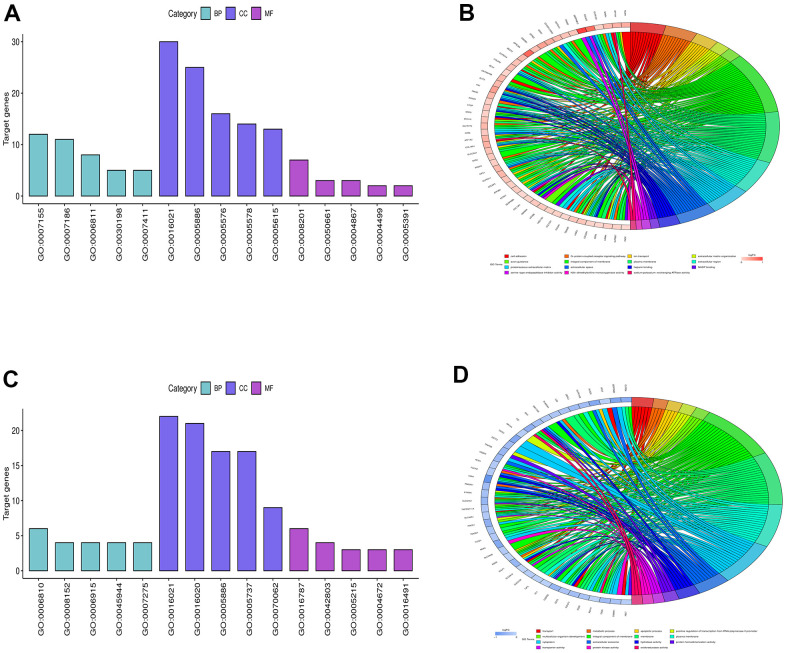
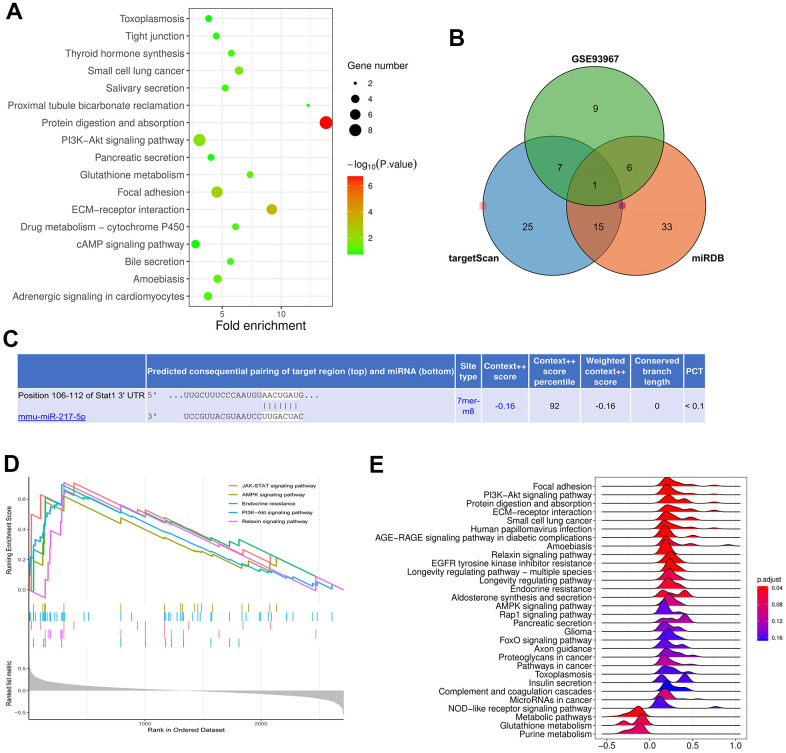
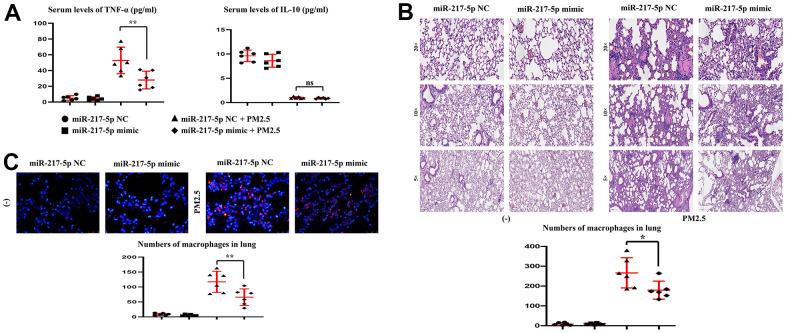
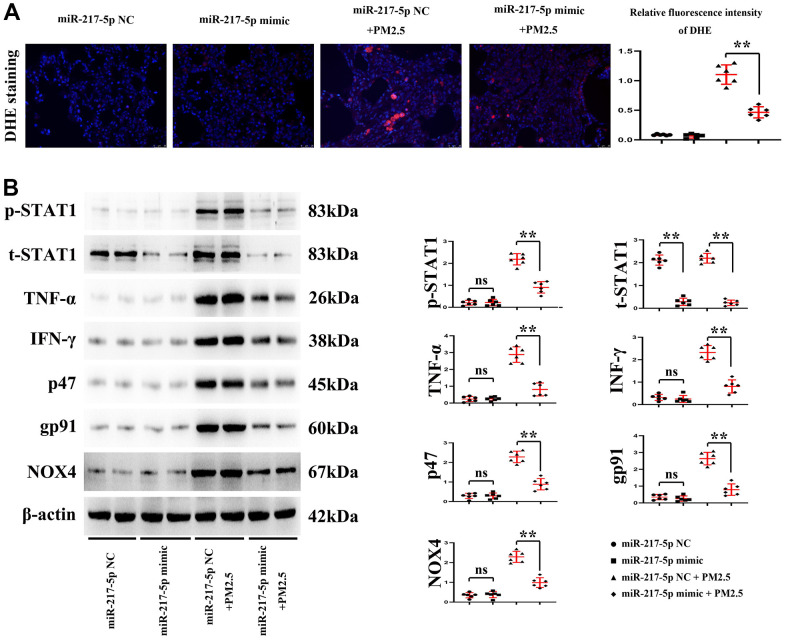
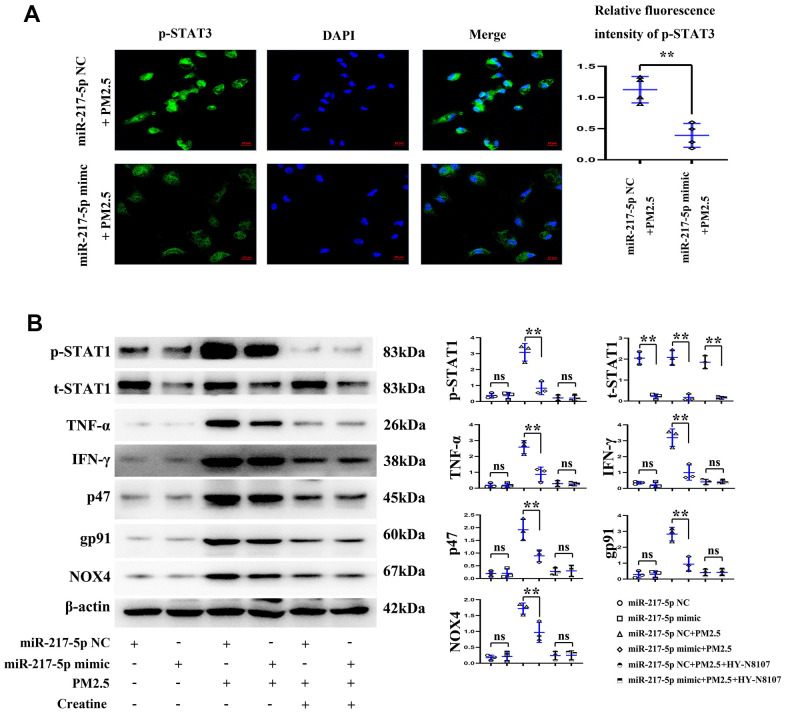
GEO database and KEGG pathway enrichment analysis as well as GSEA were used to predicted the miRNA and associated target signals. And then mice and RAW246.7 macrophages treated with PM2.5 to imitate PM2.5 induced acute lung injury environment and then transfected with miR-217-5p NC or miR-217-5p mimic. The levels of inflammatory factors TNF-α and anti-inflammatory factor IL-10 of mice serum were tested by ELISA. And the pathological changes and ROS level of mouse lung tissues were stained by HE and DHE staining. The proteins expression of phosphorylated-STAT1, total-STAT1, TNF-α, IFN-γ as well as p47, gp91, NOX4 in mice or RAW264.7 cells were tested by western blot or immunofluorescence of RAW264.7 cell slides.
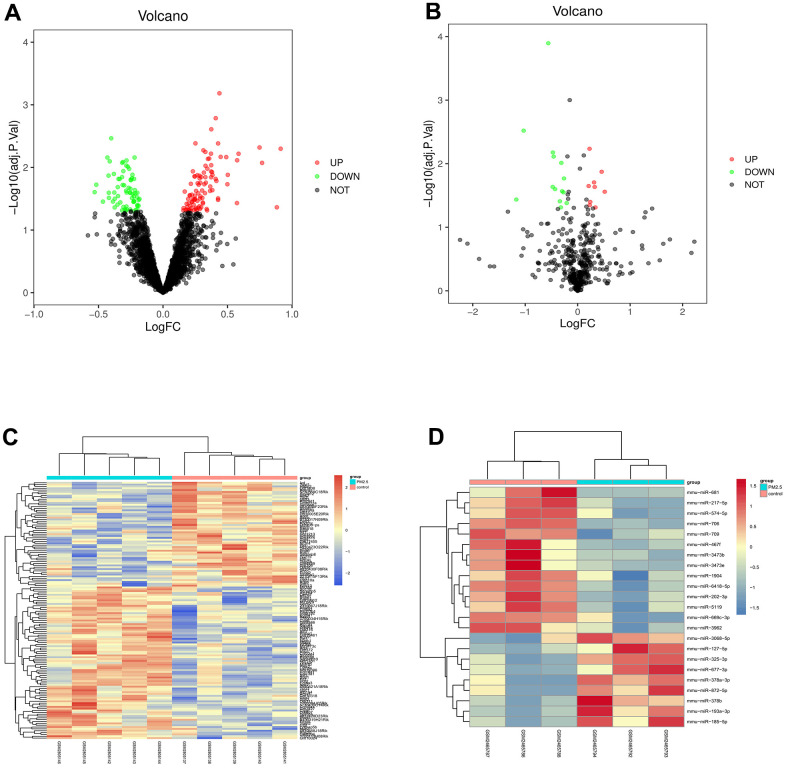
The results of bioinformatics analysis indicated the miR-217 as well as STAT1 were involved PM2.5 associated lung injury. After exposure to PM2.5, the decreased levels of serum TNF-α but not IL-10, consistent with reduced macrophages' accumulation as well as decreased ROS levels in lung tissues in miR-217-5p mimic group vs miR-217-5p NC group mice, and moreover, the protein expression levels of phosphorylated--STAT1, total-STAT1, TNF-α, IFN-γ, p47, gp91 and NOX4 in mouse lung tissues and RTAW246.7 macrophages cells were all significantly reduced with miR-217-5p mimic administration. The above phenomena were reversed by specific STAT1-inhibitor HY-N8107.
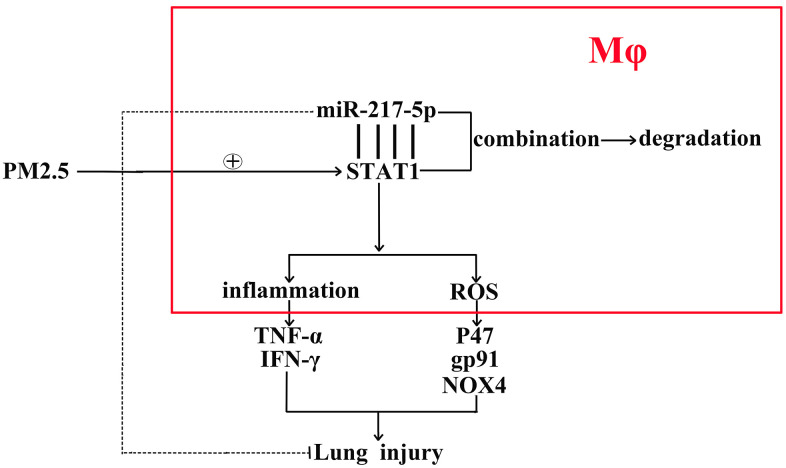
miR-217-5p suppressed the activated STAT1-signal induced inflammation and oxidative stress trigged by PM2.5 in macrophages and resulted in the decreased lung injure caused by PM2.5.
探讨巨噬细胞 miR-217-5p 在 PM2.5 诱导的急性肺损伤过程中的作用。
利用 GEO 数据库和 KEGG 通路富集分析及 GSEA 预测 miRNA 及相关靶信号。然后用 PM2.5 处理小鼠和 RAW246.7 巨噬细胞模拟 PM2.5 诱导的急性肺损伤环境,然后用 miR-217-5p NC 或 miR-217-5p 模拟物转染。通过 ELISA 检测小鼠血清中炎症因子 TNF-α和抗炎因子 IL-10 的水平。通过 HE 和 DHE 染色检测小鼠肺组织的病理变化和 ROS 水平。通过 Western blot 或 RAW264.7 细胞玻片的免疫荧光检测小鼠或 RAW246.7 细胞中磷酸化-STAT1、总-STAT1、TNF-α、IFN-γ以及 p47、gp91、NOX4 的蛋白表达。
生物信息学分析结果表明,miR-217 以及 STAT1 参与 PM2.5 相关的肺损伤。暴露于 PM2.5 后,与 miR-217-5p NC 组相比,miR-217-5p 模拟物组小鼠血清 TNF-α水平降低,但 IL-10 水平不变,同时肺组织中巨噬细胞积累减少,ROS 水平降低,并且小鼠肺组织和 RTAW246.7 巨噬细胞细胞中磷酸化-STAT1、总-STAT1、TNF-α、IFN-γ、p47、gp91 和 NOX4 的蛋白表达水平均显著降低。用特异性 STAT1 抑制剂 HY-N8107 处理可逆转上述现象。
miR-217-5p 抑制 PM2.5 诱导的巨噬细胞中激活的 STAT1 信号诱导的炎症和氧化应激,从而减轻 PM2.5 引起的肺损伤。