Infection and Immunity Program, Monash Biomedicine Discovery Institute and Department of Microbiology, Monash University, Clayton, Australia.
Cardiovascular Disease Program, Monash Biomedicine Discovery Institute and Department of Physiology, Monash University, Clayton, Australia.
Gut Microbes. 2022 Jan-Dec;14(1):2117504. doi: 10.1080/19490976.2022.2117504.
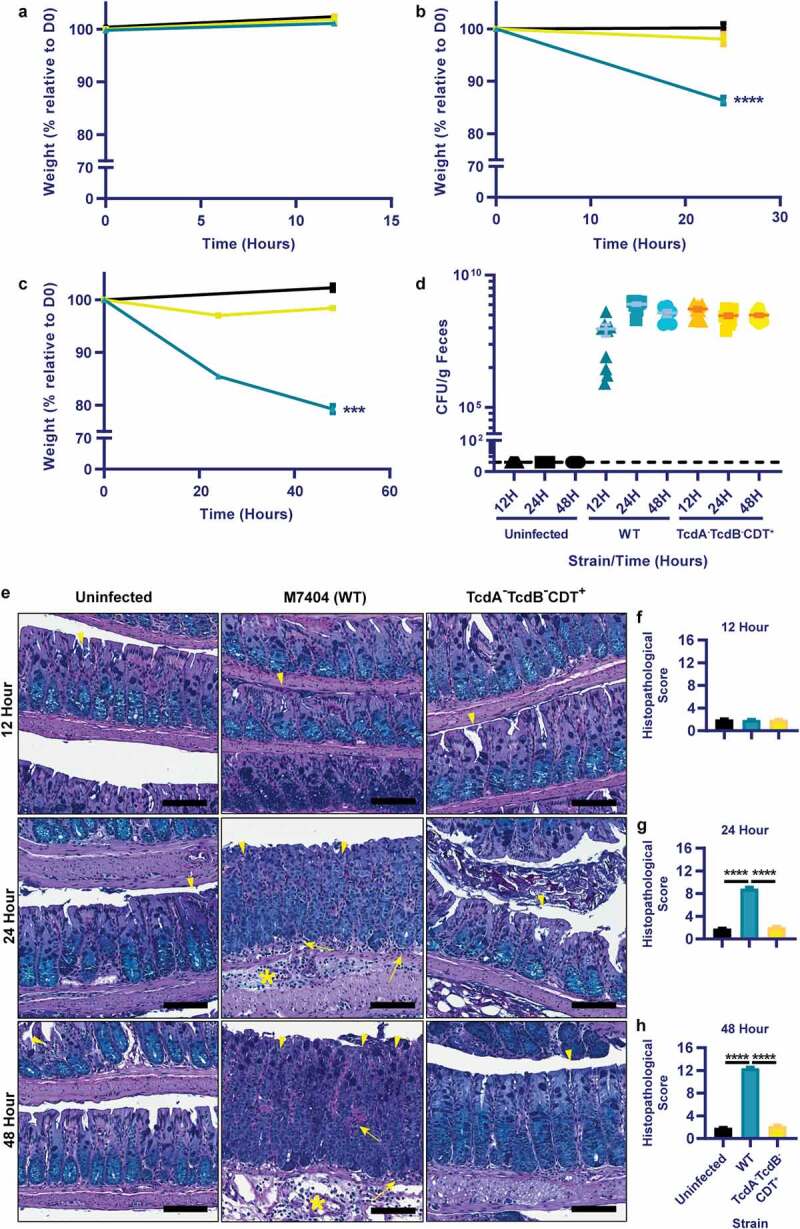
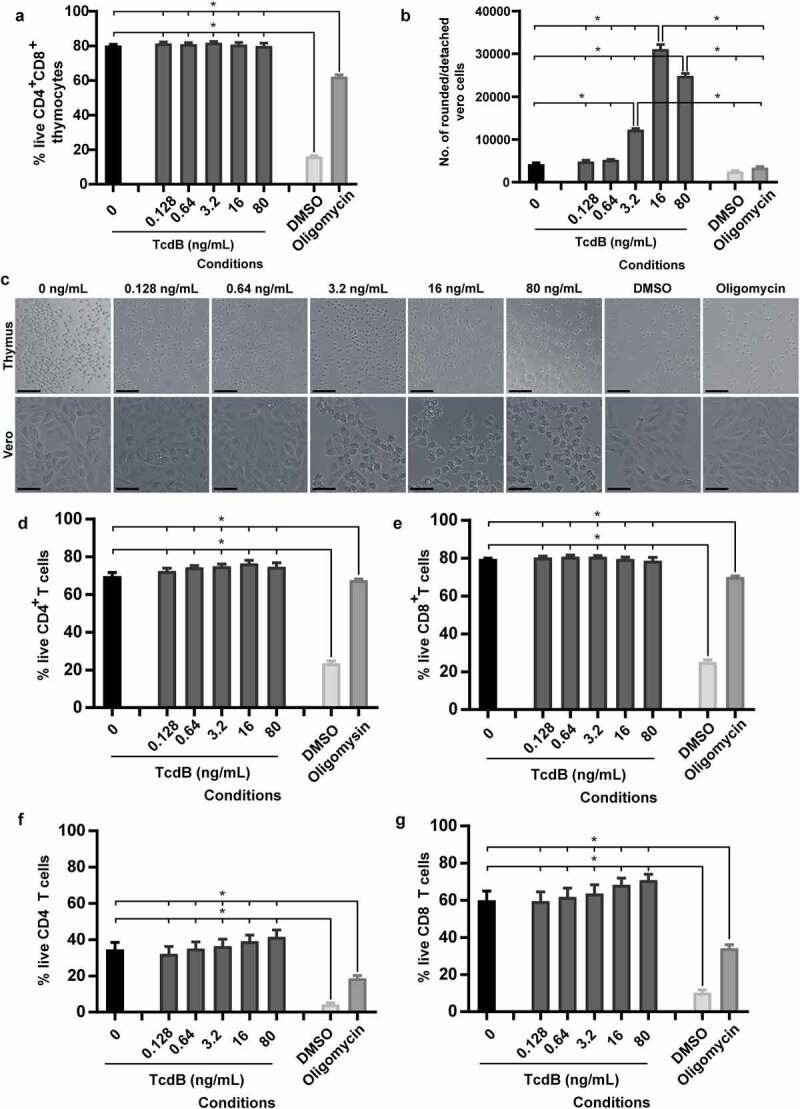
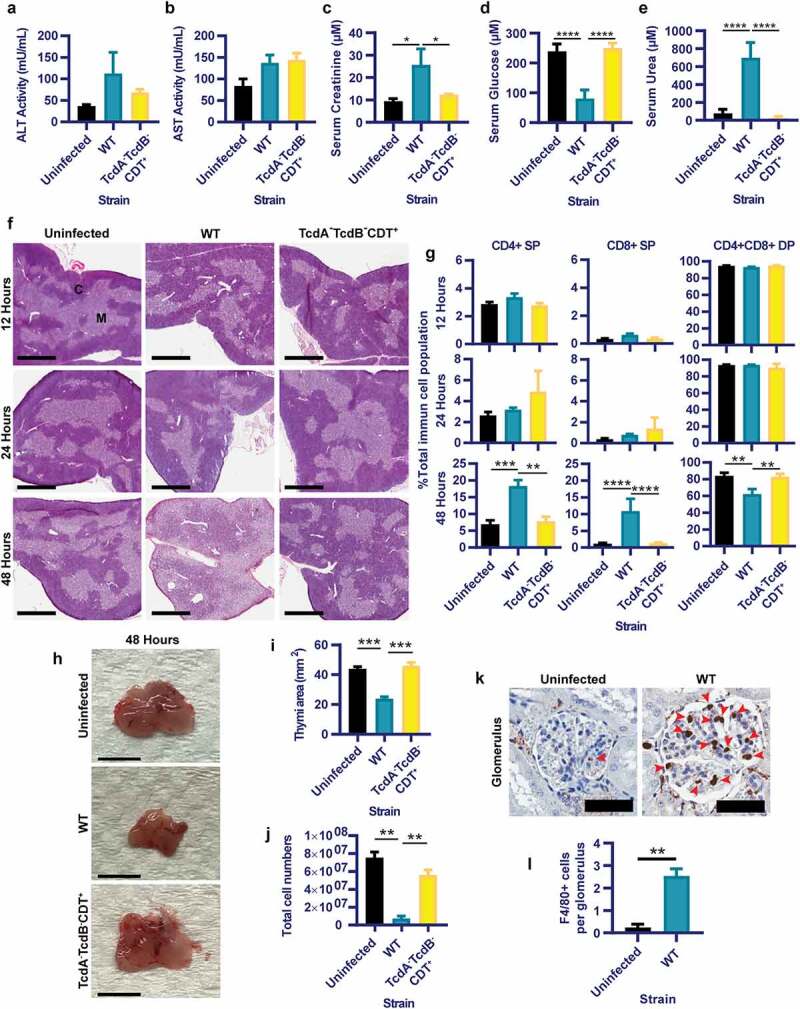
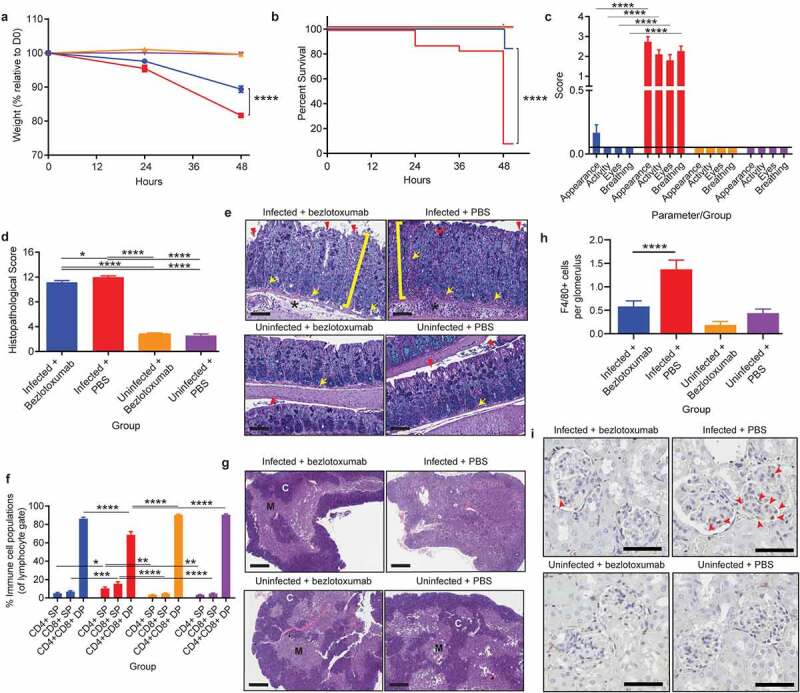
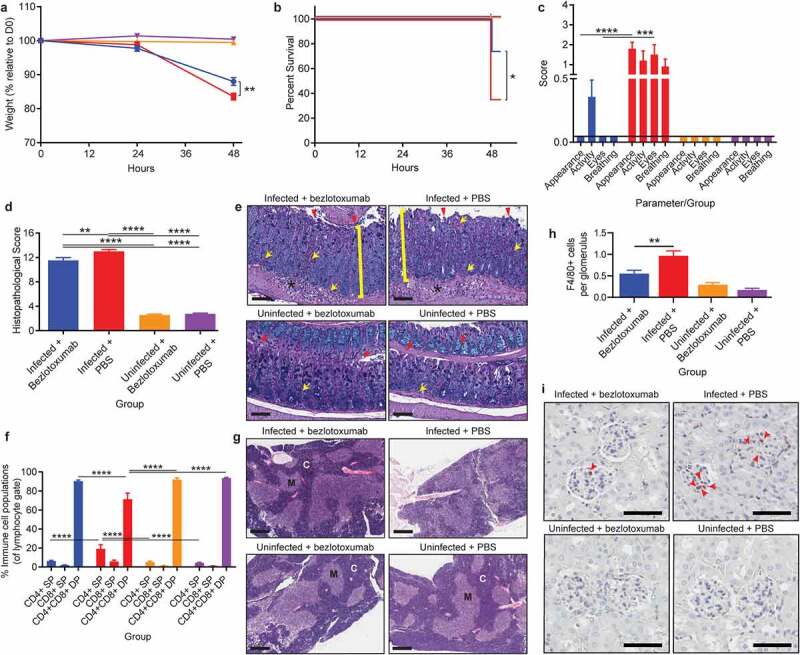
is the most common cause of infectious antibiotic-associated diarrhea, with disease mediated by two major toxins TcdA and TcdB. In severe cases, systemic disease complications may arise, resulting in fatal disease. Systemic disease in animal models has been described, with thymic damage an observable consequence of severe disease in mice. Using a mouse model of infection, we examined this disease phenotype, focussing on the thymus and serum markers of systemic disease. The efficacy of bezlotoxumab, a monoclonal TcdB therapeutic, to prevent toxin mediated systemic disease complications was also examined. infection causes toxin-dependent thymic damage and CD4CD8 thymocyte depletion in mice. These systemic complications coincide with changes in biochemical markers of liver and kidney function, including increased serum urea and creatinine, and hypoglycemia. Administration of bezlotoxumab during infection prevents systemic disease and thymic atrophy, without blocking gut damage, suggesting the leakage of gut contents into circulation may influence systemic disease. As the thymus has such a crucial role in T cell production and immune system development, these findings may have important implications in relapse of disease and impaired immunity during infection. The prevention of thymic atrophy and reduced systemic response following bezlotoxumab treatment, without altering colonic damage, highlights the importance of systemic disease in infection, and provides new insights into the mechanism of action for this therapeutic.: Acute kidney injury (AKI); Alanine Transaminase (ALT); Aspartate Aminotransferase (AST); infection (CDI); chronic kidney disease (CKD); combined repetitive oligo-peptides (CROPS); cardiovascular disease (CVD); Double positive (DP); hematoxylin and eosin (H&E); immunohistochemical (IHC); multiple organ dysfunction syndrome (MODS); phosphate buffered saline (PBS); standard error of the mean (SEM); surface layer proteins (SLP); Single positive (SP); wild-type (WT).
是感染性抗生素相关性腹泻的最常见原因,其疾病由两种主要毒素 TcdA 和 TcdB 介导。在严重的情况下,可能会出现全身性疾病并发症,导致致命的疾病。在动物模型中已经描述了全身性疾病,在严重疾病的小鼠中观察到胸腺损伤是一个可观察的后果。使用感染的小鼠模型,我们检查了这种疾病表型,重点关注胸腺和全身性疾病的血清标志物。还检查了 bezlotoxumab(一种 TcdB 治疗性单克隆抗体)预防毒素介导的全身性疾病并发症的功效。感染会导致毒素依赖性的胸腺损伤和 CD4CD8 胸腺细胞耗竭在小鼠中。这些全身性并发症与肝功能和肾功能的生化标志物的变化相吻合,包括血清尿素和肌酐增加以及低血糖症。在感染期间给予 bezlotoxumab 可预防全身性疾病和胸腺萎缩,而不会阻止肠道损伤,这表明肠道内容物漏入循环可能会影响全身性疾病。由于胸腺在 T 细胞产生和免疫系统发育中具有如此关键的作用,这些发现可能对疾病复发和感染期间免疫受损具有重要意义。贝洛妥珠单抗治疗后胸腺萎缩和全身性反应减少而不改变结肠损伤,突出了全身性疾病在感染中的重要性,并为这种治疗方法的作用机制提供了新的见解:急性肾损伤 (AKI);丙氨酸转氨酶 (ALT);天冬氨酸转氨酶 (AST);感染 (CDI);慢性肾脏病 (CKD);组合重复寡肽 (CROPS);心血管疾病 (CVD);双阳性 (DP);苏木精和曙红 (H&E);免疫组织化学 (IHC);多器官功能障碍综合征 (MODS);磷酸盐缓冲盐水 (PBS);均数的标准误差 (SEM);表面层蛋白 (SLP);单阳性 (SP);野生型 (WT)。