Pluryn Research & Development, Nijmegen, The Netherlands.
Research Institute of Child Development and Education, University of Amsterdam, Amsterdam, The Netherlands.
J Intellect Disabil Res. 2022 Oct;66(10):817-832. doi: 10.1111/jir.12970. Epub 2022 Sep 1.
The online mindset intervention The Growth Factory (TGF) has shown promising effects-increasing growth mindsets and perseverance and decreasing mental health problems among youth with intellectual disabilities (ID). Studying moderators and mediators of intervention effects is essential to elucidate for whom and why TGF works. Using a randomised controlled trial design, we examined youth's baseline mindset, gender, age, level of ID and intervention satisfaction as moderators of TGF effects and examined whether the intervention effects of TGF on improvements in mental health were mediated by perseverance.
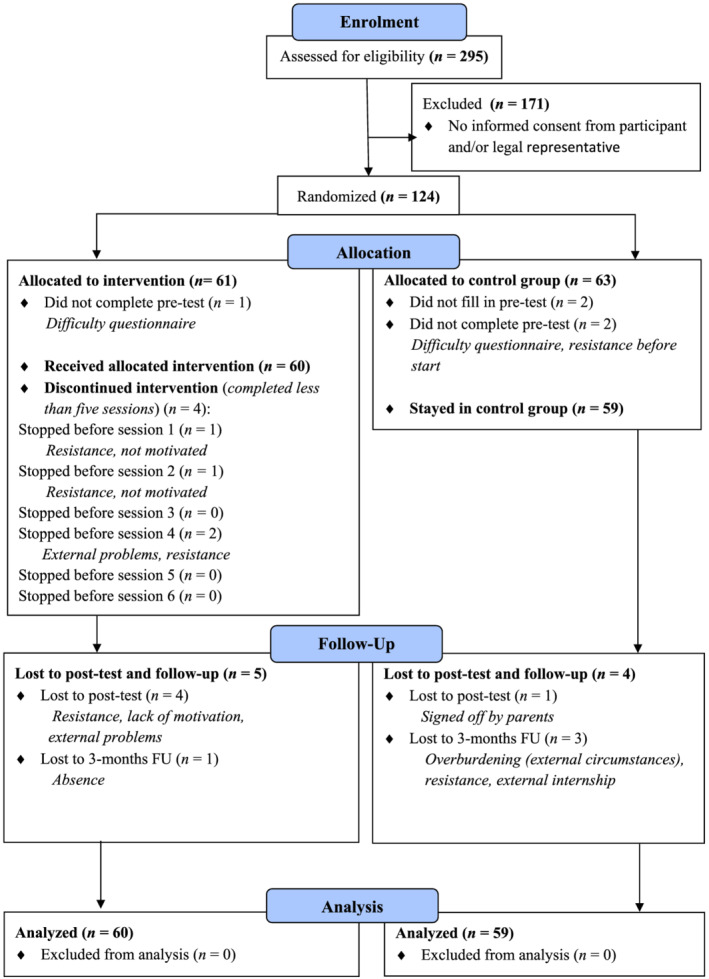
The sample consisted of 119 participants with mild to borderline ID (M = 15.83; SD = 2.23), randomly assigned to the intervention (n = 60) or passive control group (n = 59). Participants reported mindsets, perseverance, internalising, externalising, attention and total mental health problems at pre-test, at post-test and at 3-month follow-up. Additionally, youth in the intervention group graded their satisfaction with a score at the end of each session.
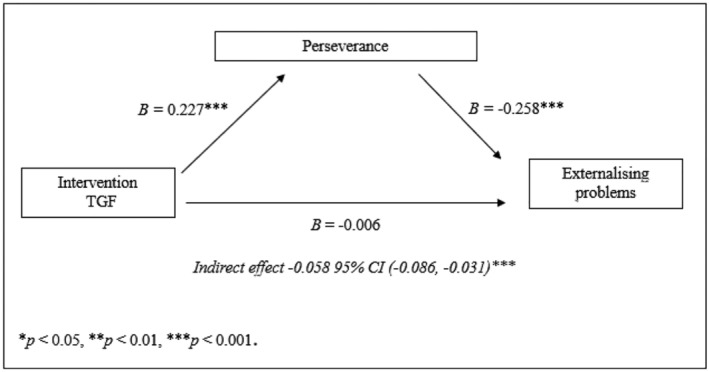
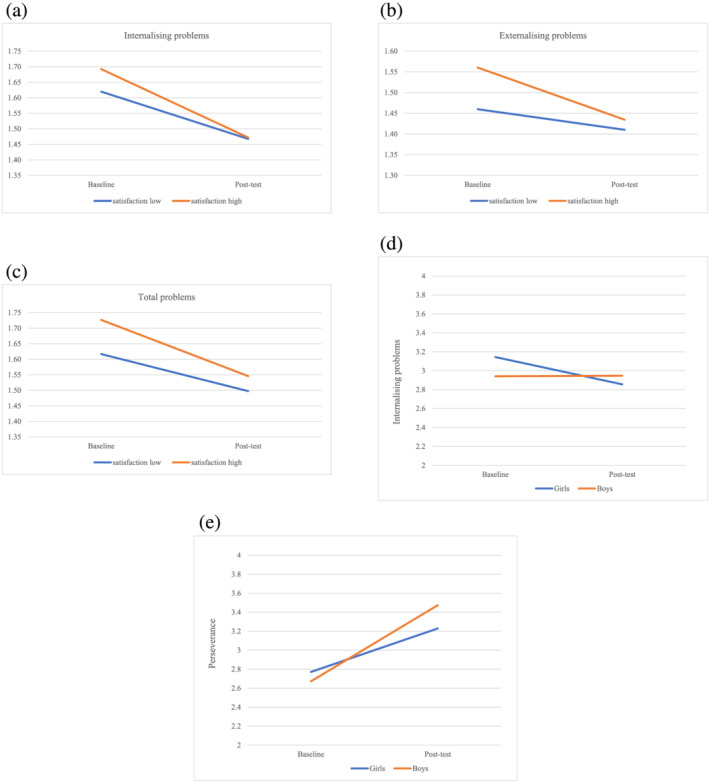
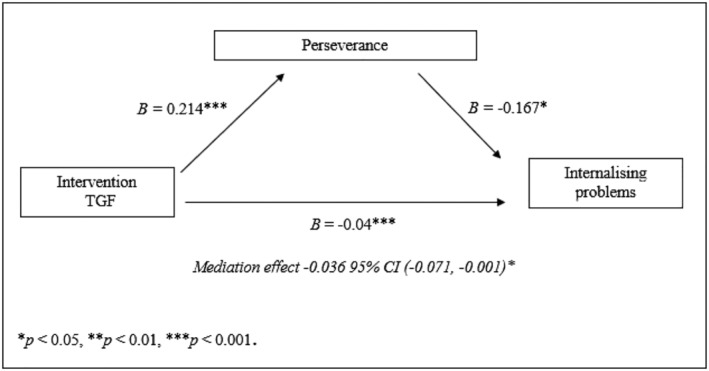
Findings indicated that the effectiveness of TGF was not affected by participants' baseline mindsets, age and ID level. TGF was more effective in reducing internalising problems in girls and increasing perseverance in boys. In addition, in the intervention group TGF was more effective in improving internalising, externalising and total mental health problems for youth who reported higher levels of intervention satisfaction at post-test. Finally, TGF indirectly decreased internalising and externalising problems at follow-up through improvements in perseverance reported at post-test.
TGF offers a universal, 'add-on' mindset intervention complementing usual care programmes. It improves mindsets, perseverance and mental health in youth with ID. Both practical and theoretical implications are discussed.
在线思维模式干预“成长工厂”(TGF)已显示出可喜的效果,它可以提高智力障碍(ID)青年的成长型思维和毅力,并减少心理健康问题。研究干预效果的调节因素和中介因素对于阐明TGF 对谁有效以及为什么有效至关重要。本研究采用随机对照试验设计,检验了青少年的思维模式基线、性别、年龄、ID 水平和干预满意度作为 TGF 效果的调节因素,并检验了 TGF 对改善心理健康的干预效果是否通过毅力来介导。
本研究样本包括 119 名轻度至边缘性 ID 青少年(M=15.83;SD=2.23),随机分配到干预组(n=60)或被动对照组(n=59)。参与者在基线、后测和 3 个月随访时报告思维模式、毅力、内化问题、外化问题、注意力和总心理健康问题。此外,干预组的青少年在每次课程结束时都会对他们的满意度进行评分。
研究结果表明,TGF 的有效性不受参与者的思维模式基线、年龄和 ID 水平的影响。TGF 更有效地减少女孩的内化问题,并增加男孩的毅力。此外,在干预组中,对于那些在干预结束时报告干预满意度较高的青少年,TGF 在后测时更有效地改善内化、外化和总心理健康问题。最后,TGF 通过在后测时报告毅力的提高,间接地减少了内化和外化问题。
TGF 提供了一种普遍的、“附加”的思维模式干预,可以补充常规护理计划。它可以改善 ID 青少年的思维模式、毅力和心理健康。讨论了其实践和理论意义。