Department of Physiology and Functional Genomics, University of Florida, Gainesville, United States.
Myology Institute, University of Florida, Gainesville, United States.
Elife. 2022 Sep 1;11:e76478. doi: 10.7554/eLife.76478.
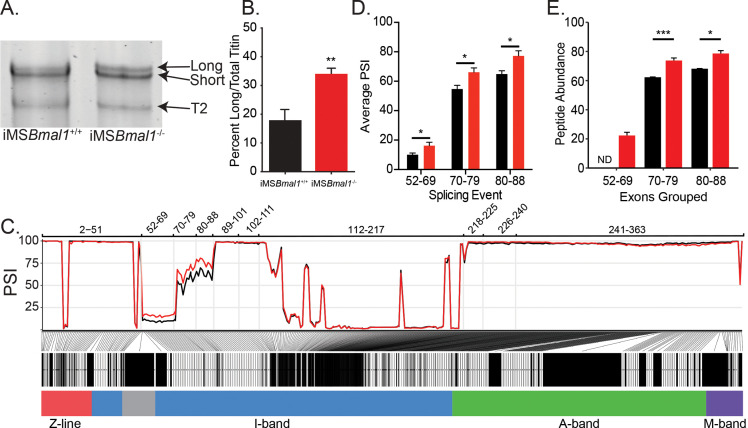
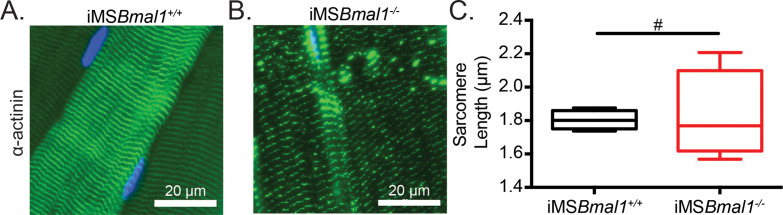
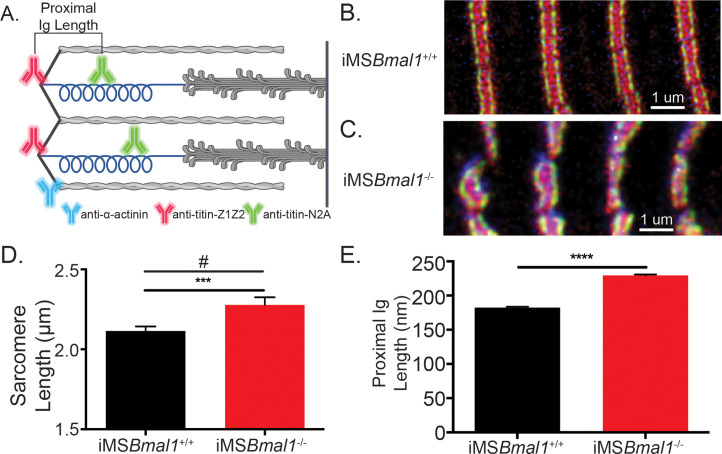
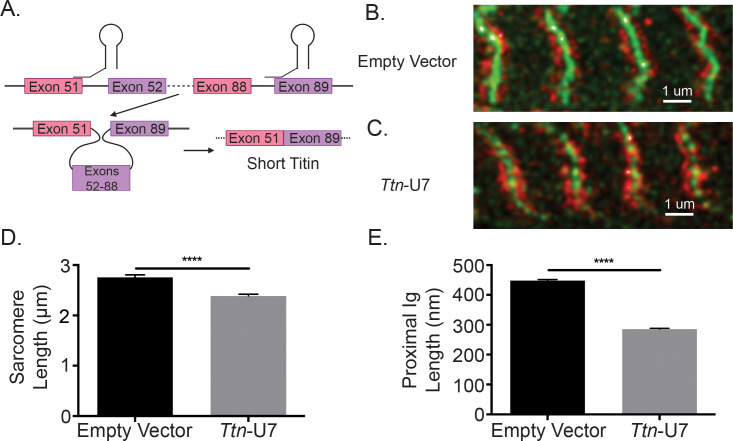
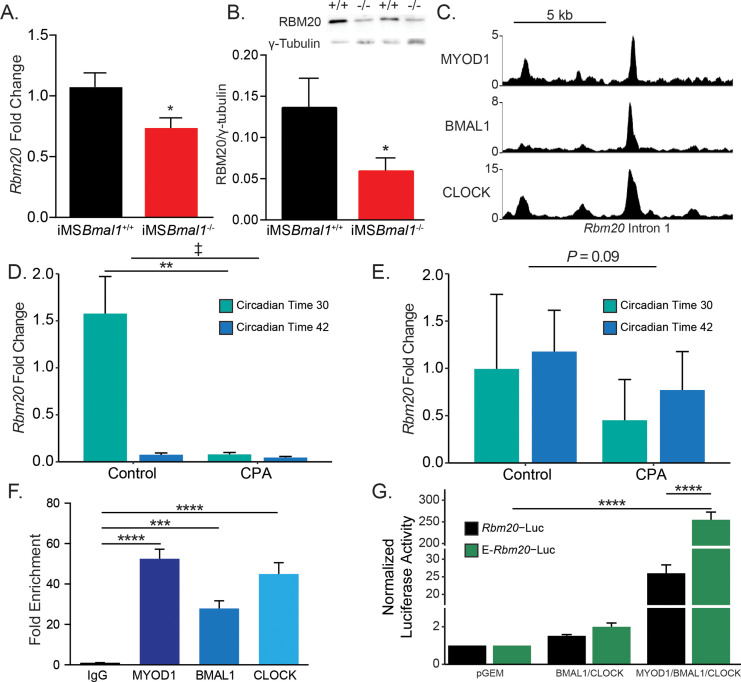
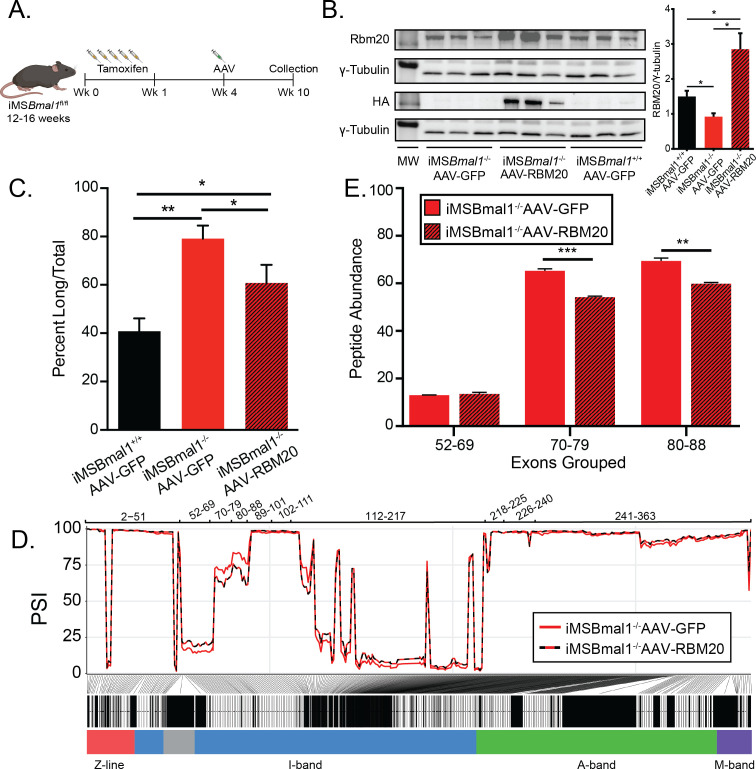
Circadian rhythms are maintained by a cell-autonomous, transcriptional-translational feedback loop known as the molecular clock. While previous research suggests a role of the molecular clock in regulating skeletal muscle structure and function, no mechanisms have connected the molecular clock to sarcomere filaments. Utilizing inducible, skeletal muscle specific, knockout (iMS) mice, we showed that knocking out skeletal muscle clock function alters titin isoform expression using RNAseq, liquid chromatography-mass spectrometry, and sodium dodecyl sulfate-vertical agarose gel electrophoresis. This alteration in titin's spring length resulted in sarcomere length heterogeneity. We demonstrate the direct link between altered titin splicing and sarcomere length in vitro using U7 snRNPs that truncate the region of titin altered in iMS muscle. We identified a mechanism whereby the skeletal muscle clock regulates titin isoform expression through transcriptional regulation of , a potent splicing regulator of titin. Lastly, we used an environmental model of circadian rhythm disruption and identified significant downregulation of expression. Our findings demonstrate the importance of the skeletal muscle circadian clock in maintaining titin isoform through regulation of RBM20 expression. Because circadian rhythm disruption is a feature of many chronic diseases, our results highlight a novel pathway that could be targeted to maintain skeletal muscle structure and function in a range of pathologies.
昼夜节律是由一个细胞自主的、转录翻译反馈环维持的,这个反馈环被称为分子钟。虽然之前的研究表明分子钟在调节骨骼肌结构和功能方面起作用,但没有任何机制将分子钟与肌节丝联系起来。利用诱导型、骨骼肌特异性敲除(iMS)小鼠,我们通过 RNAseq、液相色谱-质谱和十二烷基硫酸钠-垂直琼脂糖凝胶电泳显示,敲除骨骼肌时钟功能会改变肌联蛋白异构体的表达。这种肌联蛋白弹簧长度的改变导致了肌节长度的异质性。我们通过使用 U7 snRNPs 体外证明了肌联蛋白剪接与肌节长度之间的直接联系,U7 snRNPs 可以截断 iMS 肌肉中改变的肌联蛋白区域。我们确定了一种机制,即骨骼肌时钟通过对肌联蛋白强有力的剪接调节因子 的转录调控来调节肌联蛋白异构体的表达。最后,我们使用昼夜节律破坏的环境模型,发现 的表达显著下调。我们的研究结果表明,骨骼肌生物钟在通过调节 RBM20 表达来维持肌联蛋白异构体方面的重要性。由于昼夜节律紊乱是许多慢性疾病的一个特征,我们的研究结果强调了一种可能的新途径,该途径可以针对多种病理情况来维持骨骼肌的结构和功能。