Plangger Adelina, Rath Barbara, Stickler Sandra, Hochmair Maximilian, Lang Clemens, Weigl Lukas, Funovics Martin, Hamilton Gerhard
Institute of Pharmacology, Medical University of Vienna, Vienna, Austria.
Karl Landsteiner Institute of Lung Research and Pulmonary Oncology, Klinik Floridsdorf, Vienna, Austria.
Discov Oncol. 2022 Sep 1;13(1):84. doi: 10.1007/s12672-022-00550-w.
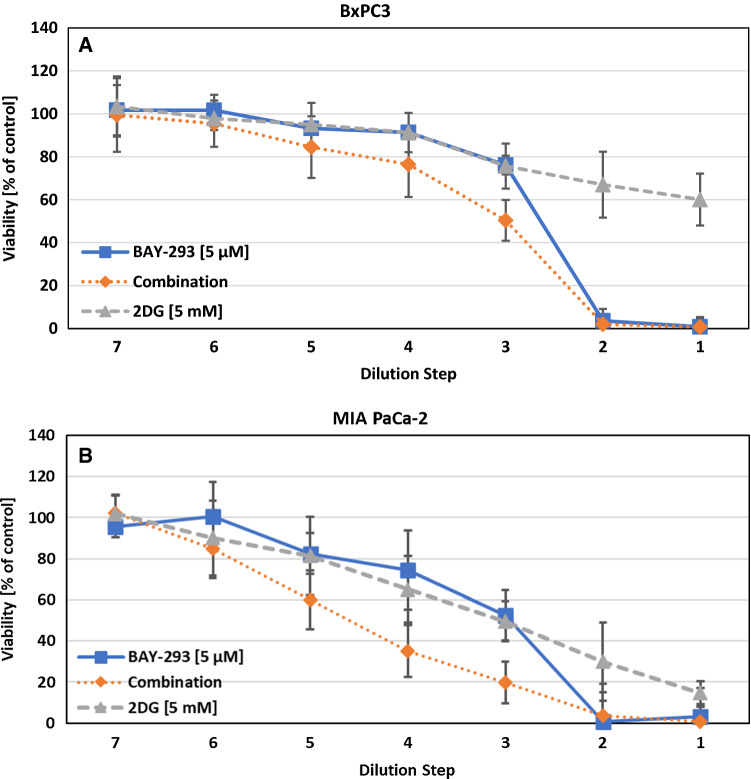
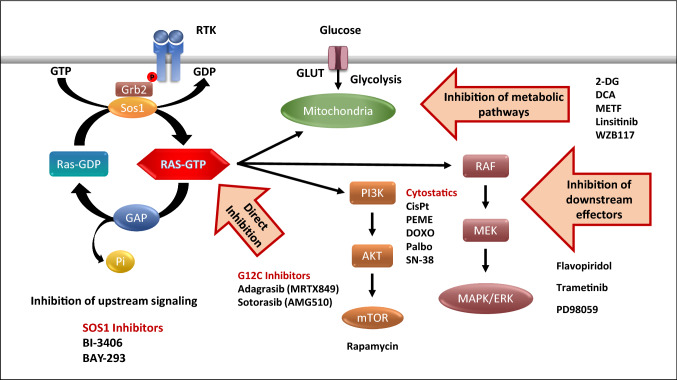
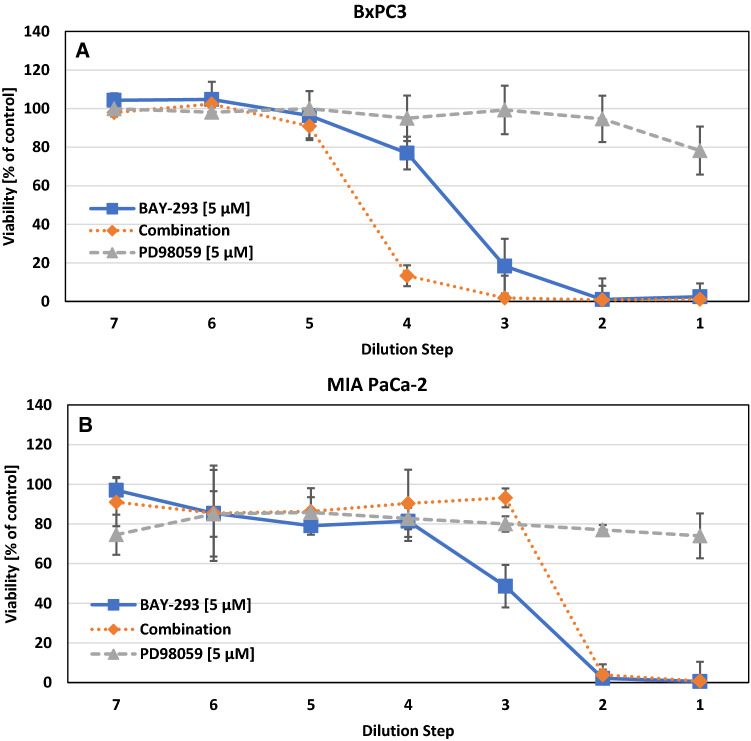
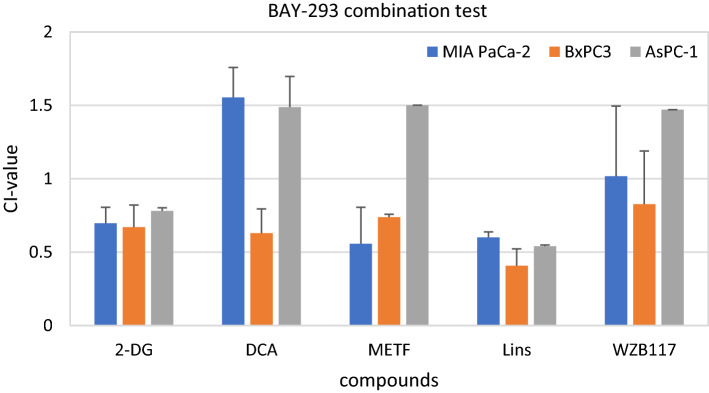
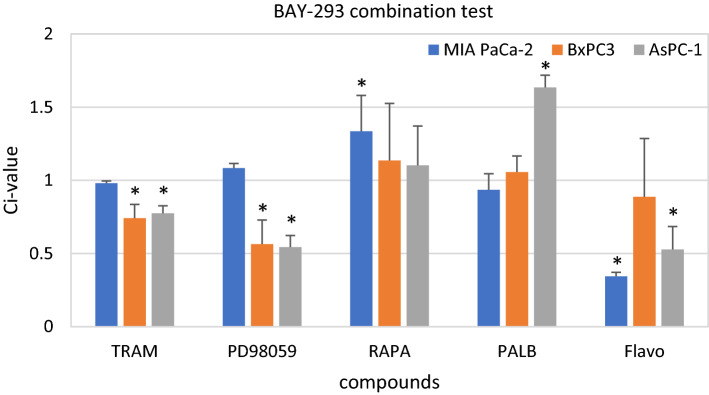
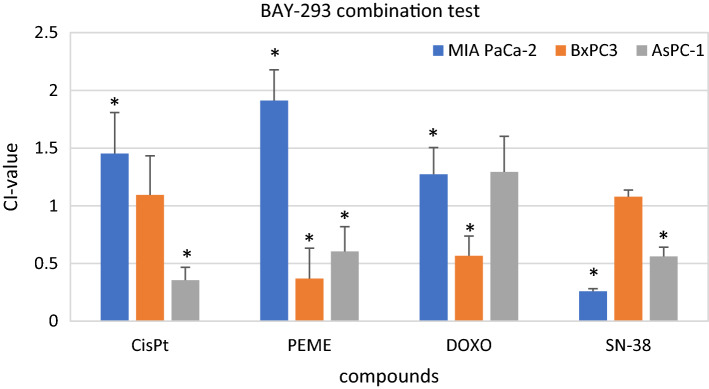
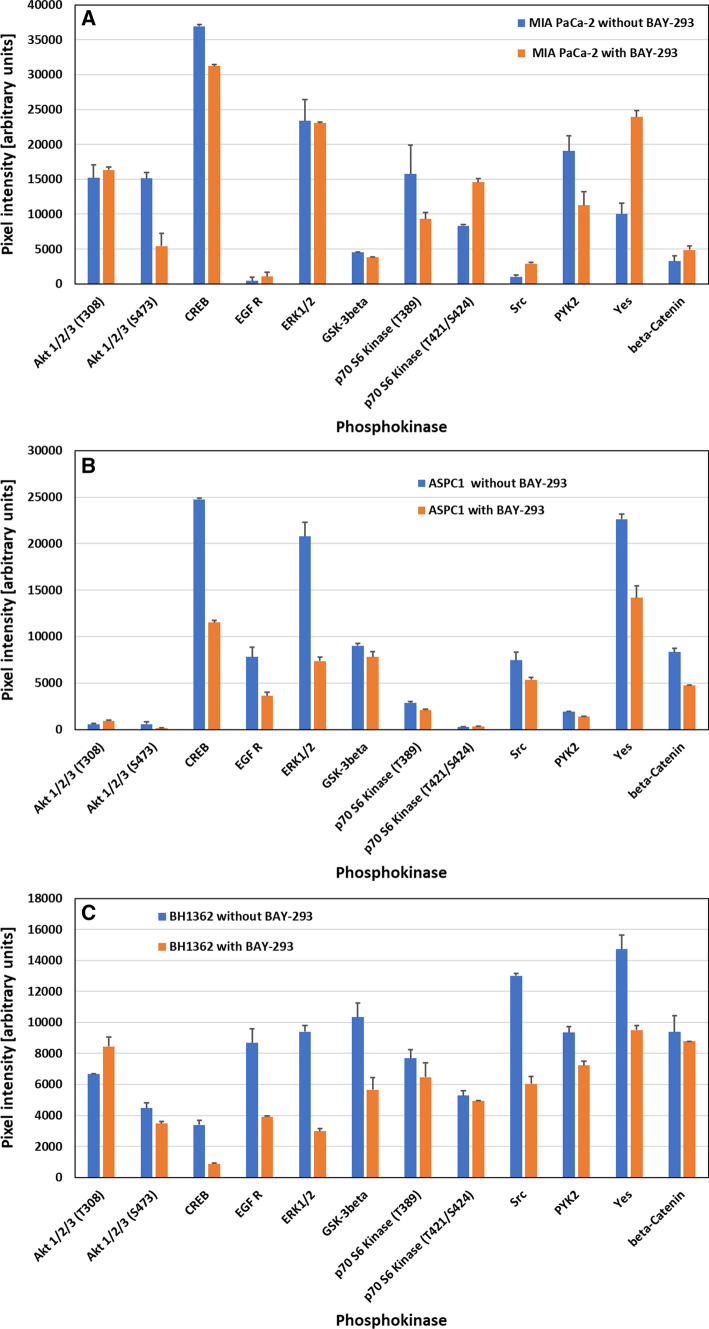
KRAS is mutated in approximately 25% of cancer patients and first KRAS G12C-specific inhibitors showed promising responses. Pancreatic cancer has the highest frequency of KRAS mutations but the prevailing KRAS G12D mutation is difficult to target. Inhibition of the GTP exchange factor (GEF) SOS1-KRAS interaction impairs oncogenic signaling independently of the specific KRAS mutations. In general, cell lines exhibiting KRAS mutations show specific alterations in respect to glucose utilization, signal transduction and stress survival. The aim of this investigation was to check the putative synergy of the SOS1 inhibitor BAY-293 with modulators targeting specific vulnerabilities of KRAS-mutated cell lines in vitro. The cytotoxicity of BAY-293 combinations was tested against MIA PaCa-2 (G12C), AsPC1 (G12D) and BxPC3 (KRAS wildtype) cell lines using MTT tests and calculation of the combination indices (CI) according to the Chou-Talalay method. The results show that BAY-293 synergizes with modulators of glucose utilization, inhibitors of the downstream MAPK pathway and several chemotherapeutics in dependence of the specific KRAS status of the cell lines. In particular, divergent responses for BAY-293 combinations between pancreatic and NSCLC cell lines were observed for linsitinib, superior inhibitory effects of trametinib and PD98059 in NSCLC, and lack of activity with doxorubicin in case of the pancreatic cell lines. Phosphoproteome analysis revealed inhibition of distinct signaling pathways by BAY-293 for MIA PaCa-2 on the one hand and for Aspc1 and BH1362 on the other hand. In conclusion, BAY-293 exhibits synergy with drugs in dependence of the tumor type and specific KRAS mutation.
约25%的癌症患者中存在KRAS突变,首批KRAS G12C特异性抑制剂显示出有前景的反应。胰腺癌中KRAS突变频率最高,但常见的KRAS G12D突变难以靶向。抑制鸟苷三磷酸(GTP)交换因子(GEF)SOS1与KRAS的相互作用可独立于特定KRAS突变损害致癌信号传导。一般来说,表现出KRAS突变的细胞系在葡萄糖利用、信号转导和应激存活方面呈现特定改变。本研究的目的是在体外检查SOS1抑制剂BAY-293与针对KRAS突变细胞系特定脆弱性的调节剂之间的假定协同作用。使用MTT试验并根据Chou-Talalay方法计算联合指数(CI),测试了BAY-293组合对MIA PaCa-2(G12C)、AsPC1(G12D)和BxPC3(KRAS野生型)细胞系的细胞毒性。结果表明,BAY-293与葡萄糖利用调节剂、下游丝裂原活化蛋白激酶(MAPK)途径抑制剂以及几种化疗药物协同作用,这取决于细胞系的特定KRAS状态。特别是,对于林西替尼,观察到胰腺癌细胞系和非小细胞肺癌(NSCLC)细胞系之间BAY-293组合的不同反应;曲美替尼和PD98059在NSCLC中具有更强的抑制作用,而在胰腺癌细胞系中阿霉素则无活性。磷酸化蛋白质组分析显示,一方面BAY-293对MIA PaCa-2的不同信号通路有抑制作用,另一方面对AsPC1和BH1362也有抑制作用。总之,BAY-293与药物的协同作用取决于肿瘤类型和特定的KRAS突变。