Department of Anatomy and Cell Biology, University of Florida College of Medicine, Gainesville, Florida, USA.
Department of Pathology, Seoul National University Hospital, Seoul National University College of Medicine, Seoul, South Korea.
JCI Insight. 2022 Oct 10;7(19):e147417. doi: 10.1172/jci.insight.147417.
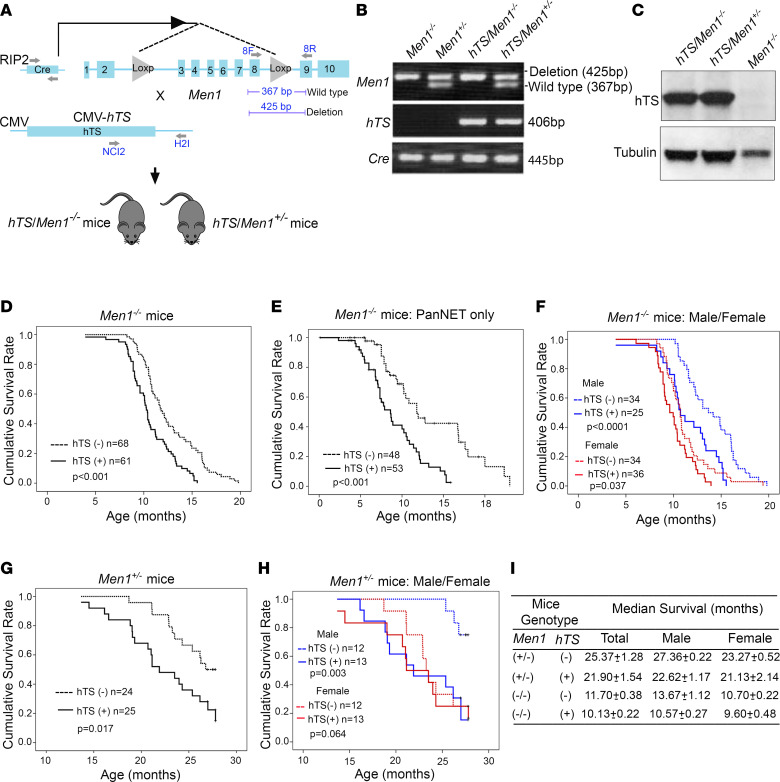
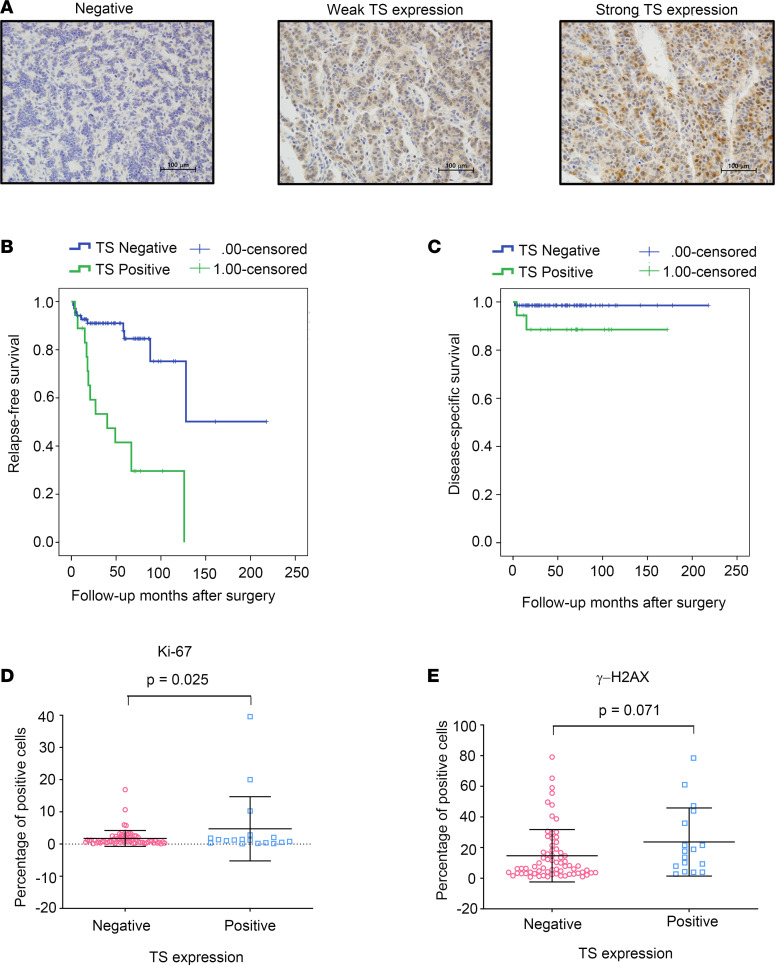
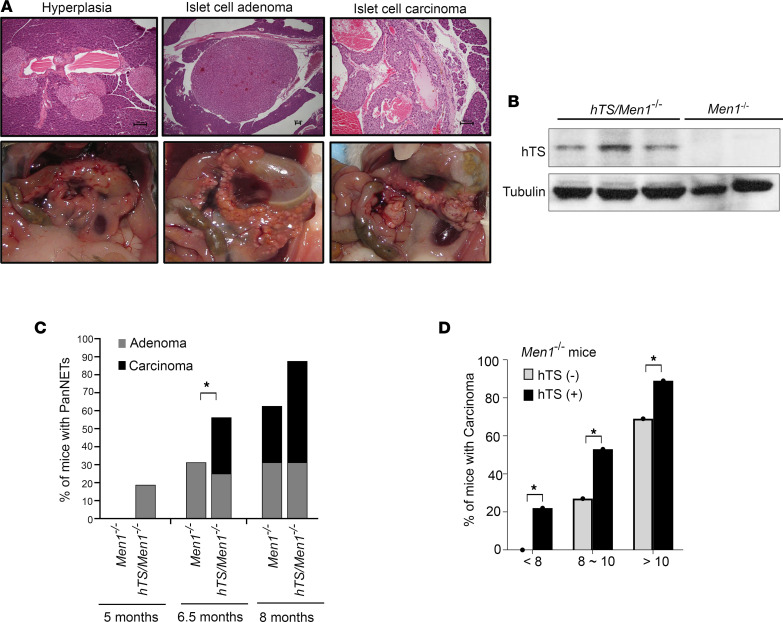
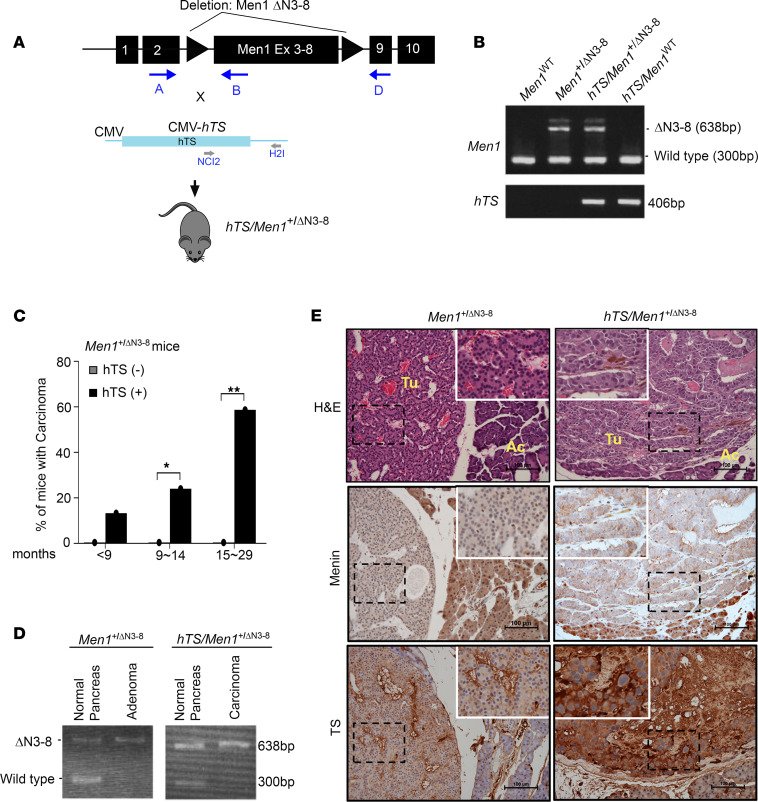
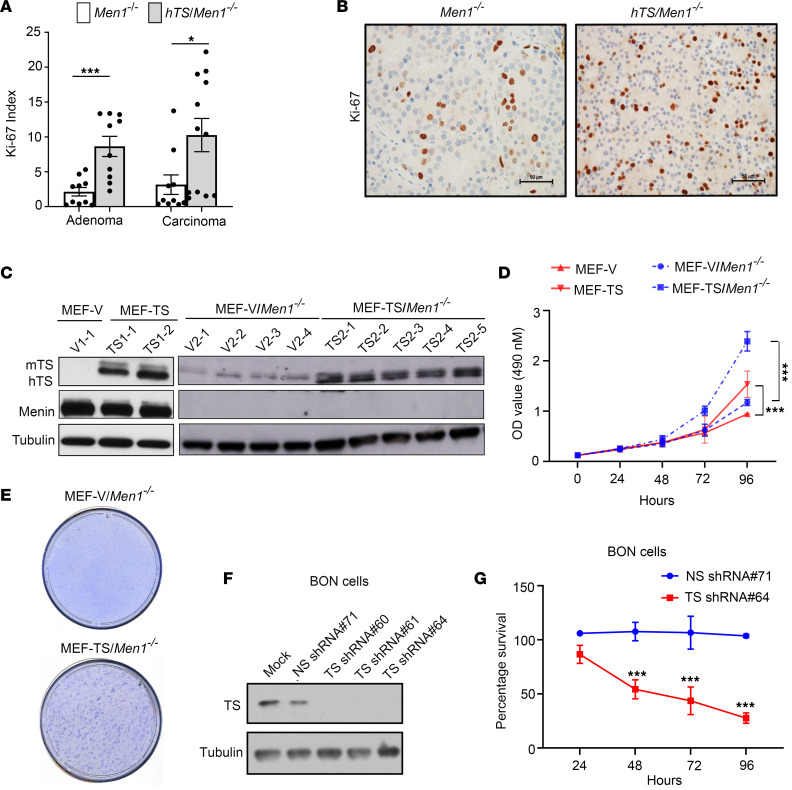
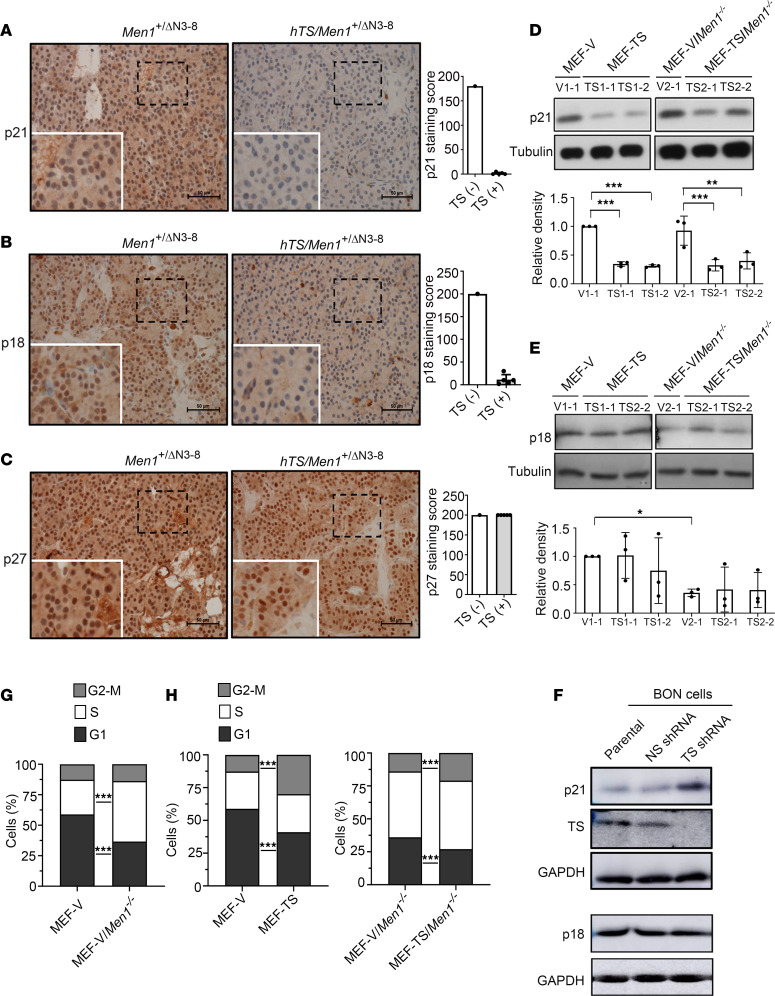
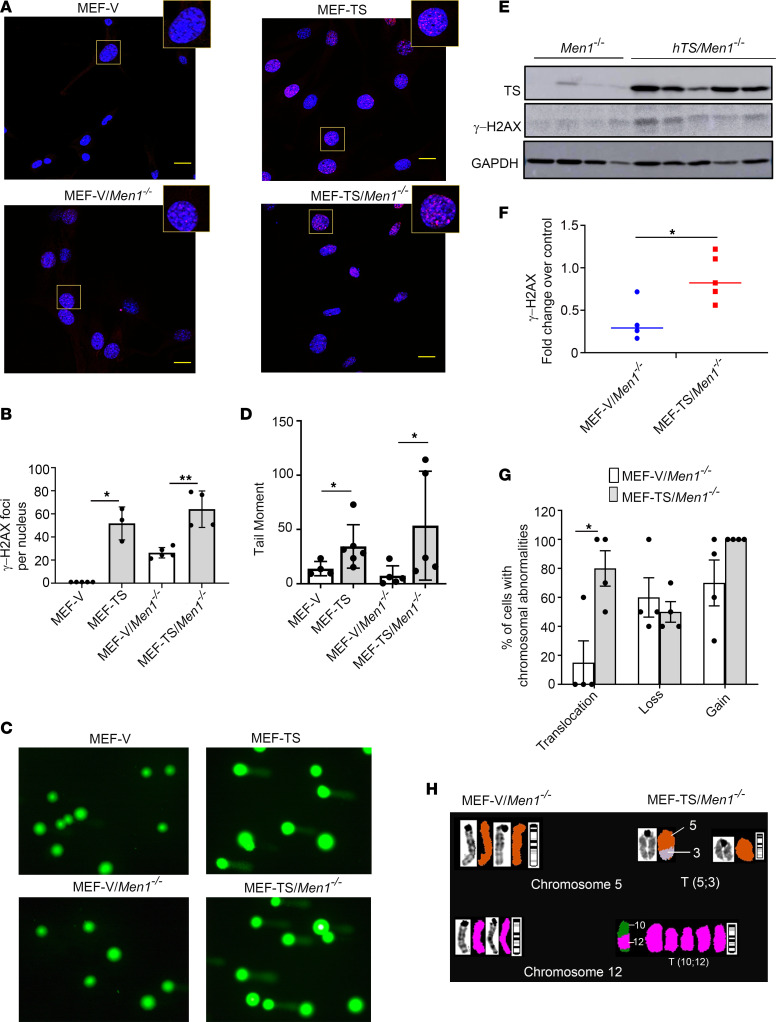
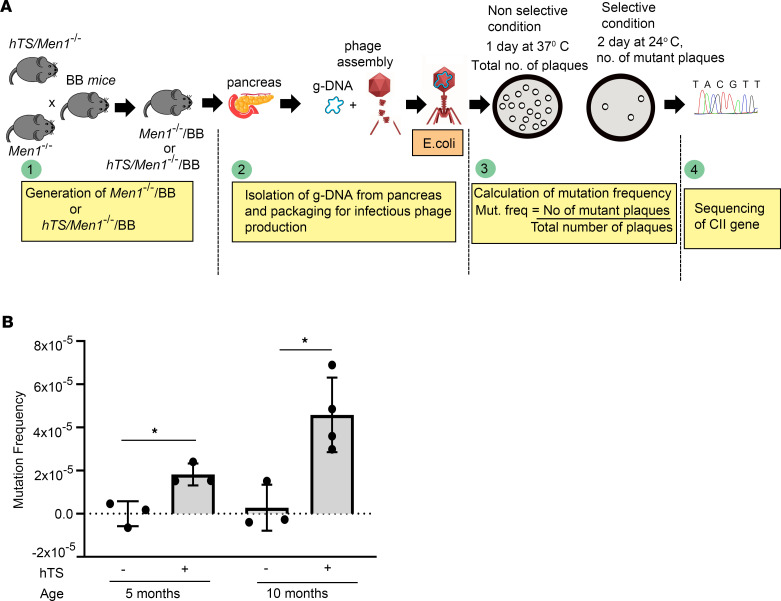
Clinical studies of cancer patients have shown that overexpression or amplification of thymidylate synthase (TS) correlates with a worse clinical outcome. We previously showed that elevated TS exhibits properties of an oncogene and promotes pancreatic neuroendocrine tumors (PanNETs) with a long latency. To study the causal impact of elevated TS levels in PanNETs, we generated a mouse model with elevated human TS (hTS) and conditional inactivation of the Men1 gene in pancreatic islet cells (hTS/Men1-/-). We demonstrated that increased hTS expression was associated with earlier tumor onset and accelerated PanNET development in comparison with control Men1-/- and Men1+/ΔN3-8 mice. We also observed a decrease in overall survival of hTS/Men1+/- and hTS/Men1-/- mice as compared with control mice. We showed that elevated hTS in Men1-deleted tumor cells enhanced cell proliferation, deregulated cell cycle kinetics, and was associated with a higher frequency of somatic mutations, DNA damage, and genomic instability. In addition, we analyzed the survival of 88 patients with PanNETs and observed that high TS protein expression independently predicted worse clinical outcomes. In summary, elevated hTS directly participates in promoting PanNET tumorigenesis with reduced survival in Men1-mutant background. This work will refocus attention on new strategies to inhibit TS activity for PanNET treatment.
临床癌症患者研究表明,胸苷酸合成酶 (TS) 的过度表达或扩增与更差的临床结果相关。我们之前曾表明,升高的 TS 表现出癌基因的特性,并促进具有长潜伏期的胰腺神经内分泌肿瘤 (PanNETs)。为了研究 PanNETs 中升高的 TS 水平的因果影响,我们生成了一种在胰腺胰岛细胞中具有升高的人 TS (hTS) 和条件性失活 Men1 基因的小鼠模型 (hTS/Men1-/-)。与对照 Men1-/-和 Men1+/ΔN3-8 小鼠相比,我们证明增加 hTS 表达与更早的肿瘤发生和加速 PanNET 发展相关。我们还观察到 hTS/Men1+/-和 hTS/Men1-/-小鼠的总生存率与对照小鼠相比下降。我们表明,在 Men1 缺失的肿瘤细胞中升高的 hTS 增强了细胞增殖,扰乱了细胞周期动力学,并与更高的体细胞突变、DNA 损伤和基因组不稳定性频率相关。此外,我们分析了 88 例 PanNET 患者的生存情况,观察到高 TS 蛋白表达独立预测临床结局较差。总之,升高的 hTS 直接参与促进具有 Men1 突变背景的 PanNET 肿瘤发生,并降低生存。这项工作将重新关注抑制 TS 活性的新策略,以用于 PanNET 治疗。