Lan Kai-Wen, Jiang Liu-Lin, Yan Ying
Hospital of Stomatology, Sun Yat-sen University, Guangdong Provincial Key Laboratory of Stomatology, Guanghua School of Stomatology, Guangzhou 510080, Guangdong Province, China.
World J Clin Cases. 2022 Jul 16;10(20):6876-6889. doi: 10.12998/wjcc.v10.i20.6876.
Bruxism is a rhythmic masticatory muscle activity that occurs involuntarily in a non-physiologically functional state. There is a lack of research classifying the functional status of masticatory muscles in patients with different mandibular movement types (centric clenching or eccentric grinding) of bruxism.
To assess the differences of the masticatory muscle activity in patients with different types of bruxism.
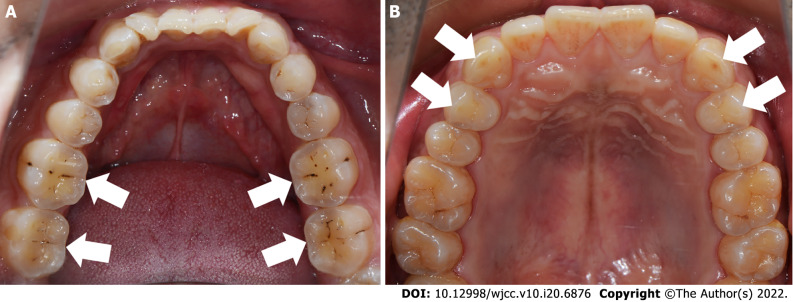
A total of 21 subjects with centric bruxism (CB) and 21 subjects with eccentric bruxism (ECB) were screened from college students according to a questionnaire and their tooth wear features. Sixteen subjects with no bruxism were also recruited. The surface electromyography (EMG) signals of the temporalis anterior (TA) and superficial masseter muscle (MM) were measured in different mandibular positions and during the chewing task. The EMG amplitude and chewing cycle duration parameters were then analyzed.
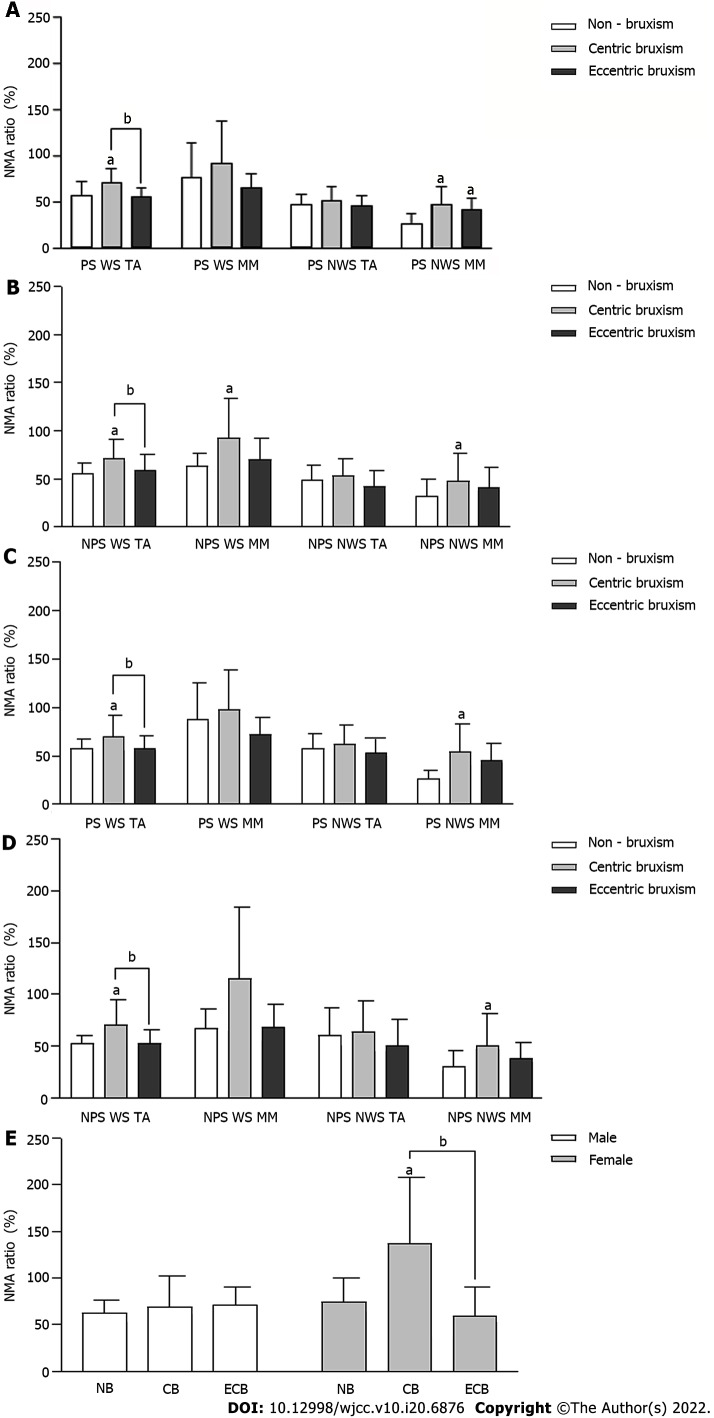
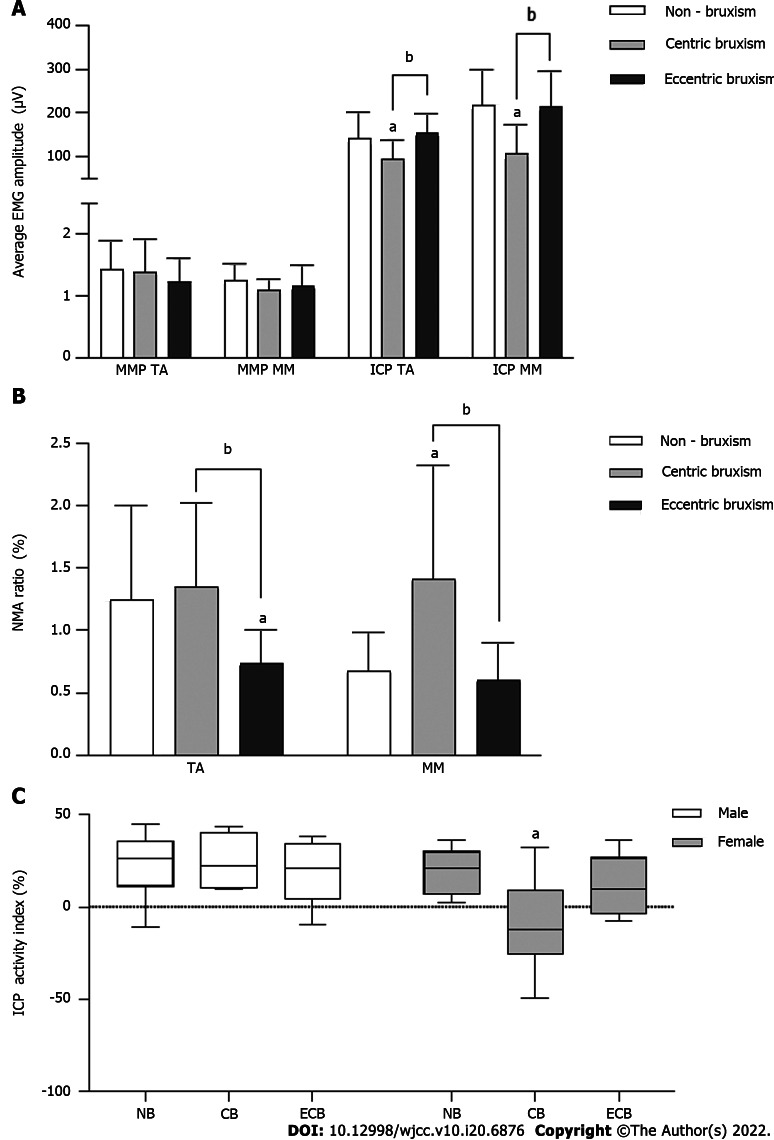
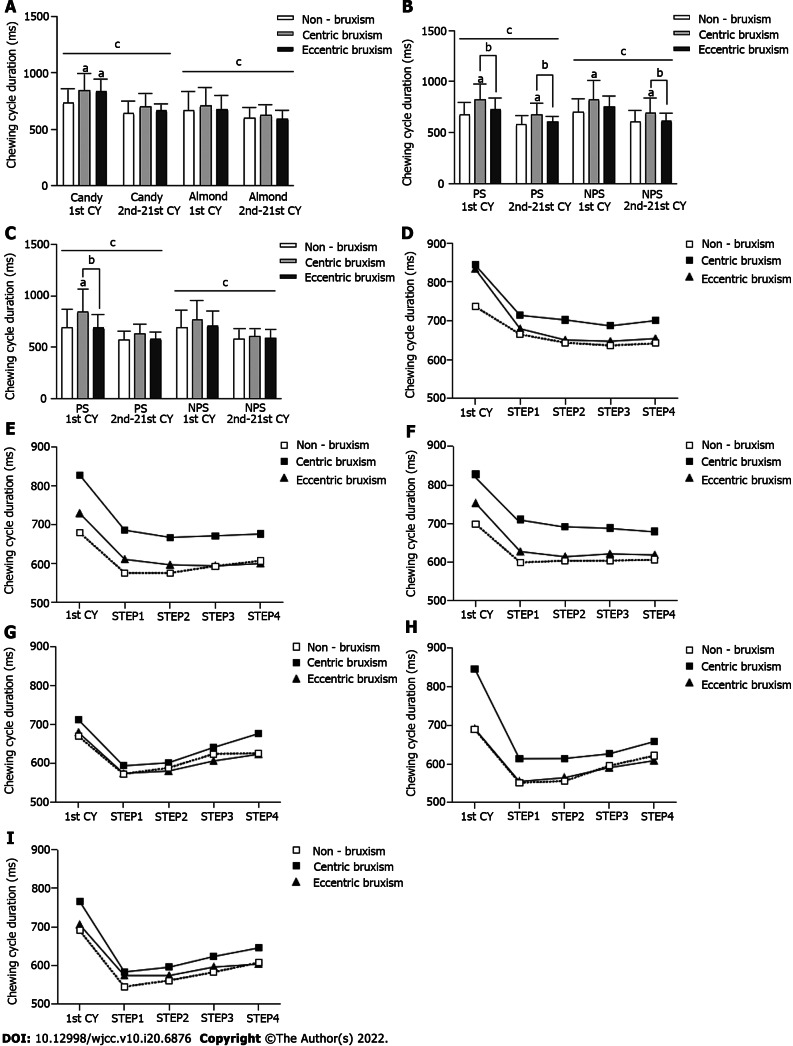
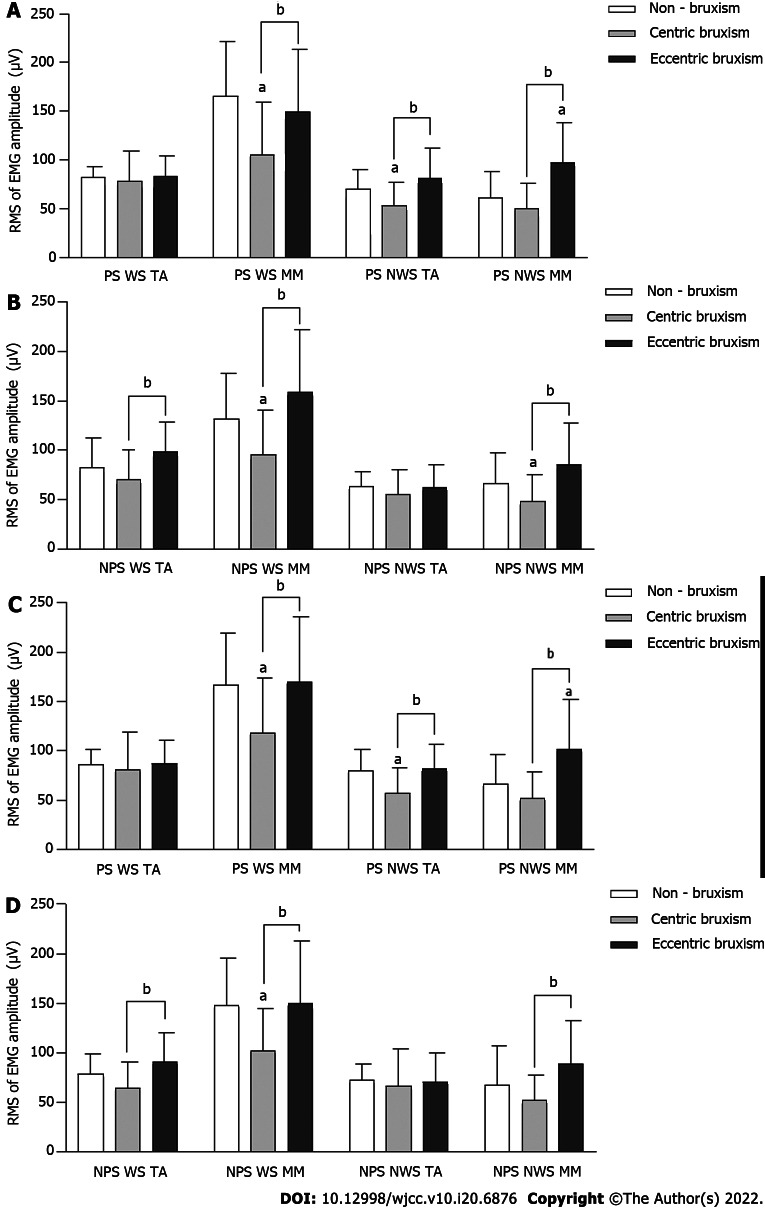
The CB group showed fewer muscle maximal motor units, with the MM being more pronounced, a higher proportion of muscle contractions to be recruited for the same load of chewing activity, and a longer chewing cycle. The ECB group showed more TA maximal motor units and higher MM activity on the non-working side in unilateral chewing.
CB mainly affects the MM, and patients with CB show reduced masticatory muscle contraction efficiency and chewing cycle efficiency. ECB mainly affects the TA, and patients with ECB show enhanced contraction of non-functional lateral muscle bundles.
磨牙症是一种在非生理功能状态下不自主发生的节律性咀嚼肌活动。目前缺乏对不同下颌运动类型(正中紧咬或非正中磨牙)的磨牙症患者咀嚼肌功能状态进行分类的研究。
评估不同类型磨牙症患者咀嚼肌活动的差异。
根据问卷和牙齿磨损特征从大学生中筛选出21名正中磨牙症(CB)患者和21名非正中磨牙症(ECB)患者。还招募了16名无磨牙症的受试者。在不同下颌位置和咀嚼任务期间测量颞肌前束(TA)和咬肌浅层(MM)的表面肌电图(EMG)信号。然后分析EMG幅度和咀嚼周期持续时间参数。
CB组显示肌肉最大运动单位较少,其中MM更为明显,在相同咀嚼活动负荷下需要募集的肌肉收缩比例更高,咀嚼周期更长。ECB组在单侧咀嚼时非工作侧显示更多的TA最大运动单位和更高的MM活动。
CB主要影响MM,CB患者表现出咀嚼肌收缩效率和咀嚼周期效率降低。ECB主要影响TA,ECB患者表现出非功能性外侧肌束收缩增强。