Leibniz Institute for Food Systems Biology at the Technical University of Munich, Lise-M eitner-Straße 34, 85354Freising, Germany.
Chair of Livestock Biotechnology, TUM School of Life Sciences, Technical University of Munich, Liesel-Beckmann-Straße 1, 85354Freising, Germany.
J Agric Food Chem. 2022 Sep 21;70(37):11591-11602. doi: 10.1021/acs.jafc.2c05228. Epub 2022 Sep 2.
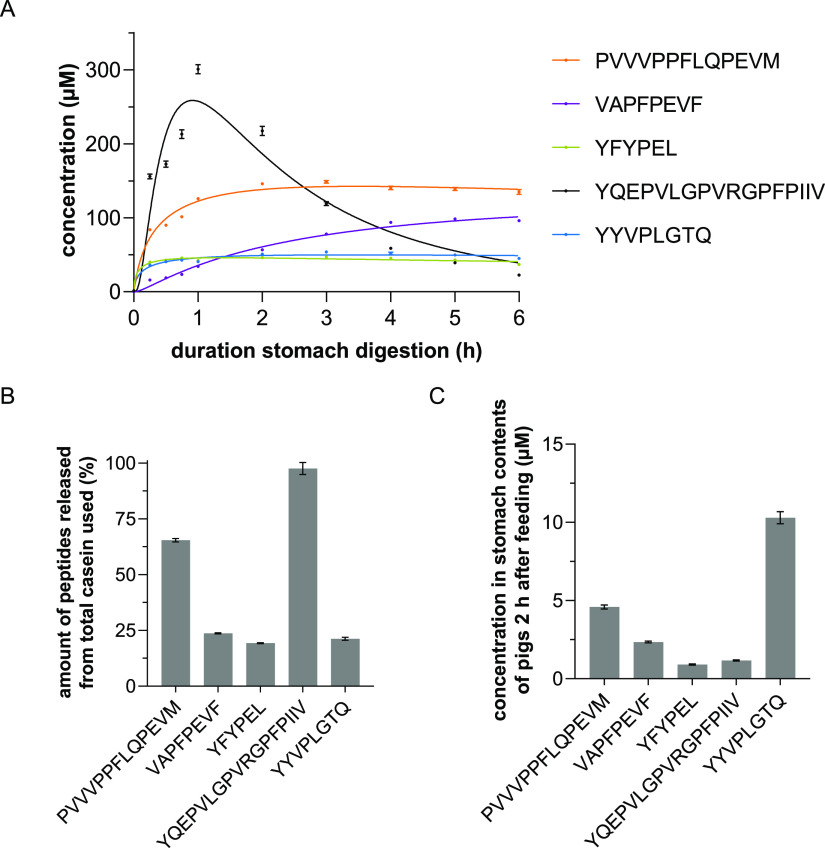
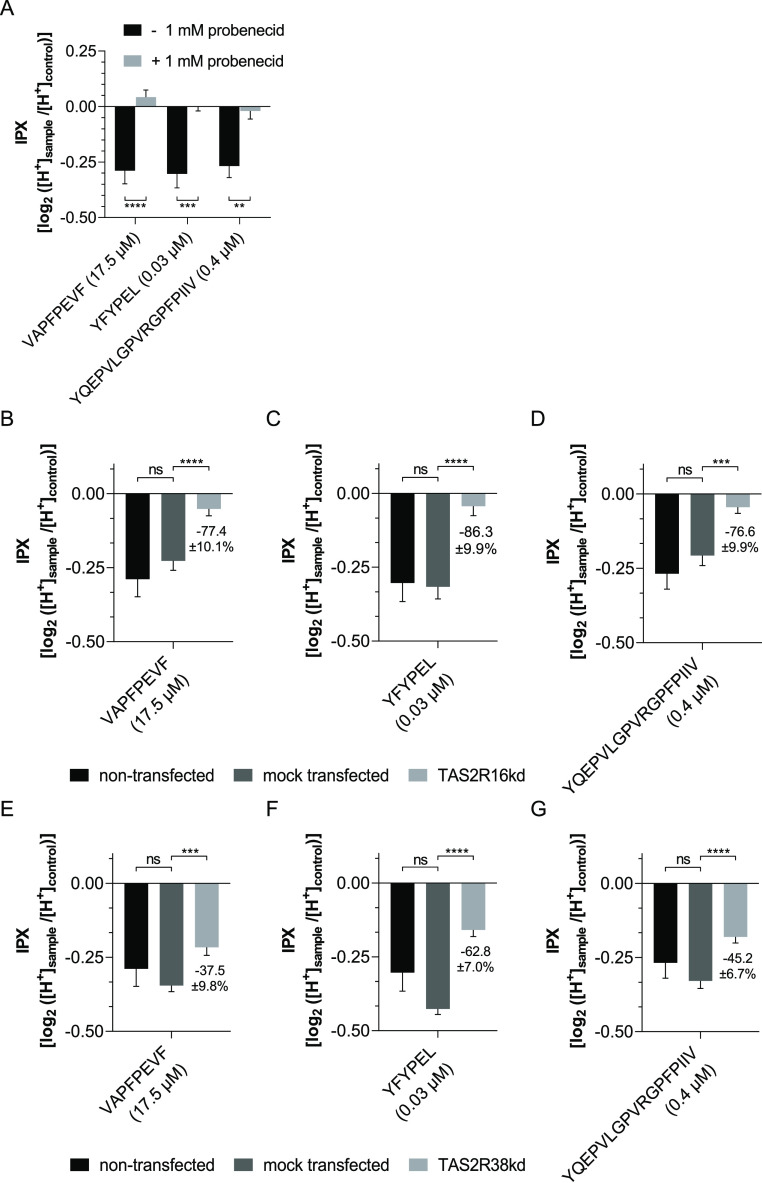
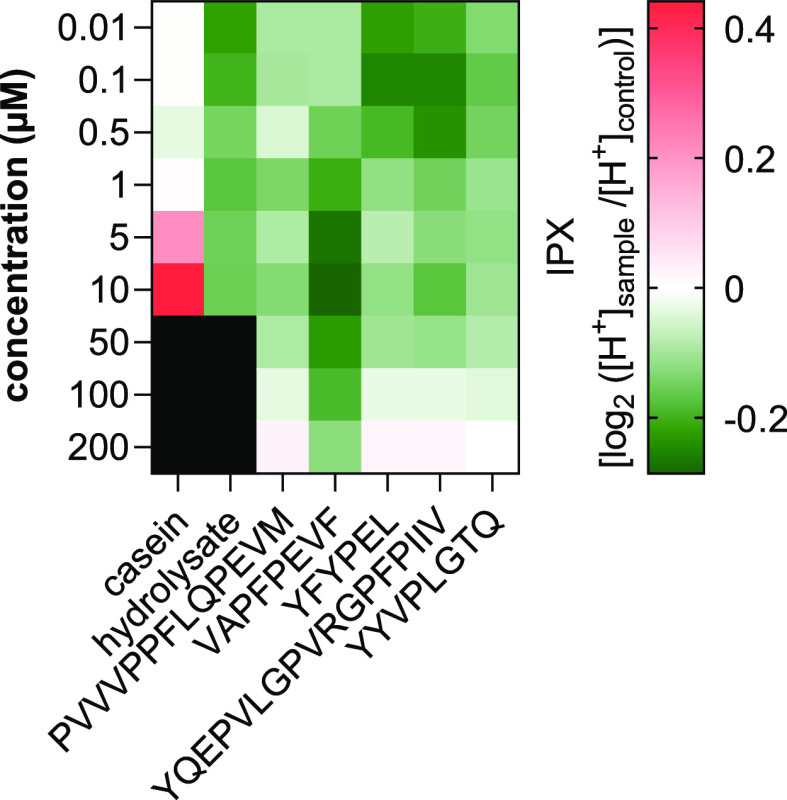
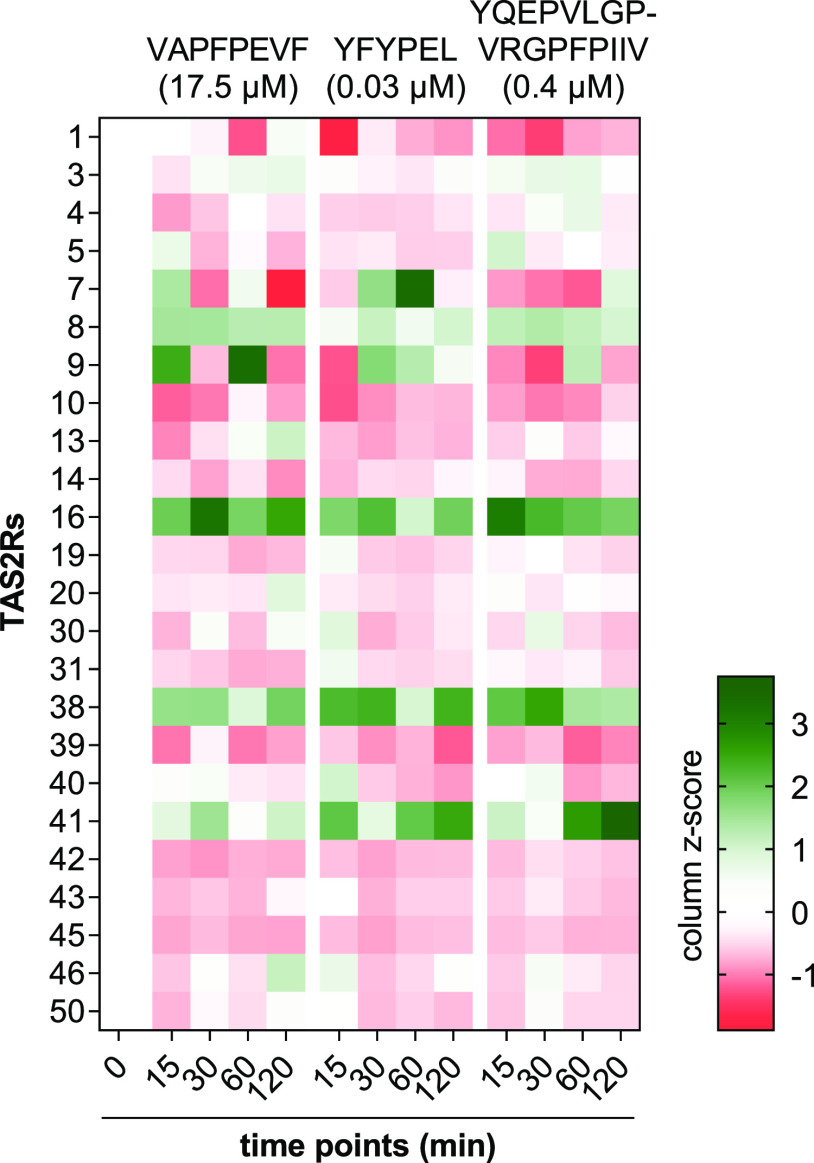
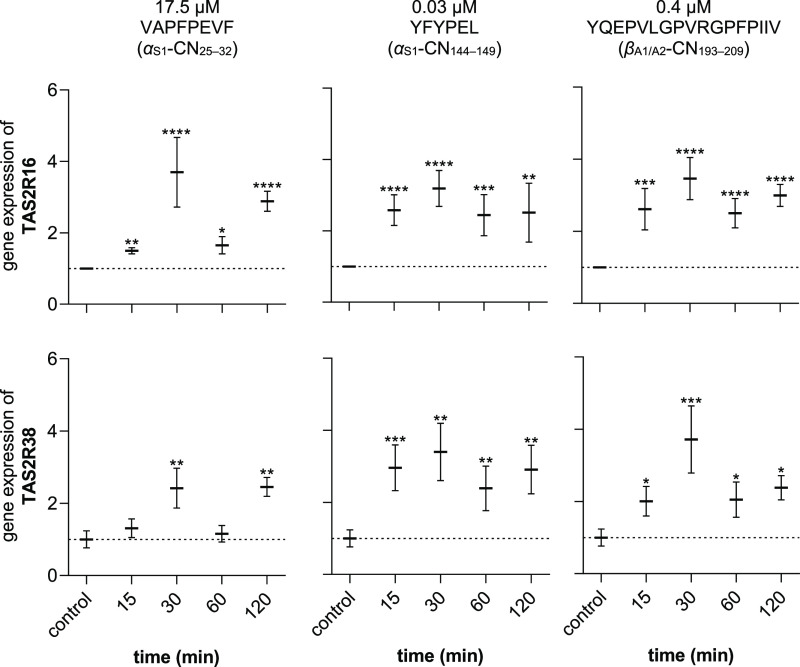
Eating satiating, protein-rich foods is one of the key aspects of modern diet, although a bitter off-taste often limits the application of some proteins and protein hydrolysates, especially in processed foods. Previous studies of our group demonstrated that bitter-tasting food constituents, such as caffeine, stimulate mechanisms of gastric acid secretion as a signal of gastric satiation and a key process of gastric protein digestion activation of bitter taste receptors (TAS2Rs). Here, we tried to elucidate whether dietary non-bitter-tasting casein is intra-gastrically degraded into bitter peptides that stimulate mechanisms of gastric acid secretion in physiologically achievable concentrations. An model of gastric digestion was verified by casein-fed pigs, and the peptides resulting from gastric digestion were identified by liquid chromatography-time-of-flight-mass spectrometry. The bitterness of five selected casein-derived peptides was validated by sensory analyses and by an screening approach based on human gastric parietal cells (HGT-1). For three of these peptides (YFYPEL, VAPFPEVF, and YQEPVLGPVRGPFPIIV), an upregulation of gene expression of and was observed. The functional involvement of these TAS2Rs was verified by siRNA knock-down (kd) experiments in HGT-1 cells. This resulted in a reduction of the mean proton secretion promoted by the peptides by up to 86.3 ± 9.9% for TAS2R16kd ( < 0.0001) cells and by up to 62.8 ± 7.0% for TAS2R38kd ( < 0.0001) cells compared with mock-transfected cells.
食用饱腹感强、富含蛋白质的食物是现代饮食的关键方面之一,尽管一些蛋白质和蛋白质水解物的苦味往往会限制其应用,尤其是在加工食品中。我们小组之前的研究表明,苦味食物成分,如咖啡因,作为胃饱腹感的信号和胃蛋白消化激活的关键过程,刺激胃酸分泌机制 苦味受体(TAS2R)。在这里,我们试图阐明膳食中非苦味的酪蛋白是否在胃内降解为苦味肽,以生理上可达到的浓度刺激胃酸分泌机制。通过给猪喂食酪蛋白来验证胃消化模型,并通过液相色谱-飞行时间质谱鉴定胃消化产生的肽。通过感官分析和基于人胃壁细胞(HGT-1)的筛选方法验证了 5 种选定的酪蛋白衍生肽的苦味。对于这三种肽(YFYPEL、VAPFPEVF 和 YQEPVLGPVRGPFPIIV),观察到 和 基因表达上调。通过 HGT-1 细胞中的 siRNA 敲低(kd)实验验证了这些 TAS2R 的功能参与。这导致肽促进的平均质子分泌减少了 86.3±9.9%( < 0.0001)细胞和 62.8±7.0%( < 0.0001)细胞,与 mock 转染细胞相比。