European Molecular Biology Laboratory (EMBL-Barcelona), 08003 Barcelona, Spain.
European Molecular Biology Laboratory (EMBL-Barcelona), 08003 Barcelona, Spain.
Dev Cell. 2022 Sep 12;57(17):2140-2150.e5. doi: 10.1016/j.devcel.2022.08.005. Epub 2022 Sep 1.
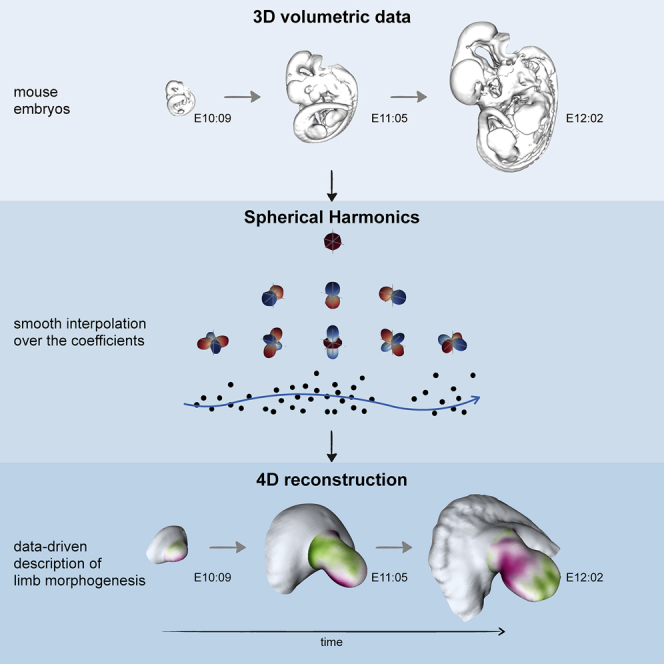
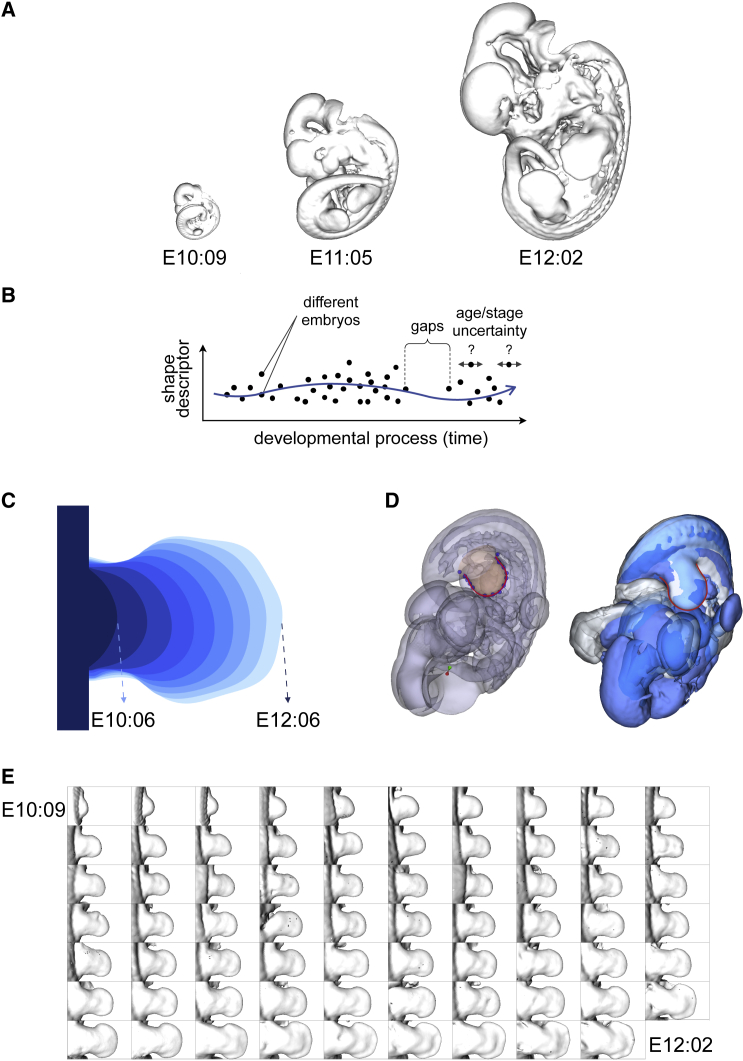
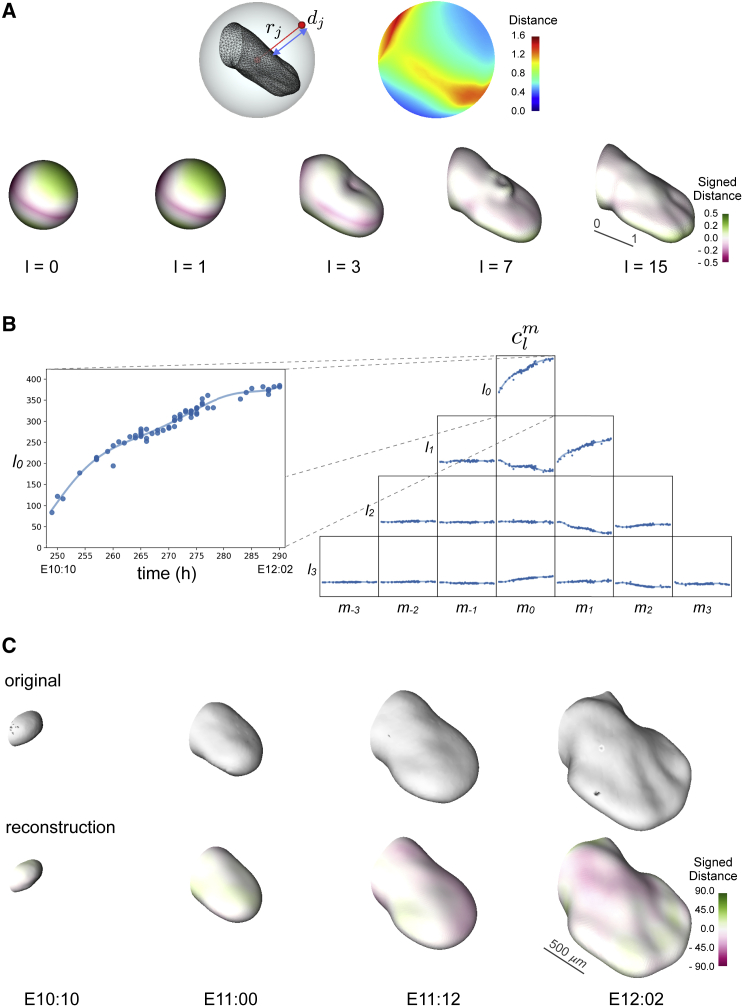
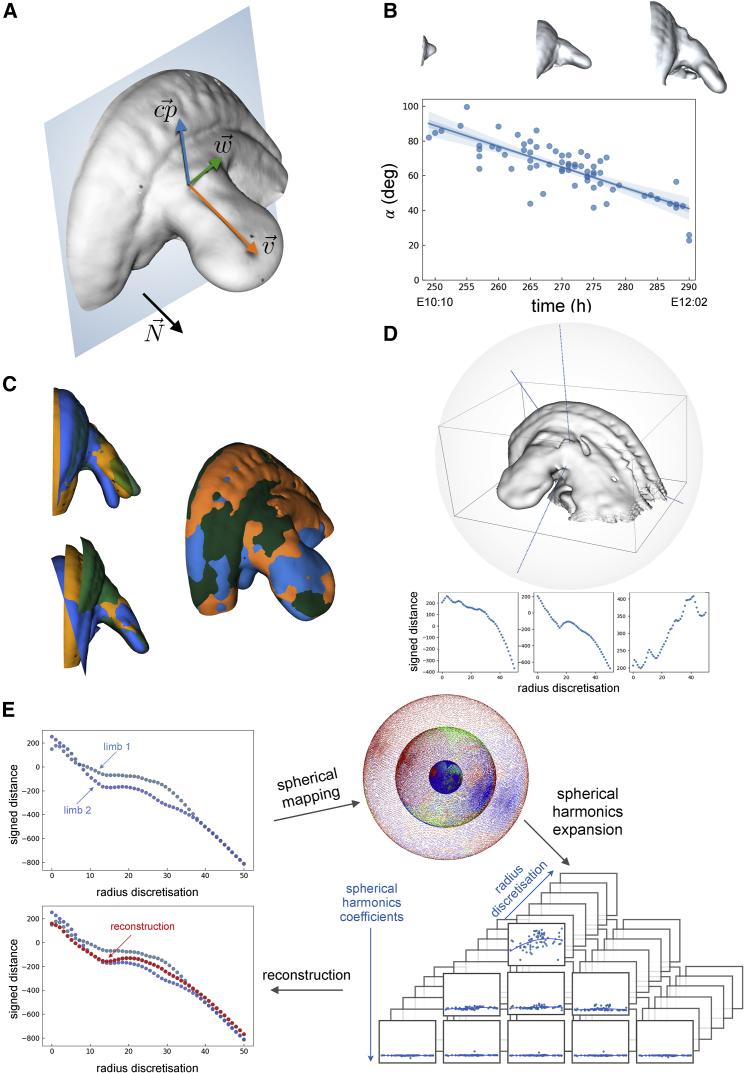
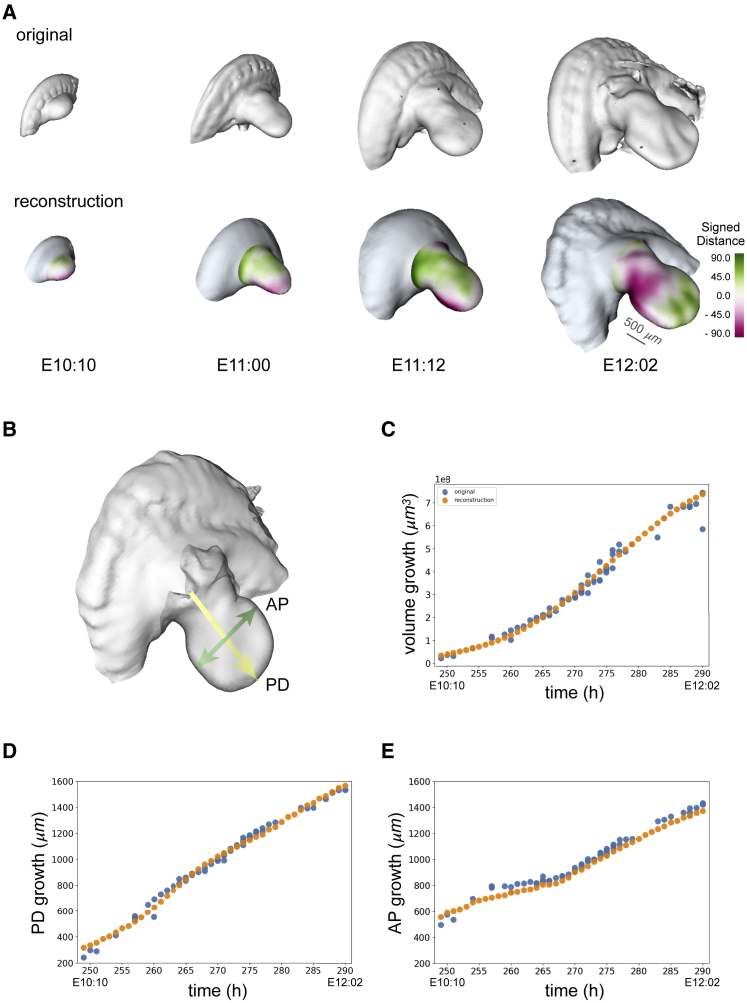
Normal organogenesis cannot be recapitulated in vitro for mammalian organs, unlike in species including Drosophila and zebrafish. Available 3D data in the form of ex vivo images only provide discrete snapshots of the development of an organ morphology. Here, we propose a computer-based approach to recreate its continuous evolution in time and space from a set of 3D volumetric images. Our method is based on the remapping of shape data into the space of the coefficients of a spherical harmonics expansion where a smooth interpolation over time is simpler. We tested our approach on mouse limb buds and embryonic hearts. A key advantage of this method is that the resulting 4D trajectory can take advantage of all the available data while also being able to interpolate well through time intervals for which there are little or no data. This allows for a quantitative, data-driven 4D description of mouse limb morphogenesis.
与包括果蝇和斑马鱼在内的物种不同,哺乳动物器官的正常器官发生无法在体外重现。现有的以离体图像形式存在的 3D 数据仅提供了器官形态发育的离散快照。在这里,我们提出了一种基于计算机的方法,可以从一组 3D 体积图像中重新创建其在时间和空间上的连续演变。我们的方法基于将形状数据重新映射到球谐函数展开系数的空间中,其中时间上的平滑插值更为简单。我们在小鼠肢芽和胚胎心脏上测试了我们的方法。该方法的一个关键优势是,所得的 4D 轨迹可以利用所有可用数据,同时也能够很好地通过数据很少或没有数据的时间段进行插值。这允许对小鼠肢芽形态发生进行定量的、数据驱动的 4D 描述。