Department CIBIO, University of Trento, Via Sommarive 9, 38123, Povo, Italy.
Laboratory of Molecular Biology, Istituto Di Ricerche Farmacologiche Mario Negri IRCCS, Via Mario Negri 2, 20156, Milan, Italy.
Stem Cell Res Ther. 2022 Sep 2;13(1):440. doi: 10.1186/s13287-022-03135-0.
Cornelia de Lange syndrome (CdLS) is a rare multisystem genetic disorder which is caused by genetic defects involving the Nipped-B-like protein (NIPBL) gene in the majority of clinical cases (60-70%). Currently, there are no specific cures available for CdLS and clinical management is needed for life. Disease models are highly needed to find a cure. Among therapeutic possibilities are genome editing strategies based on CRISPR-Cas technology.
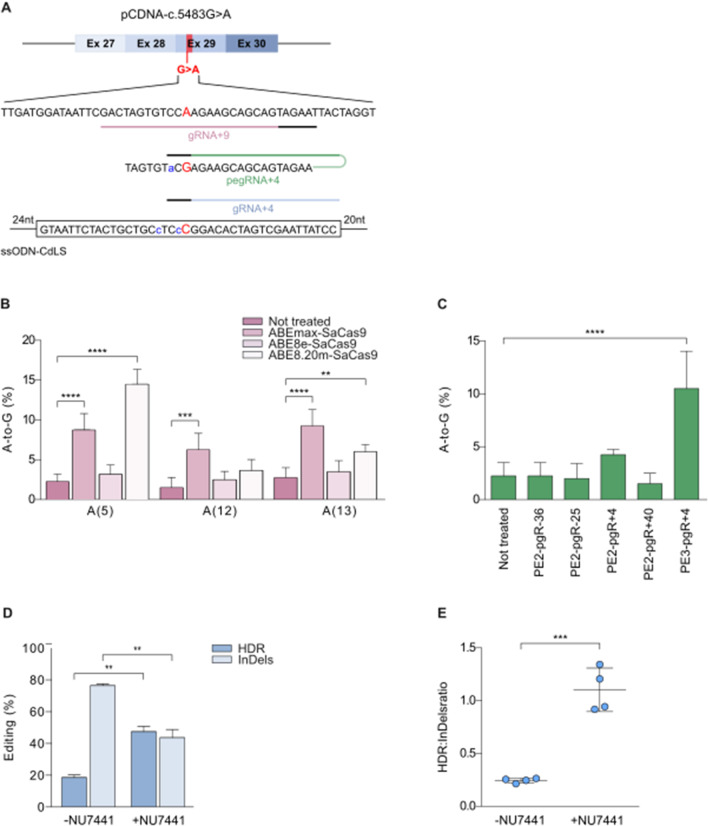
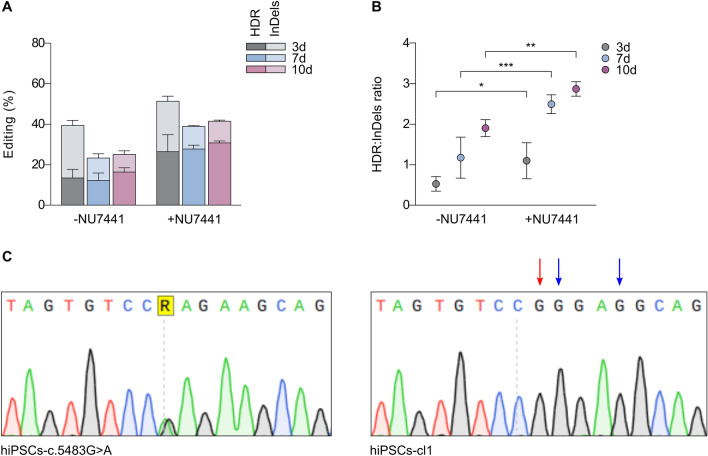
A comparative analysis was performed to test the most recent CRISPR-Cas technologies comprising base- and prime-editors which introduce modifications without DNA cleavages and compared with sequence substitution approaches through homology directed repair (HDR) induced by Cas9 nuclease activity. The HDR method that was found more efficient was applied to repair a CdLS-causing mutation in the NIPBL gene. Human-induced pluripotent stem cells (hiPSCs) derived from a CdLS patient carrying the c.5483G > A mutation in the NIPBL were modified through HDR to generate isogenic corrected clones.
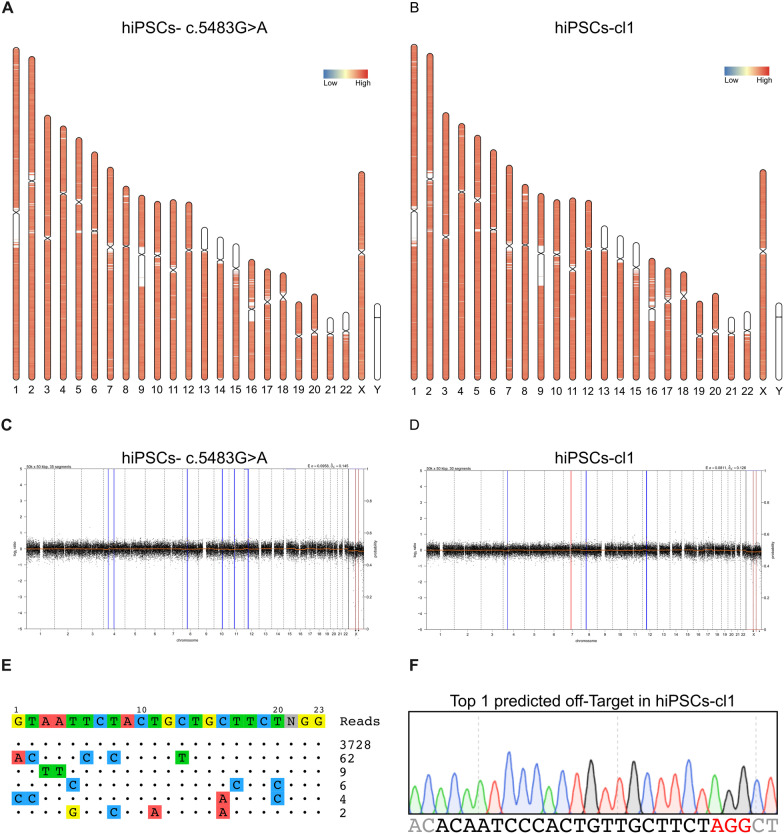
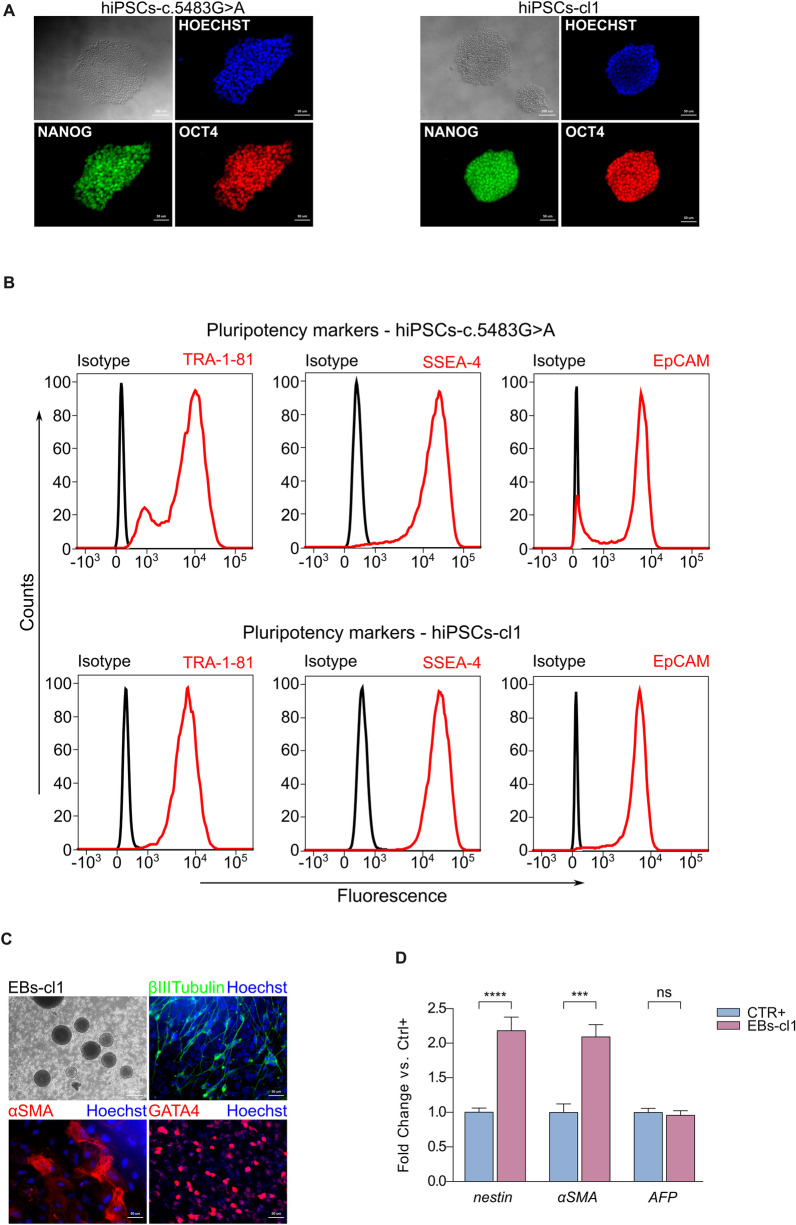
This study reports an efficient method to repair the NIPBL gene through HDR mediated by CRISPR-Cas and induced with a compound (NU7441) inhibiting non-homologous end joining (NHEJ) repair. This sequence repair method allowed the generation of isogenic wild-type hiPSCs clones with regular karyotype and preserved pluripotency.
CdLS cellular models were generated which will facilitate the investigation of the disease molecular determinants and the identification of therapeutic targets. In particular, the hiPSC-based cellular models offer the paramount advantage to study the tissue differentiation stages which are altered in the CdLS clinical development. Importantly, the hiPSCs that were generated are isogenic thus providing the most controlled experimental set up between wild-type and mutated conditions.
Cornelia de Lange 综合征(CdLS)是一种罕见的多系统遗传疾病,大多数临床病例(60-70%)是由涉及 Nipped-B 样蛋白(NIPBL)基因的遗传缺陷引起的。目前,尚无针对 CdLS 的特定治疗方法,需要终生进行临床管理。因此,非常需要疾病模型来寻找治疗方法。治疗的可能性包括基于 CRISPR-Cas 技术的基因组编辑策略。
进行了比较分析,以测试最新的 CRISPR-Cas 技术,包括不进行 DNA 切割即可进行修饰的碱基编辑器和先导编辑器,并与 Cas9 核酸酶活性诱导的同源定向修复(HDR)的序列替换方法进行比较。发现效率更高的 HDR 方法应用于修复 NIPBL 基因中导致 CdLS 的突变。通过 HDR 对携带 NIPBL 基因 c.5483G > A 突变的 CdLS 患者来源的人诱导多能干细胞(hiPSC)进行修饰,以生成同源校正克隆。
本研究报告了一种通过 CRISPR-Cas 介导并通过化合物(NU7441)抑制非同源末端连接(NHEJ)修复来进行 HDR 修复 NIPBL 基因的有效方法。这种序列修复方法允许生成具有正常核型和保留多能性的同源野生型 hiPSC 克隆。
生成了 CdLS 细胞模型,这将有助于研究疾病的分子决定因素和鉴定治疗靶点。特别是,基于 hiPSC 的细胞模型提供了最大的优势,可以研究在 CdLS 临床发展中改变的组织分化阶段。重要的是,生成的 hiPSC 是同基因的,因此在野生型和突变条件之间提供了最可控的实验设置。