Graduate School, Beijing University of Chinese Medicine, Beijing, China.
Department of Gastroenterology, Chongqing Traditional Chinese Medicine Hospital, Chongqing, China.
Biomed Res Int. 2022 Aug 25;2022:9427076. doi: 10.1155/2022/9427076. eCollection 2022.
An imbalance of macrophage M1/M2 polarization significantly influences the pathogenesis of inflammatory bowel disease. Qingchang Wenzhong decoction (QCWZD) has a proven therapeutic effect on patients with inflammatory bowel disease (IBD) and can significantly inhibit the inflammatory response in mice with colitis. However, its effect on macrophages during IBD treatment remains nebulous. . Explore the mechanism underlying QCWZD effects in a dextran sulfate sodium (DSS)-induced colitis mouse model in vivo and RAW264.7 cell in vitro by observing macrophage polarization dynamics.
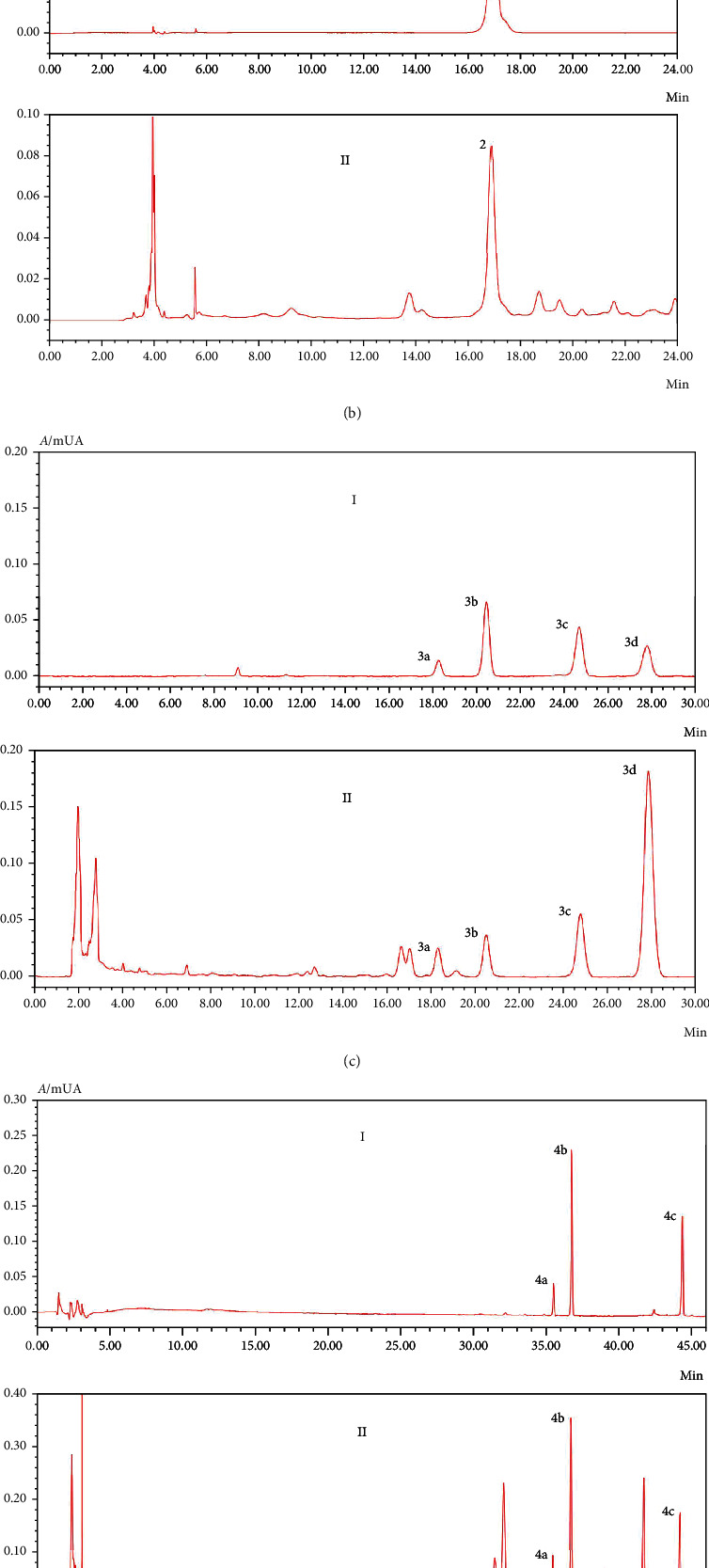
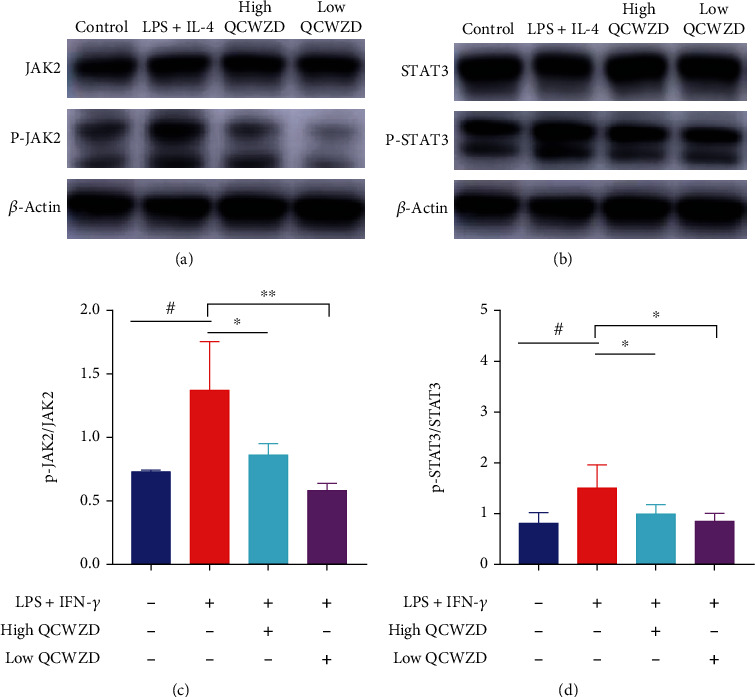
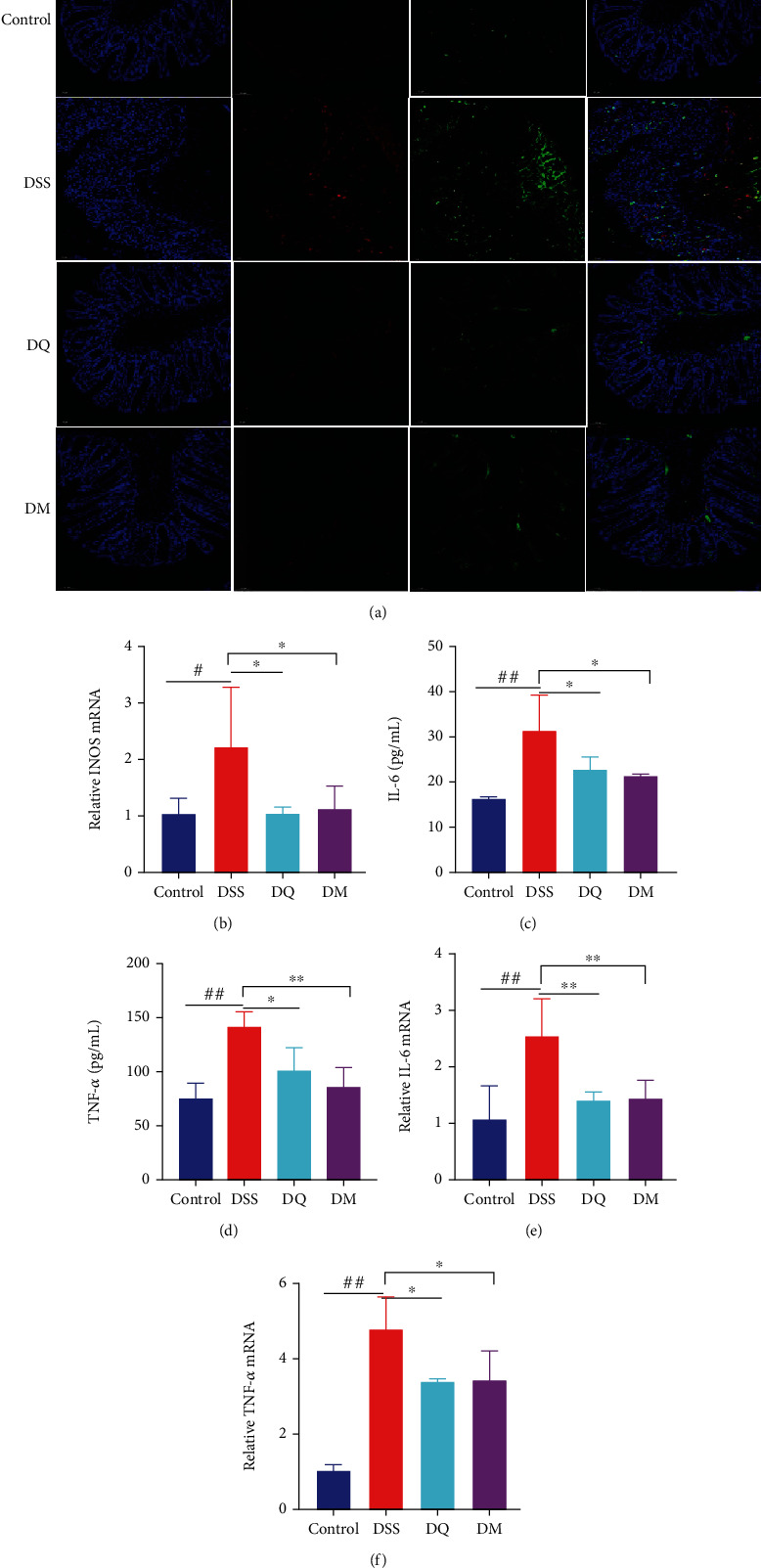
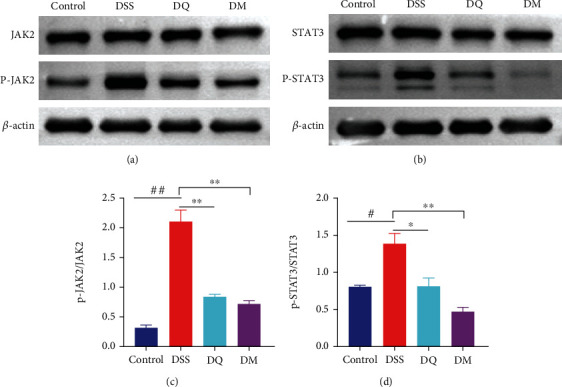
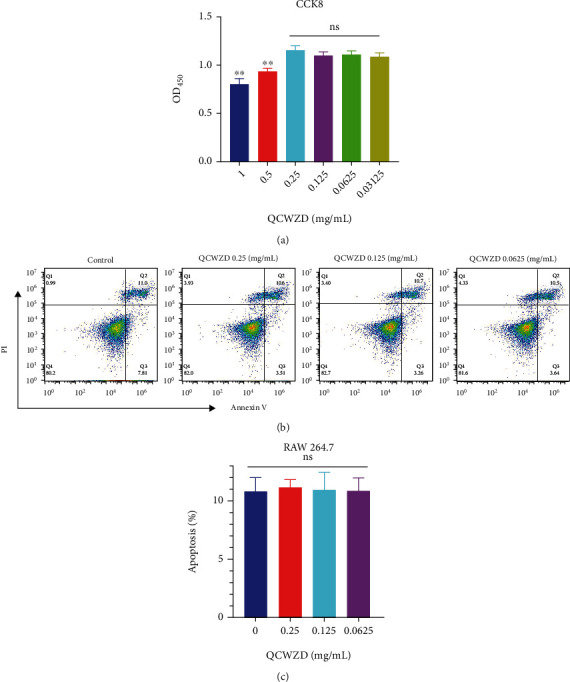
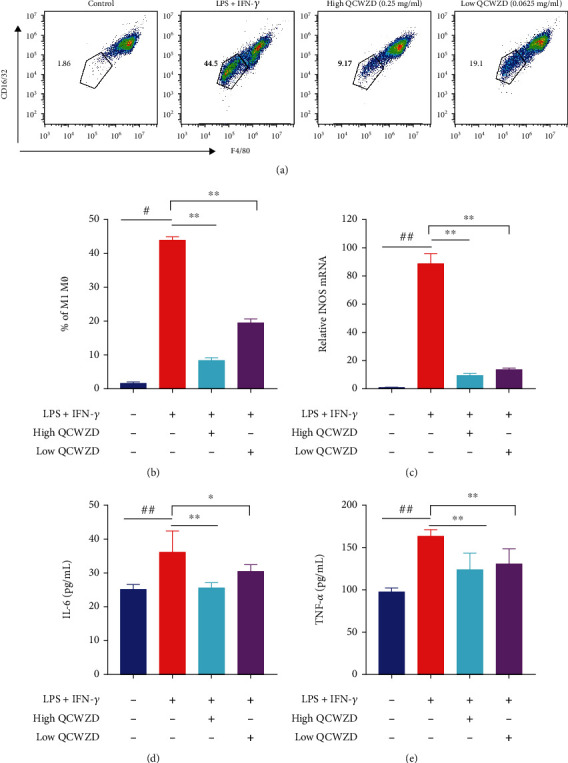
The main active components of QCWZD were determined using high-performance liquid chromatography. Surface marker expression on M1-type macrophages was analyzed using flow cytometry and immunofluorescence. The effect on inducible nitric oxide synthase (iNOS), interleukin-6 (IL-6), and tumor necrosis factor- (TNF-) released by M1 type macrophages was determined using ELSA and RT-PCR. The expression of key proteins in the JAK2/STAT3 signaling pathway was analyzed using western blotting. QCWZD cytotoxicity in macrophages was measured using CCK8 and Annexin V-FITC/PI assays.
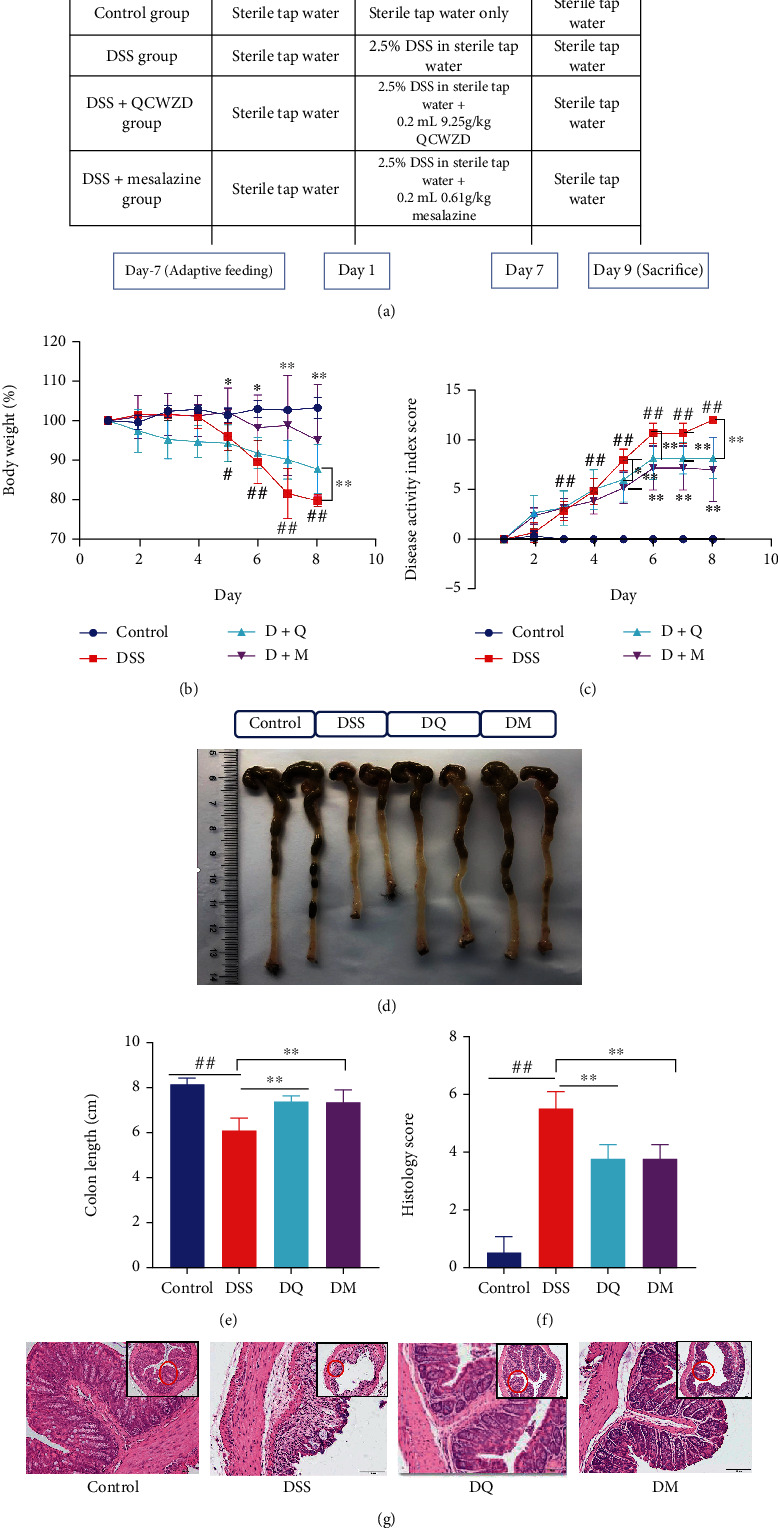
The main active components of QCWZD were berberine chloride, coptisine chloride, epiberberine chloride, gallic acid, ginsenoside Rg1, ginsenoside Rb1, indigo, indirubin, notoginsenoside R1, palmatine chloride, and 6-curcumin. QCWZD markedly alleviated DSS-induced colitis in mice, as revealed by the rescued weight loss and disease activity index, attenuated the colonic shortening and mucosal injury associated with the inhibition of M1 macrophage polarization and expression of related cytokines, such as IL-6 and TNF-, and . Furthermore, QCWZD decreased the iNOS, JAK2, and STAT3 levels and , regulating the JAK2/STAT3 signaling pathway.
QCWZD administration improves intestinal inflammation by inhibiting M1 macrophage polarization. The JAK2/STAT3 signaling pathway may mediate the effects of QCWZD on M1 macrophage polarization in colitis treatment. This study presents a novel macrophage-mediated therapeutic strategy for the treatment of IBD.
巨噬细胞 M1/M2 极化失衡显著影响炎症性肠病的发病机制。清肠温中汤(QCWZD)对炎症性肠病(IBD)患者有明确的治疗作用,可显著抑制结肠炎小鼠的炎症反应。但其在 IBD 治疗中对巨噬细胞的作用仍不清楚。本研究通过观察巨噬细胞极化动态,探讨 QCWZD 在葡聚糖硫酸钠(DSS)诱导的结肠炎小鼠模型体内和 RAW264.7 细胞体外的作用机制。
采用高效液相色谱法测定 QCWZD 的主要活性成分。采用流式细胞术和免疫荧光法分析 M1 型巨噬细胞表面标志物的表达。采用 ELISA 和 RT-PCR 测定 M1 型巨噬细胞诱导型一氧化氮合酶(iNOS)、白细胞介素-6(IL-6)和肿瘤坏死因子-(TNF-)的释放。采用 Western blot 分析 JAK2/STAT3 信号通路关键蛋白的表达。采用 CCK8 和 Annexin V-FITC/PI 检测 QCWZD 对巨噬细胞的细胞毒性。
QCWZD 的主要活性成分为盐酸小檗碱、盐酸黄连碱、盐酸巴马汀、没食子酸、人参皂苷 Rg1、人参皂苷 Rb1、靛蓝、靛玉红、三七皂苷 R1、盐酸巴马汀和 6-姜黄素。QCWZD 明显缓解 DSS 诱导的小鼠结肠炎,表现为体重减轻和疾病活动指数得到挽救,结肠缩短和黏膜损伤减轻,同时抑制 M1 巨噬细胞极化和相关细胞因子如 IL-6 和 TNF-的表达。此外,QCWZD 降低了 iNOS、JAK2 和 STAT3 水平,并调节 JAK2/STAT3 信号通路。
QCWZD 给药通过抑制 M1 巨噬细胞极化改善肠道炎症。JAK2/STAT3 信号通路可能介导 QCWZD 对结肠炎治疗中 M1 巨噬细胞极化的作用。本研究为 IBD 治疗提供了一种新的巨噬细胞介导的治疗策略。