Zhang Bo, Li Keqing, Zhang Siqi, Hu Yafei, Han Bin
School of Civil and Resource Engineering, University of Science and Technology Beijing, Beijing 100083, China.
Key Laboratory of Ministry of Education of China for Efficient Mining and Safety of Metal Mines, University of Science and Technology Beijing, Beijing 100083, China.
Heliyon. 2022 Aug 24;8(8):e10338. doi: 10.1016/j.heliyon.2022.e10338. eCollection 2022 Aug.
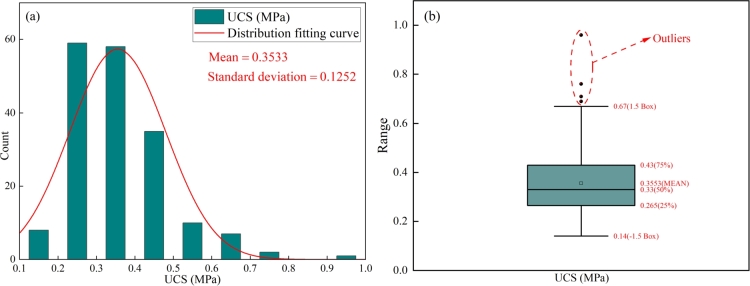
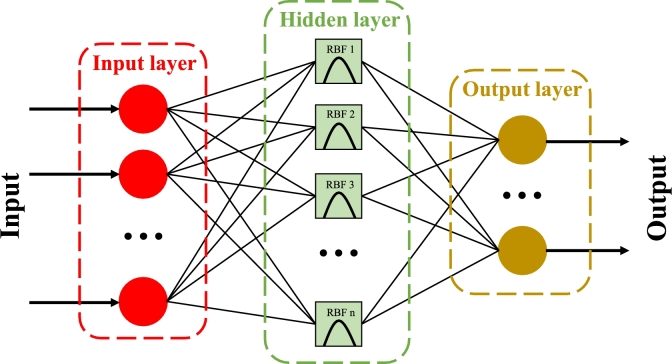
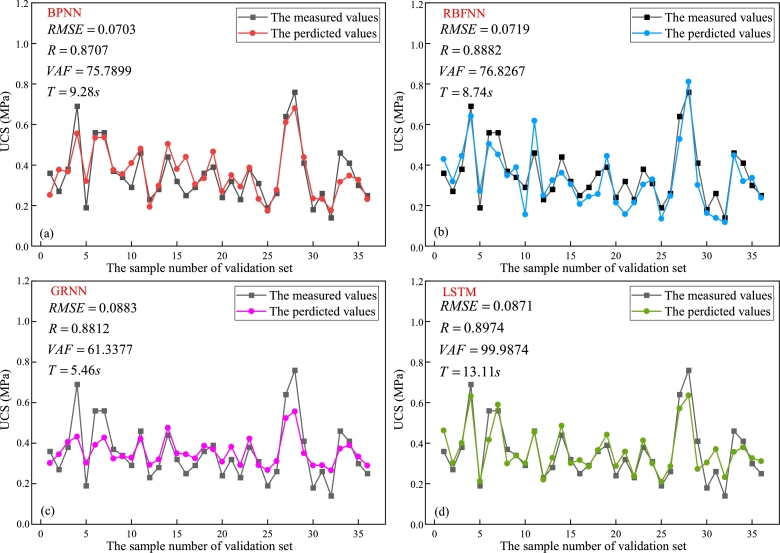
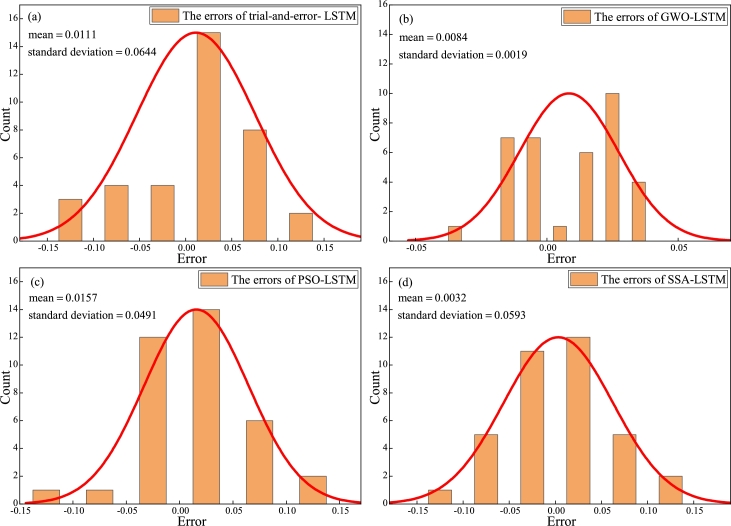
Cemented paste backfill (CPB) is wildly used in mines production practices around the world. The strength of CPB is the core of research which is affected by factors such as slurry concentration and cement content. In this paper, a research on the UCS is conducted by means of a combination of laboratory experiments and machine learning. BPNN, RBFNN, GRNN and LSTM are trained and used for UCS prediction based on 180 sets of experimental UCS data. The simulation results show that LSTM is the neural network with the optimal prediction performance (The total rank is 11). The trial-and-error, PSO, GWO and SSA are used to optimize the learning rate and the hidden layer nodes for LSTM. The comparison results show that GWO-LSTM is the optimal model which can effectively express the non-linear relationship between underflow productivity, slurry concentration, cement content and UCS in experiments ( , = 0.0204, = 98.2847 and T = 16.37 s). The correction coefficient () is defined to adjust the error between predicted UCS in laboratory (UCS) and predicted UCS in actual engineering (UCS) based on extensive engineering and experimental experience. Using GWO-LSTM combined with , the strength of the filling body is successfully predicted for 153 different filled stopes with different stowing gradient at different curing times. This study provides both effective guidance and a new intelligent method for the support of safety mining.
胶结膏体充填(CPB)在世界各地的矿山生产实践中被广泛应用。CPB的强度是研究的核心,它受料浆浓度和水泥含量等因素影响。本文通过实验室试验和机器学习相结合的方式对无侧限抗压强度(UCS)进行研究。基于180组UCS试验数据对BP神经网络(BPNN)、径向基函数神经网络(RBFNN)、广义回归神经网络(GRNN)和长短期记忆网络(LSTM)进行训练并用于UCS预测。模拟结果表明,LSTM是预测性能最优的神经网络(总排名为11)。采用试错法、粒子群优化算法(PSO)、灰狼优化算法(GWO)和正弦余弦算法(SSA)对LSTM的学习率和隐藏层节点进行优化。比较结果表明,GWO-LSTM是最优模型,能有效表达试验中底流生产率、料浆浓度、水泥含量与UCS之间的非线性关系( , = 0.0204, = 98.2847且T = 16.37 s)。基于大量工程和试验经验,定义修正系数( )来调整实验室预测的UCS(UCS )与实际工程中预测的UCS(UCS )之间的误差。结合 使用GWO-LSTM,成功预测了153个不同充填采场在不同养护时间、不同充填梯度下充填体的强度。该研究为安全开采支护提供了有效指导和一种新的智能方法。