Stratiev Dicho, Shishkova Ivelina, Dinkov Rosen, Kolev Iliyan, Argirov Georgi, Ivanov Vitaly, Ribagin Simeon, Atanassova Vassia, Atanassov Krassimir, Stratiev Danail, Nenov Svetoslav, Pilev Dimitar, Yordanov Dobromir
LUKOIL Neftohim Burgas, 8104 Burgas, Bulgaria.
Institute of Biophysics and Biomedical Engineering, Bulgarian Academy of Sciences, Bulgarian Academy of Sciences, Academic Georgi Bonchev 105, 1113 Sofia, Bulgaria.
ACS Omega. 2022 Aug 17;7(34):30462-30476. doi: 10.1021/acsomega.2c03876. eCollection 2022 Aug 30.
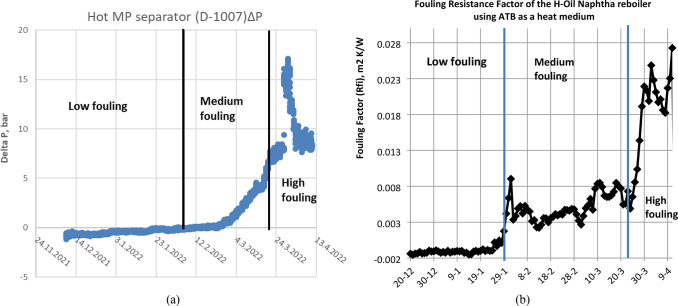
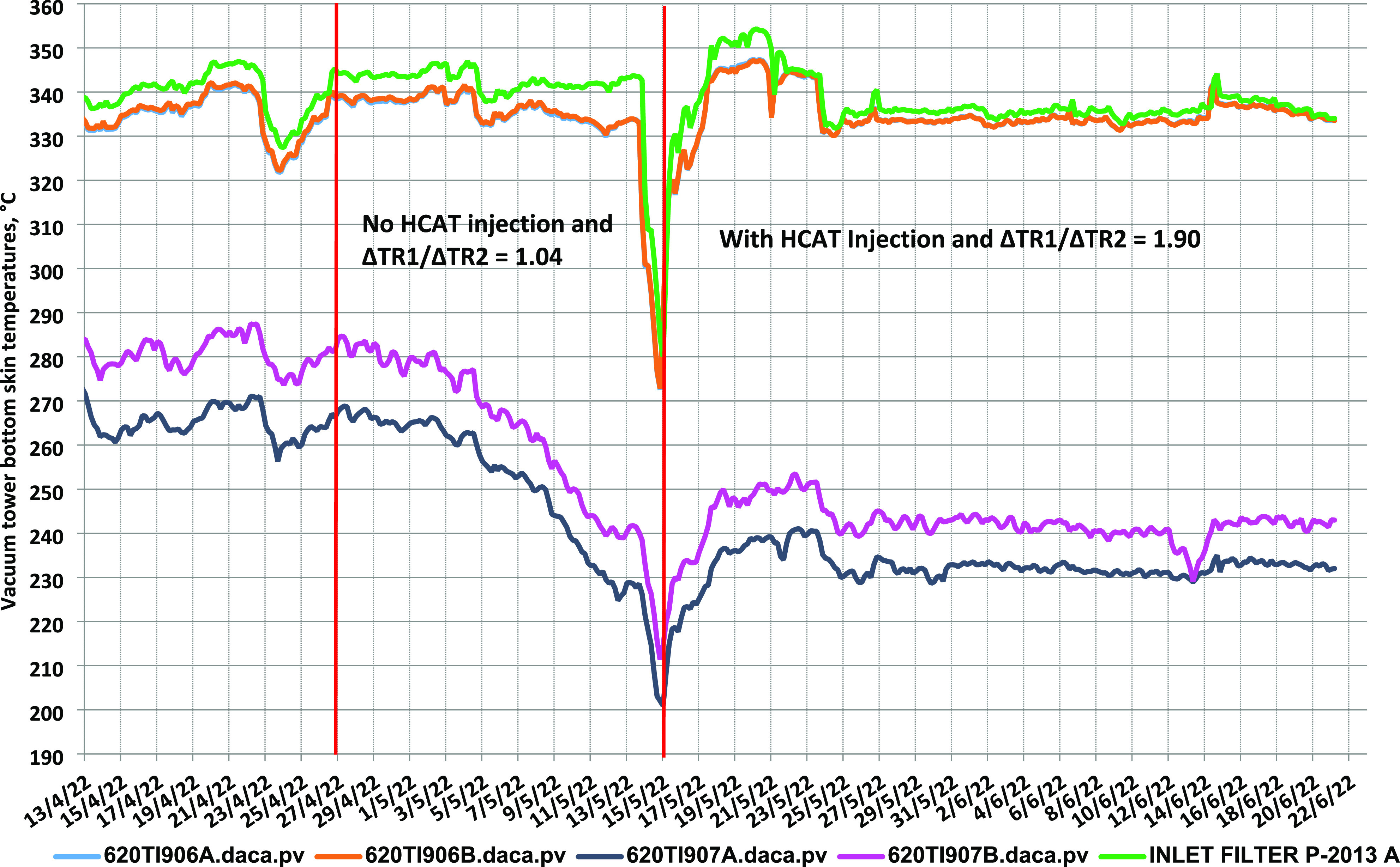
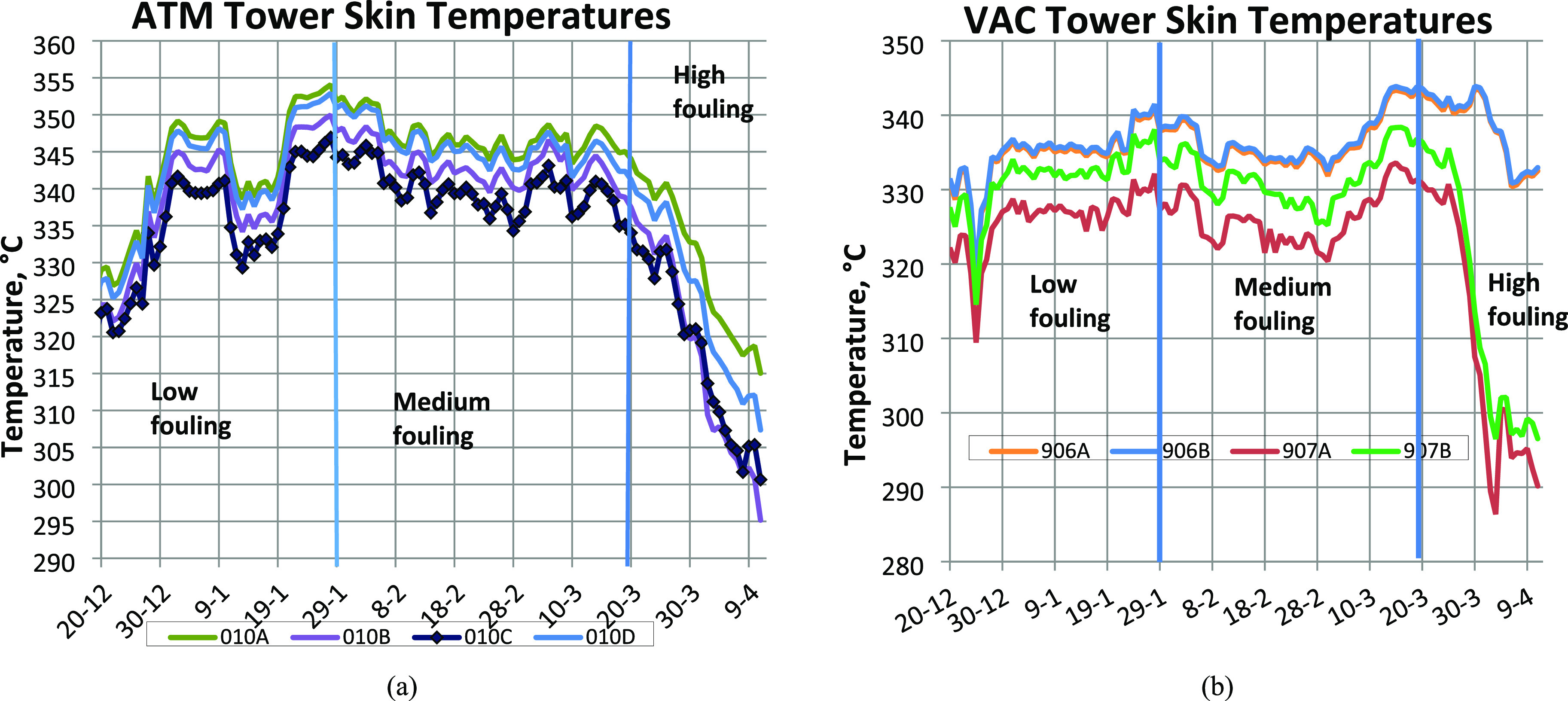
The intercriteria analysis developed on the base of intuitionistic fuzziness and index matrices was applied to evaluate processing data of the LUKOIL Neftohim Burgas H-Oil ebullated bed vacuum residue hydrocracker with the aim of revealing the reasons for increased fouling registered during the 3rd cycle of the H-Oil hydrocracker. It was found that when the ratio of the Δ of the 1st reactor to the Δ of the 2nd reactor gets lower than 2.0, an excessive H-Oil equipment fouling occurs. The fouling was also found to be favored by processing of lower Conradson carbon content vacuum residual oils and increased throughput and depressed by increasing the dosage of the HCAT nanodispersed catalyst. The fouling in the atmospheric tower bottom section is facilitated by a lower aromatic content in the atmospheric tower bottom product. The addition of FCC slurry oil not only increases aromatic content but also dissolves some of the asphaltenes in the atmospheric residual hydrocracked oil and decreases its colloidal instability index. The fouling in the vacuum tower bottom section is facilitated by a higher saturate content in the VTB. Surprisingly, it was found that the asphaltene content in the VTB depresses the fouling rate. No relation was found of the sediment content in the hydrocracked residual oils measured by hot filtration tests and by the centrifuge method to the equipment fouling of the H-Oil hydrocracker.
基于直觉模糊性和指标矩阵开发的相互标准分析被应用于评估卢克石油纳夫托希姆布尔加斯H-Oil沸腾床减压渣油加氢裂化装置的处理数据,目的是揭示H-Oil加氢裂化装置第3个周期期间记录的污垢增加的原因。结果发现,当第一反应器的Δ与第二反应器的Δ之比低于2.0时,会发生过度的H-Oil设备结垢。还发现,加工康氏残炭含量较低的减压渣油、提高处理量会促进结垢,而增加HCAT纳米分散催化剂的用量则会抑制结垢。常压塔底部产品中芳烃含量较低会促进常压塔底部的结垢。添加催化裂化油浆不仅会增加芳烃含量,还会溶解常压渣油加氢裂化油中的一些沥青质,并降低其胶体不稳定指数。减压塔底部馏分中饱和烃含量较高会促进减压塔底部的结垢。令人惊讶的是,发现减压塔底部的沥青质含量会降低结垢速率。通过热过滤试验和离心法测得的加氢裂化渣油中的沉积物含量与H-Oil加氢裂化装置的设备结垢没有关系。