Department of Ultrasound, The Second Affiliated Hospital and Yuying Children's Hospital of Wenzhou Medical University, Wenzhou, Zhejiang Province, China.
Department of Hepatobiliary Surgery, The First Affiliated Hospital of Wenzhou Medical University, Wenzhou, China.
BMC Cancer. 2022 Sep 6;22(1):955. doi: 10.1186/s12885-022-10017-4.
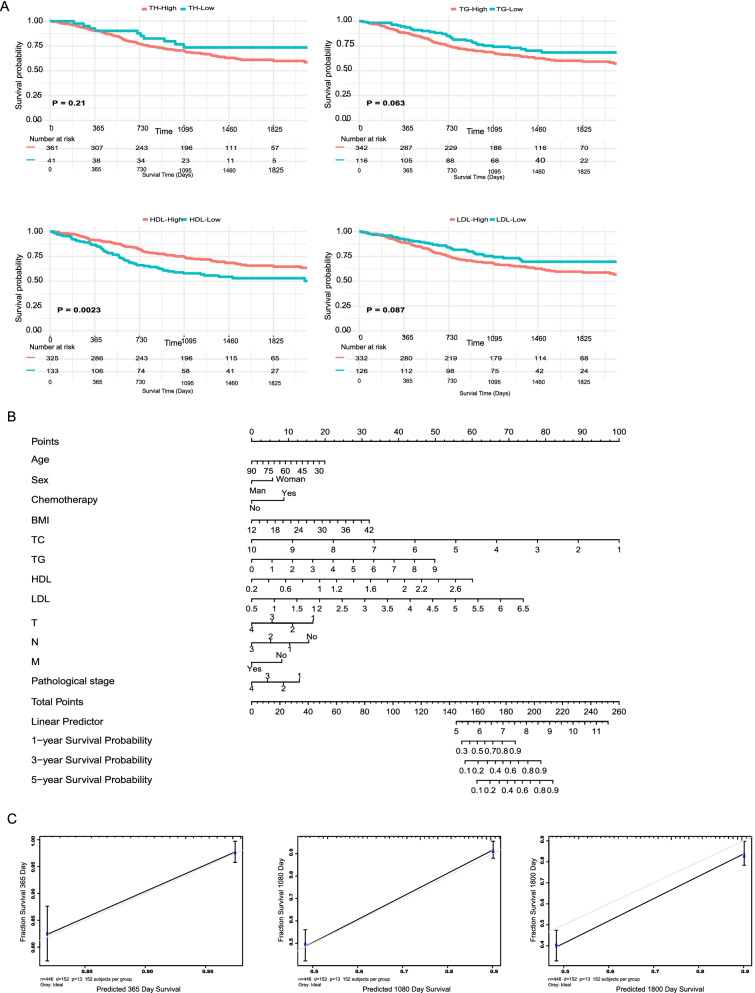
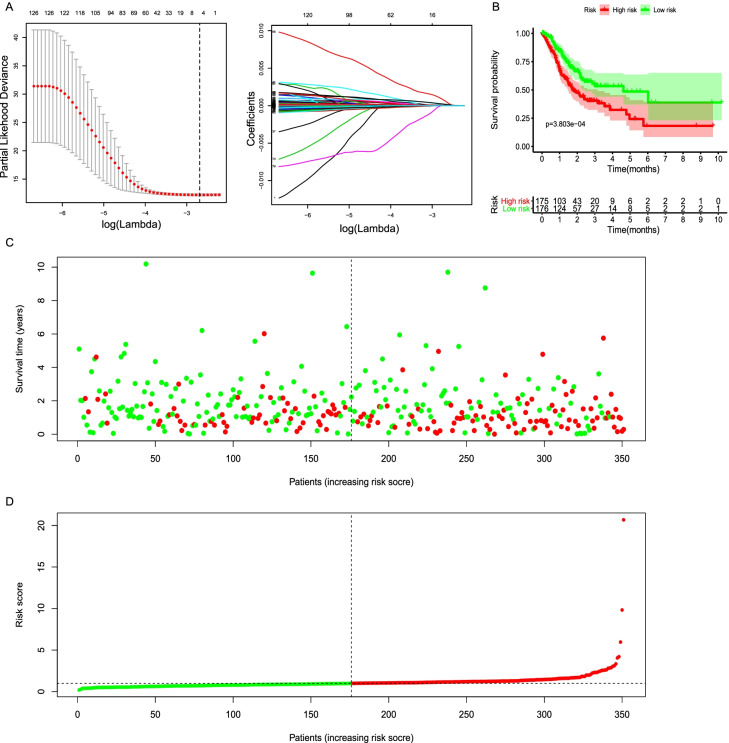
Lipid metabolism has a profound impact on gastric cancer (GC) progression and is a newly targetable vulnerability for cancer therapy. Given the importance of lipids in cancer cellular processes, in this study we employed lipidomic clinical and transcriptomic data to connect the variations of lipid metabolism changes of GC. We constructed a clinical nomogram based on the lipid factors and other clinical items. Then by using multi-omics techniques, we established a lipid-related gene signature for individualized prognosis prediction in patients with GC. Moreover, a total of 1357 GC cases were then applied to evaluate the robustness of this model. WGCNA was used to identify co-expression modules and enriched genes associated with GC lipid metabolism. The role of key genes ACLY in GC was further investigated. The prognostic value of the lipgenesis signature was analyzed using Cox regression model, and clinical nomogram was established. Among them, we observed overexpression of ACLY significantly increased the levels of intracellular free fatty acid and triglyceride, and activated AKT/mTOR pathway to promote cancer development. In conclusion, our findings revealed that GC exhibited a reprogramming of lipid metabolism in association with an altered expression of associated genes. Among them, ACLY significantly promoted GC lipid metabolism and increased cancer cell proliferation, suggesting that this pathway can be targetable as a metabolic vulnerability in future GC therapy.
脂质代谢对胃癌(GC)的进展有深远影响,是癌症治疗的一个新的靶向弱点。鉴于脂质在癌症细胞过程中的重要性,在这项研究中,我们采用了脂质组学临床和转录组学数据来连接 GC 脂质代谢变化的差异。我们基于脂质因素和其他临床项目构建了一个临床列线图。然后,通过使用多组学技术,我们建立了一个与 GC 脂质代谢相关的基因特征,用于患者的个体化预后预测。此外,还应用了 1357 例 GC 病例来评估该模型的稳健性。WGCNA 用于鉴定与 GC 脂质代谢相关的共表达模块和富集基因。进一步研究了 ACLY 基因在 GC 中的作用。使用 Cox 回归模型分析了 lipgenesis 特征的预后价值,并建立了临床列线图。其中,我们观察到 ACLY 的过度表达显著增加了细胞内游离脂肪酸和甘油三酯的水平,并激活了 AKT/mTOR 通路,促进了癌症的发展。总之,我们的研究结果表明,GC 表现出与相关基因表达改变相关的脂质代谢重编程。其中,ACLY 显著促进 GC 脂质代谢并增加癌细胞增殖,表明该途径可作为未来 GC 治疗中的代谢弱点进行靶向治疗。