Department of Molecular Diagnostics, Sun Yat-Sen University Cancer Center, State Key Laboratory of Oncology in South China, Collaborative Innovation Center for Cancer Medicine, Guangzhou, China.
Department of Endoscopy and Laser, Sun Yat-Sen University Cancer Center, State Key Laboratory of Oncology in South China, Collaborative Innovation Center for Cancer Medicine, Guangzhou, China.
Oncogene. 2022 Sep;41(40):4537-4546. doi: 10.1038/s41388-022-02366-y. Epub 2022 Sep 5.
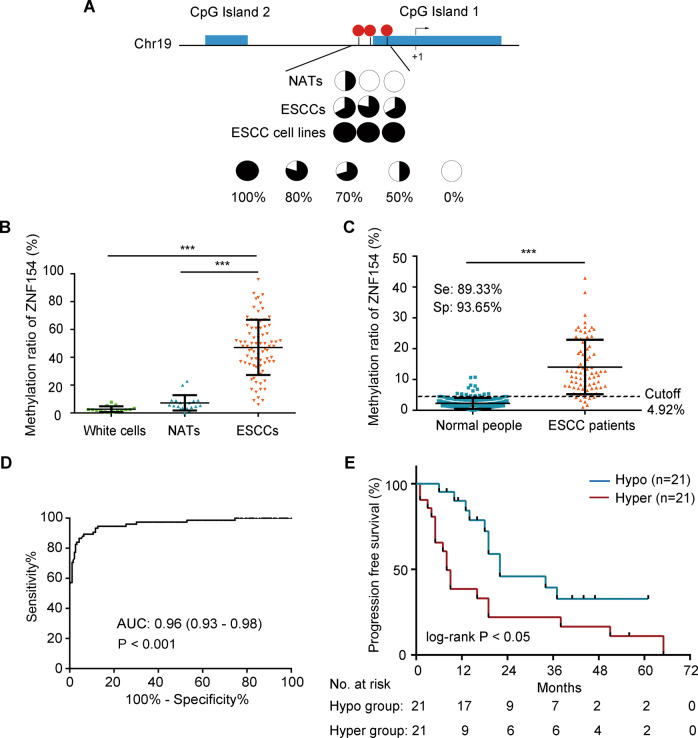
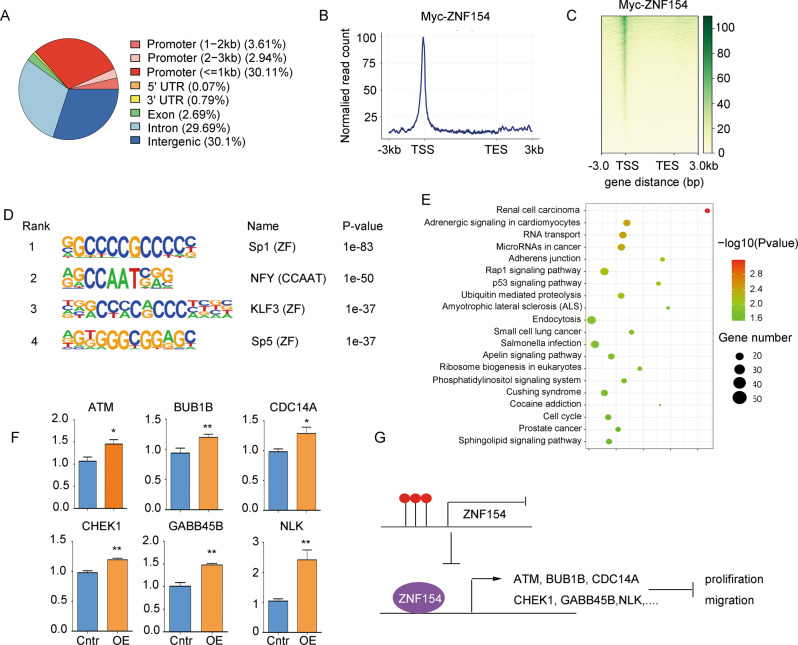
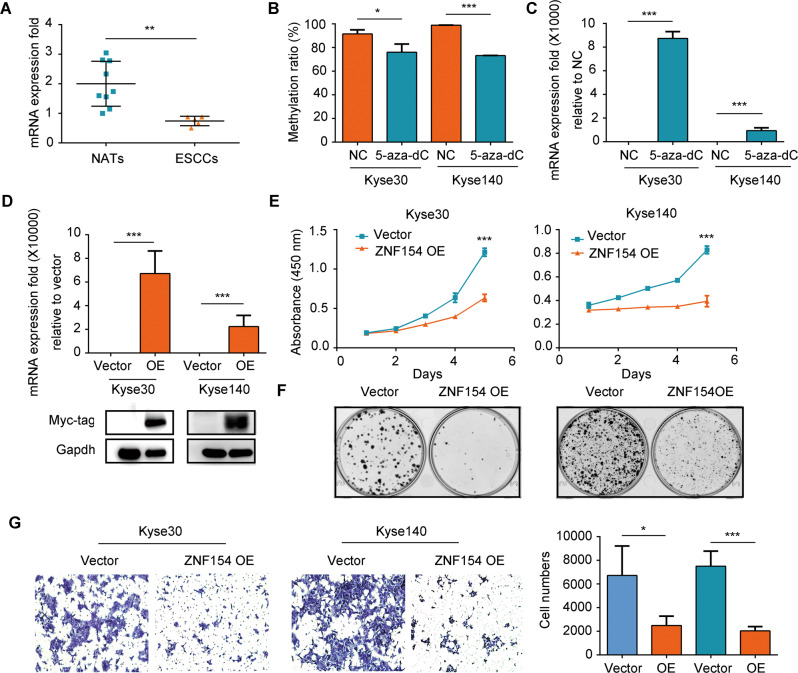
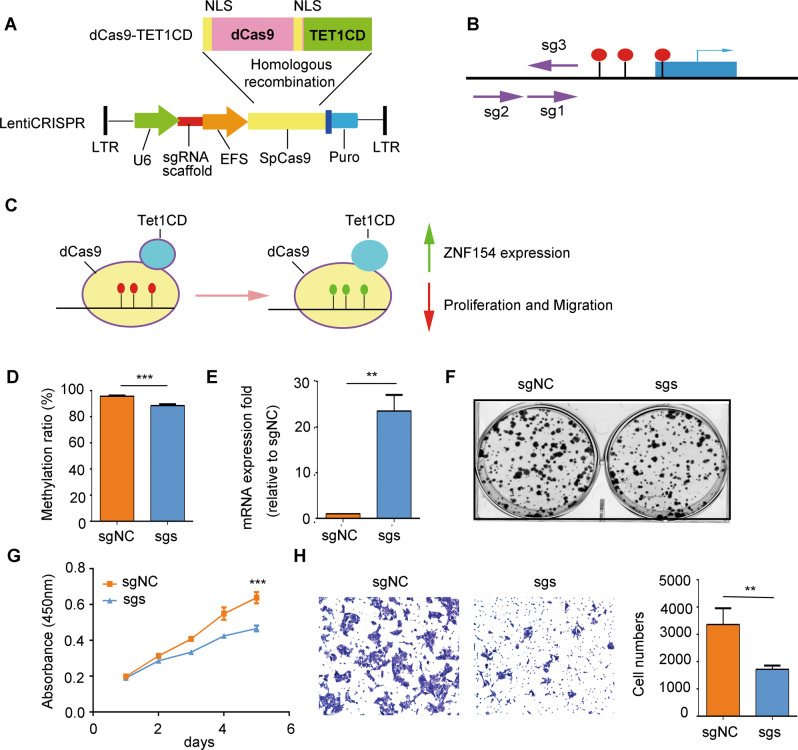
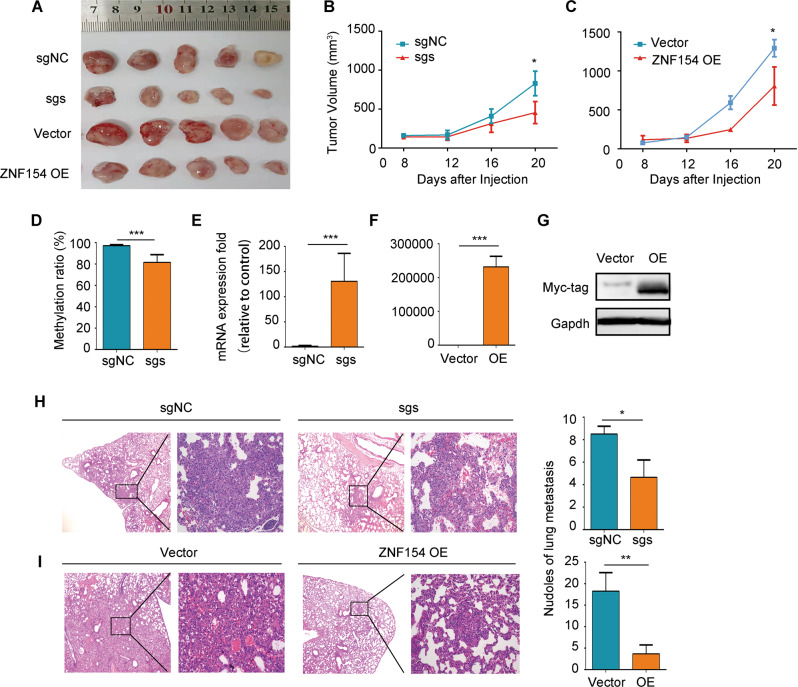
Zinc finger protein 154 (ZNF154) is hypermethylated at the promoter in many epithelial-derived solid tumors. However, its methylation status and function in esophageal squamous carcinoma (ESCC) are poorly understood. We found that the ZNF154 promoter is hypermethylated in ESCC and portends poor prognosis. In addition, ZNF154 functions as a tumor suppressor gene (TSG) in ESCC, and is downregulated by promoter hypermethylation. We established a targeted demethylation strategy based on CRISPR/dCas9 technology and found that the hypermethylation of ZNF154 promoter repressed ZNF154 induction, which in turn promoted the proliferation and migration of ESCC cells in vitro and in vivo. Finally, high-throughput CUT&Tag analysis, GEPIA software and qPCR were used to revealed the role of ZNF154 as a transcription factor to upregulate the expression of ESCC-associated tumor suppressor genes. Taken together, hypermethylation of the ZNF154 promoter plays an important role in the development of ESCC, and epigenetic editing is a promising tool for inhibiting ESCC cells with aberrant DNA methylation.
锌指蛋白 154(ZNF154)在许多上皮来源的实体瘤中启动子呈超甲基化。然而,其在食管鳞状细胞癌(ESCC)中的甲基化状态和功能尚不清楚。我们发现 ZNF154 启动子在 ESCC 中呈超甲基化,预示着预后不良。此外,ZNF154 在 ESCC 中作为肿瘤抑制基因(TSG)发挥作用,其表达受启动子超甲基化的下调。我们基于 CRISPR/dCas9 技术建立了靶向去甲基化策略,发现 ZNF154 启动子的超甲基化抑制了 ZNF154 的诱导,进而促进了 ESCC 细胞在体外和体内的增殖和迁移。最后,通过高通量 CUT&Tag 分析、GEPIA 软件和 qPCR 揭示了 ZNF154 作为转录因子上调 ESCC 相关肿瘤抑制基因表达的作用。总之,ZNF154 启动子的超甲基化在 ESCC 的发展中起着重要作用,表观遗传编辑是抑制具有异常 DNA 甲基化的 ESCC 细胞的一种很有前途的工具。