Faculty of Life Sciences, Department of Molecular Biology, University of Vienna, Dr. Bohrgasse 9, 1030, Vienna, Austria.
Forensic Anthropology Unit, Institut de Medicina Legal I Ciènces Forenses de Catalunya (IMLCFC), Ciutat de la Justícia, Gran Via de les Corts Catalanes, 111 Edifici G, 08075, Barcelona, Spain.
Int J Legal Med. 2024 Jan;138(1):35-42. doi: 10.1007/s00414-022-02875-1. Epub 2022 Sep 6.
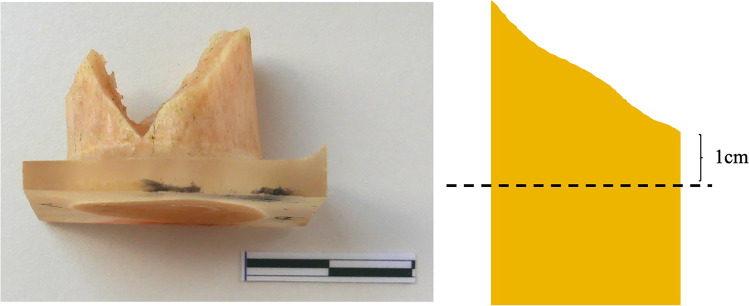
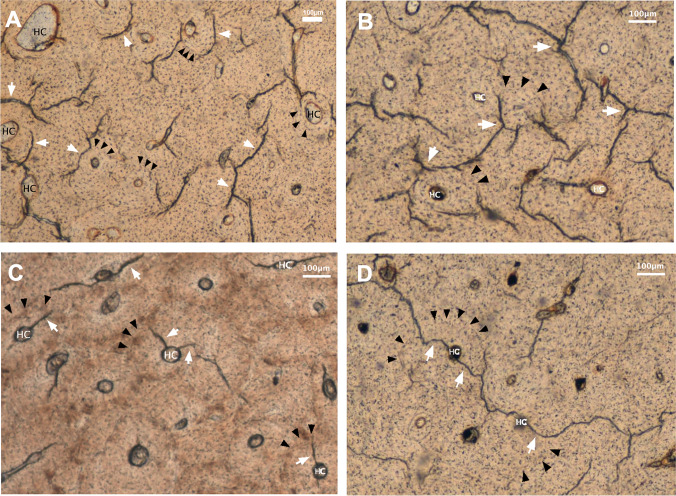
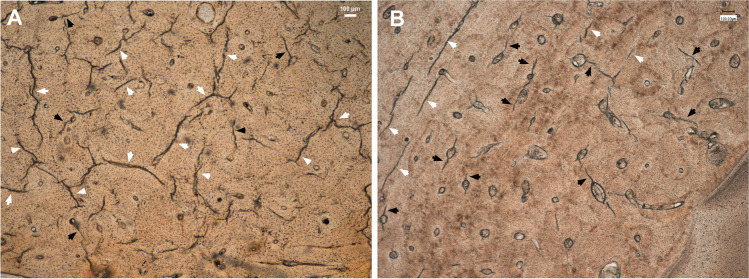
Timing bone fractures is one of the main tasks of a forensic anthropologist, but still an uncertain diagnostic. In the literature, there are many macroscopic methods to distinguish perimortem from postmortem fractures, based on the distinct structural and mechanical properties of fresh and dry bones. However, this differentiation is still challenging, in particular when the bones are fragmented or still exhibit fresh properties. Although histologic analysis is often used as a complementary diagnostic tool in forensic pathology, its application in the evaluation of bone fractures is uncommon. The aim of this study was to investigate whether fractures of fresh bones reveal a distinct microcracking pattern compared to fractures of dry bones, in order to optimise the fracture timing. To this purpose, we histologically analysed perimortem and postmortem fractures in human humeri. The fresh bones were retrieved from traumatic autopsy cases, and the dry bones from donors which were experimentally fractured. Our results showed that the highest density and length of microcracks (MCKs) were found in the interstitial area of dry fractured bones, which may be considered a marker of postmortem damage. In fresh fractured bones, we generally observed a lower density of MCKs, but a higher proportion of osteonal MCKs, which may be considered a marker of perimortem trauma. In summary, the results of our exploratory study suggest that changes in intrinsic bone factors (mineral/organic components) result in a different microcracking pattern that can be used in fracture timing.
鉴定骨损伤的时间是法医人类学家的主要任务之一,但仍然是一个不确定的诊断。在文献中,有许多宏观方法可以根据新鲜和干燥骨骼的明显结构和机械性能来区分生前和死后骨折。然而,这种区分仍然具有挑战性,特别是当骨骼碎裂或仍具有新鲜特征时。尽管组织学分析通常被用作法医病理学中的一种辅助诊断工具,但在评估骨骼骨折时并不常用。本研究的目的是调查新鲜骨骼的骨折是否与干燥骨骼的骨折相比呈现出明显的微裂纹模式,以便优化骨折时间。为此,我们对人肱骨的生前和死后骨折进行了组织学分析。新鲜骨骼取自创伤性尸检案例,干燥骨骼取自实验性骨折的供体。我们的结果表明,在干燥骨折的骨间质区发现了最高密度和最长的微裂纹(MCKs),这可能被认为是死后损伤的标志。在新鲜骨折的骨骼中,我们通常观察到 MCKs 的密度较低,但骨单位 MCKs 的比例较高,这可能被认为是生前创伤的标志。总之,我们的探索性研究结果表明,内在骨骼因素(矿物质/有机成分)的变化导致了不同的微裂纹模式,可用于骨折时间的推断。